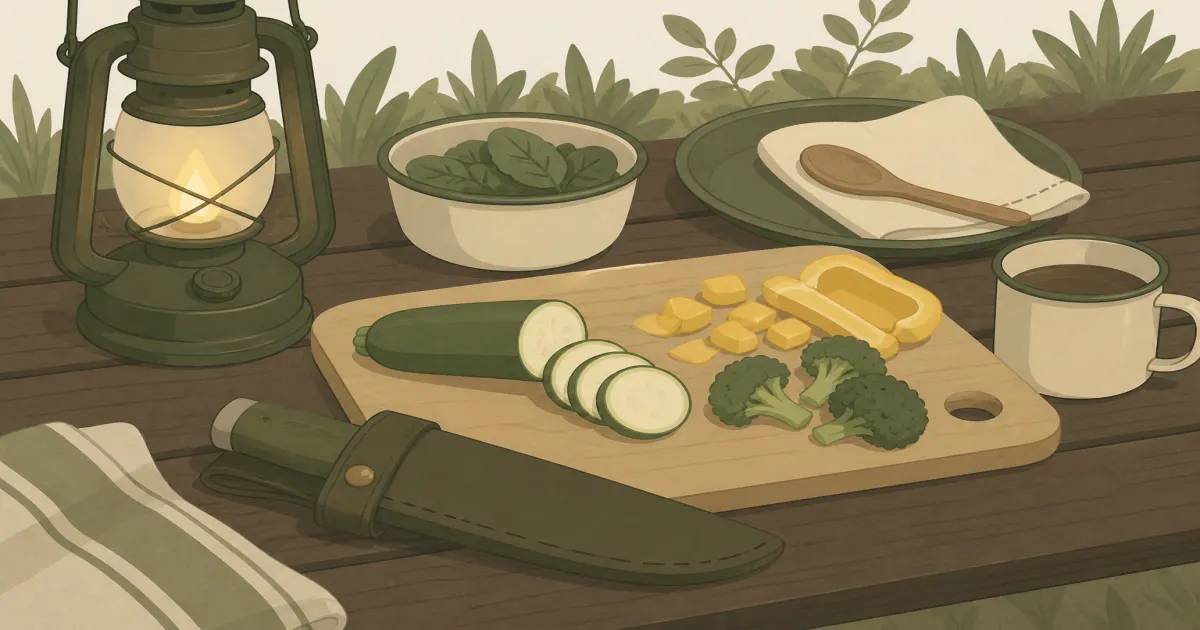
Camping Cutting Board: Prep Space That Packs Flat and Stays Clean
Cookware
A camping cutting board keeps knives off pans and food off the dirty table. Pick a size that fits your stove setup, clean it after raw meat, and pack it dry.
Our picks
Most camp food prep happens on a table that has seen wet boots and bird droppings. A dedicated board gives you a surface you washed, and it keeps knives off pans. Chopping on a skillet or griddle scars the cook surface and dulls the blade. Prep tools sit with the wider camp cookware category, and the best camping cookware roundup shows the sets they feed.
Car-camp kits with real knives should pack a real board. Solo backpackers sometimes skip it and cut on a mug lid. That is a different game. Pair with camping utensils, campsite kitchen setup, and camping griddle.
Why a camping cutting board earns the tote
Knives hate grit. Table grit dulls edges and can chip tips. Food deserves a surface you washed, not a picnic plank you wiped once with a sleeve.
A board also stops the classic mistake of chopping on a nonstick pan or a seasoned griddle. Those surfaces are for heat, not for blade work. Prep stays on the board. Cookware stays for cooking.
Solo backpackers sometimes skip a board and cut on a mug lid or a rock. That is a different game. Car-camp kits with real knives should pack a real board.
Materials and formats
Rigid plastic camping cutting boards clean easily and shrug off damp totes better than wood. Look for a size that fits beside the stove without covering the burners.
Flexible mats roll or fold and weigh little. They are great for vegetables and cheese. For heavy butchering, stack a mat on a firmer board so the knife has support. Thin mats alone on a warped table invite puncture cuts.
Wood boards look camp-classic and feel kind to knives. They need full drying. A damp wood board in a closed camp kitchen box grows smells. If you love wood, oil it at home and air-dry at camp before packing.
Bamboo is common in kits that nest with pot sets. It is fine for light work. Watch for splintering after hard seasons and replace when the surface gets fuzzy.
Skip glass and stone “boards” for camping. They are heavy, slippery, and brutal on knife edges.
Size, grip, and table fit
Match the camping cutting board to your table plan. You need room for the stove, the board, and a plate without stacking hot pans on raw onions. That layout is the heart of campsite kitchen setup.
Juice grooves help with tomatoes and meat. Non-slip feet or a damp towel under the board stop sliding when the table is slick. A sliding board is how people cut fingers.
Color coding helps groups. One board for raw meat and one for ready-to-eat food reduces cross-contamination when you are tired. If you only bring one, wash hard between jobs.
Handles and hanging holes are nice for drying on a line. They are optional. Flat boards pack tighter in narrow totes.
Prep workflow that stays clean
Set the camping cutting board in the prep zone, not over the wash bins. Keep the knife sheathed until you start. Put a trash bag or compost jar within reach so peels do not migrate into the cook zone.
Prep raw meat last when you only have one board, then wash before salad work. Or prep vegetables first, set them aside in a clean bowl, then do meat. Order matters when water is limited.
Keep a towel for drying hands and wiping the board between small tasks. A slimy board makes knives slip. For the full wash station, see how to wash dishes camping and collapsible camping sink.
Do not store the knife loose on the board overnight. Sheath it. Curious pets and sleepy hands bump tables.
Cleaning and packing
Wash with hot soapy water after raw proteins and sticky marinades. Rinse and dry both faces. Stand the board on edge so air hits both sides before it goes in the tote.
If water is scarce overnight, scrape well, wipe with a soapy cloth, and finish a full wash at home the next day for greasy boards. Do not pretend a dry wipe sanitizes raw chicken residue.
Pack the camping cutting board between soft items so it does not act like a blade against soft lids. Keep it away from liquid fuel bottles. Boards pick up smells.
Replace boards with deep grooves that will not clean. Deep cuts hold food film. A cheap replacement is safer than a “vintage” scarred plank.
Cutting board picks that travel
A grocery-store board works once. A better car-camp answer is the GSI Outdoors Destination Kitchen Set 24, which keeps a cutting board with the knives and utensils you otherwise lose in the tote. The ballistic nylon case is the packing win. It is more pieces than a solo backpacker needs.
If you want fewer parts, the Stanley Wildfare Core 26-Piece Complete Camp Kitchen Cook Set builds a prep surface into the cook kit so the board does not float around alone. It is not a full family cookware stack. It is a weekend nest with a place to chop an onion.
Common mistakes
Chopping on the camping skillet or griddle to “save packing” ruins cook surfaces. Bring the board.
Using a tiny bar board for a whole meal forces food onto the dirty table around the edges. Size up slightly.
Washing the board in the same water as greasy pans without a rinse step leaves a film. Wash, then rinse.
Leaving a wood board sealed in a wet towel is a mold shortcut. Air-dry first.
When to skip a dedicated camping cutting board
Skip a second giant board if you already nest a solid board in your pot set and it still looks clean. Skip specialty carving planks for one weekend of nachos.
If your real gap is a sharp knife and a sheath, fix the knife first via camping utensils. The board supports a knife that already cuts.
Bottom line
A camping cutting board keeps prep clean and knives sharp. Plastic or a thick mat is the easy car-camp default. Keep it in the prep zone, wash it after raw meat, dry it before packing, and leave pans for cooking. Small surface, big reduction in camp kitchen chaos.
Frequently Asked Questions
Do I need a camping cutting board if the table is clean?
Picnic tables are rarely food-clean. A board gives you a known surface and protects knives from grit that dulls edges fast.
Plastic or wood for camping?
Plastic and flexible mats pack easy and wash simple. Wood looks nice but needs thorough drying. For most car camps, a rigid plastic board or thick mat wins.
What size camping cutting board should I bring?
Large enough for an onion and a chicken breast without juggling. Huge boards waste tote space. Roughly tablet-size covers most weekend menus.
Can I cut on a skillet or griddle?
No. Knives scar cook surfaces and dull on steel. Keep prep on the board and cooking on the pan. See camping skillet and camping griddle guides.
How do I clean a camping cutting board after raw meat?
Hot soapy water, a scrub, a rinse, and a full dry. Do not prep salad on a board that just held raw meat without that wash. Pack sanitizing wipes if water is scarce.
Are flexible cutting mats good for camping?
Yes for light prep and easy packing. Use a firmer board under them if the table is warped so the knife does not punch through.