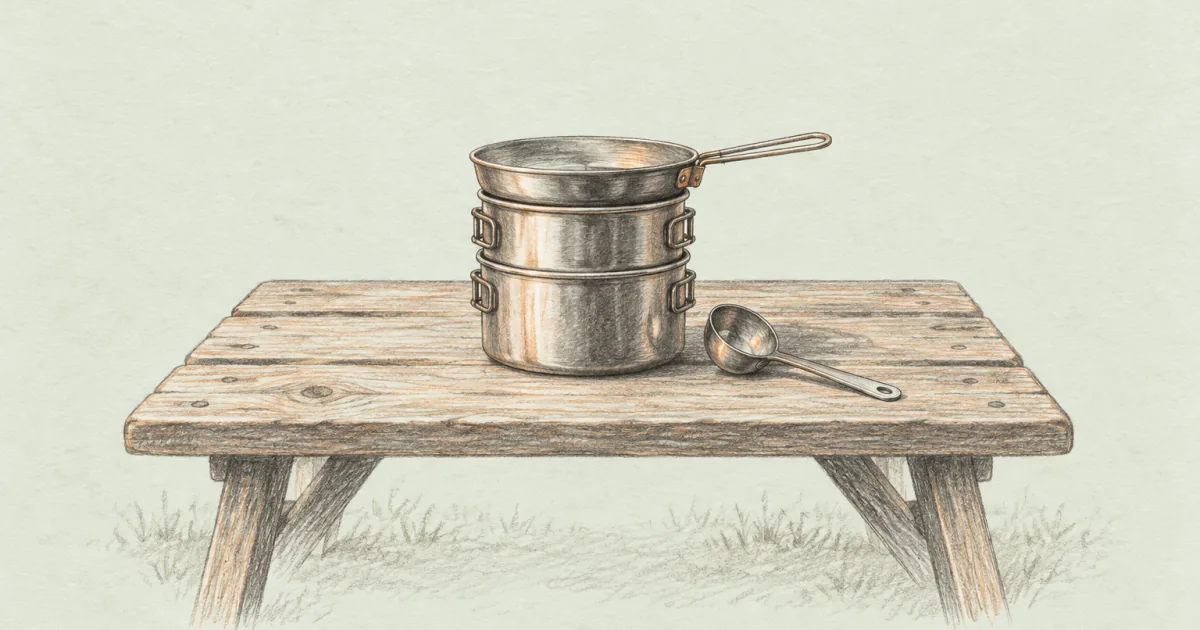
Best Camping Cookware (2026): Nesting Kits for Car Camp and Trail
Cookware
The best camping cookware nests tight, matches your trip type, and skips filler pieces you will never heat on the stove.
Our picks
The best camping cookware is the nest you will actually heat. Car camping wants capacity, stable handles, and a fry surface. Backpacking wants ounces and a lid that nests with the stove. Family weekends want a stock pot before a twelfth plastic cup. The broader camp cookware category covers the pots, skillets, and small tools that pair with a nesting set.
Start with the trip, then the metal. Stainless lasts in a trunk. Titanium saves weight on trail and runs hotter at the rim. Aluminum heats fast and scorches if you crank the flame. For nesting pot systems only, see best camping pot set. Budget kits live in best camping cookware under $50. Trail-first ounces live in best backpacking cookware. Heat pads and landing spots for hot pots live in camping pot holder and camping trivet. For propane sear nights, see best portable camping grill.
Quick comparison
Top pick: GSI Outdoors Glacier Stainless Base Camper Cookset
The GSI Outdoors Glacier Stainless Base Camper Cookset is the best camping cookware default for couples and small weekend crews. You get a 3-liter pot, a 2-liter pot, a 9-inch tri-clad fry pan, two locking strainer lids, folding handles, fill lines inside the pots, and a mesh stuff sack that keeps the nest together instead of spilling across the trunk.
Stainless takes stove heat and camp abuse better than bargain nonstick that peels after a season. The tri-clad fry pan browns eggs and sausage without the hot spots a thin pan gets over a campfire. Eggs still want oil. Pasta for four fits in the big pot. Group chili does not. Packed weight is fine in a trunk and silly in a thru-hike pack. On a dual-burner you can run both pots. On a tiny canister burner, keep the smaller pot centered.
Who it is for: Weekend car campers, couples, and anyone replacing a warped aluminum starter pan.
Who should skip it: Freeze-dried-only hikers, and families who need a dedicated stock pot plus table settings every Friday night.
Pros
- Durable 18/8 stainless cooking surfaces
- Two useful pot sizes plus a 9-inch tri-clad fry pan
- Locking strainer lids drain pasta without a separate colander
- Nests into a mesh sack with folding handles
Cons
- Higher price than a basic two-pot kit
- Needs oil and technique for sticky foods
- Overkill if you only boil freezer-bag meals
Check the GSI Glacier Base Camper on Amazon
Best backpacking: TOAKS Titanium 750ml Pot
The TOAKS Titanium 750ml Pot wins when the pack decides the purchase. Titanium keeps a simple boil pot light enough for solo freezer-bag meals, snow melts, and canister stove dinners. Packed diameter is the trail test: stove and cozy should nest or ride beside it without wasting pack volume.
Do not expect family frying space. Thin walls run hot at the handle. A lid saves fuel. If you want more capacity with a pan lid, the TOAKS 1100ml in our backpacking cookware guide covers that lane. Tiny trail pots also tip on big dual-burner grates, so keep this kit for miles, not campground chili.
Who it is for: Weekend backpackers, alpine trips, and anyone who already owns a canister stove and wants cookware that matches it.
Pros
- Excellent strength-to-weight ratio
- Enough volume for real trail dinners for one
- Lid doubles as a plate to cut kit clutter
- Nests tightly for pack lids and bear canisters
Cons
- Higher price than aluminum kits
- Thin walls run hot at the handle without care
- Weak fit for big dual-burner car-camp spreads
Check the TOAKS Titanium 750ml Pot on Amazon
Best for families: Stanley Wildfare Core 26-Piece Camp Kitchen Cook Set
The Stanley Wildfare Core 26-Piece Camp Kitchen Cook Set is the family car-camp answer. A 4-quart pot with lid, an 8-inch fry pan, and four complete place settings of plates, bowls, and cutlery cover multi-course weekends without juggling random thrift-store pans or packing a separate box of dishes.
Fold-and-lock handles keep the pot and pan compact when they nest, and the 18/8 stainless takes the scrape of camp cleanup. The set is heavy at about 6.9 pounds. That is fine when the car is doing the carrying. Wash duty is real. Wipe while warm, dry before nesting, and do not store it wet. This kit matches a two burner camping stove better than a pocket burner.
Who it is for: Families, group car camps, and RV weekends where breakfast eggs and a big dinner share one tote.
Pros
- Real 4-quart capacity for stews and pasta nights
- Dedicated 8-inch frying pan for breakfast
- Four full place settings cut the separate dish box
- Familiar Stanley durability for camp abuse
Cons
- Weight and bulk punish backpacking
- More pieces to wash after dinner
- Overbuilt if you only cook for two
Check the Stanley Wildfare Core Set on Amazon
Match cookware to the trip, not the aisle photo
Car camping wants capacity, stable handles, and a fry surface. Backpacking wants ounces and a lid that nests with your stove. Family weekends want a stock pot before they want a twelfth plastic cup.
If your budget is tight, start with the under-$50 kits instead of stretching for titanium you will not use. If you already know you need nested pots only, jump to the pot set guide. If eggs matter more than pasta, a camping skillet can beat another tiny pot.
Materials in plain English
Stainless is the car-camp workhorse. It takes heat, scrapes, and years of nesting. Aluminum heats fast and costs less, then asks for more careful flame control so food does not scorch. Titanium saves weight on trail and can feel hotter at the rim and handle.
Nonstick coatings make eggs easy and need soft utensils plus careful packing so stove parts do not gouge the surface. For a deeper metal comparison, read aluminum vs titanium camping cookware.
How much cookware you actually need
Most couple trips need one medium pot, one smaller pot or kettle, and a fry surface. Solo boil-only menus can live with one pot and a mug. Families need the stock pot and pan more than a tower of matching cups.
Count the burners on your stove too. A single canister burner wants sequential cooking. A two burner camping stove lets a pot and pan work at once, which changes which kit feels complete.
What to check on the piece list
Confirm pot volumes in quarts or liters, not a “10-piece” headline. Packed dimensions have to fit the tote or pack. Watch for warping, peeling coatings, and handles that loosen after heat cycles. Count pieces you will heat, not cups in the photo.
Mistakes to avoid
Buying a giant set for two people creates wash duty without better dinners. Taking backpacking mug-pots to a family dual-burner weekend leaves everyone hungry. Nesting wet cookware overnight invites smells and stuck lids. Skipping a real fry surface when your menu is eggs every morning is a common regret.
Also avoid packing only cookware and forgetting cleanup. A simple wash kit from how to wash dishes camping keeps pots usable for breakfast.
Who should choose something else
Choose a budget mess kit from the under-$50 guide if you are testing camp cooking for the first time. Choose cast iron only when the car can carry it and you want sear performance. See cast iron camping cookware before you add that weight. Choose a Dutch oven path from dutch oven camping when coals and lids are the whole point.
If your campsite kitchen is chaos, fix layout first with a campsite kitchen setup. Better flow beats buying a fourth pot.
Care tips that extend cookware life
Wipe pots while warm. Use soft scrubs on coated pans. Dry fully before nesting so lids do not stick and odors do not build. Oil stainless lightly after deep cleans if you store kits for months.
Keep grippers and pot handles with the set so you are not improvising with pliers at dinner. Full stainless and aluminum care notes live in how to clean camping cookware.
Bottom line
The best camping cookware matches the trip: durable nesting stainless for most weekends, titanium for trail ounces, and a family stock-pot set when the car is full of hungry people. Buy the GSI Glacier Stainless Base Camper Cookset for most car camps, the TOAKS Titanium 750ml Pot for backpacking, or the Stanley Wildfare Core Camp Kitchen Cook Set when family meals need real capacity.
Frequently Asked Questions
What is the best camping cookware overall?
For most weekend car campers, the GSI Outdoors Glacier Stainless Base Camper Cookset. Choose the TOAKS Titanium 750ml Pot for backpacking weight, or the Stanley Wildfare Core Camp Kitchen Cook Set when you cook for a family every trip.
Do I need a full cook set or one pot?
Couples usually want two pot sizes plus a fry surface. Solo boil-only menus can live with one pot. Families need a stock pot and a pan more than a pile of tiny cups.
Stainless, aluminum, or titanium?
Stainless wins for car-camp durability. Aluminum is cheaper and lighter for starters. Titanium wins when every ounce on trail matters. See our materials notes in aluminum vs titanium camping cookware for deeper metal tradeoffs.
Can backpacking cookware handle car camping?
Yes for boiling, but tiny trail pots tip more on big dual-burner grates and feel undersized for family chili. Keep car-camp capacity for car-camp heat.
Are giant 10-piece Amazon sets worth it?
Sometimes for families who will use the plates and utensils. Often no for couples. Count pieces you will heat, not the marketing piece count.
How should I clean camp cookware?
Wipe while warm, use a soft scrub, and dry fully before nesting. Full care steps live in how to clean camping cookware.