Collapsible Camping Sink: Wash Station Setup Without the Backache
Cookware
A collapsible camping sink keeps dish water off the ground and at table height. Pack two basins when you can, scrape first, and dump gray water where rules allow.
Our picks
Dish duty fails when people bend over a ground bucket with cold grease and no rinse plan. A fold-flat sink fixes height and footprint. A fold-flat sink raises the wash job off the dirt. Scrape first, wash, rinse away from streams, and dry dishes before they nest. Wash station gear lives in the camp cookware category, alongside the best camping cookware pieces that get washed.
Pair with how to wash dishes camping, campsite kitchen setup, and camping kitchen checklist.
Why a collapsible camping sink helps
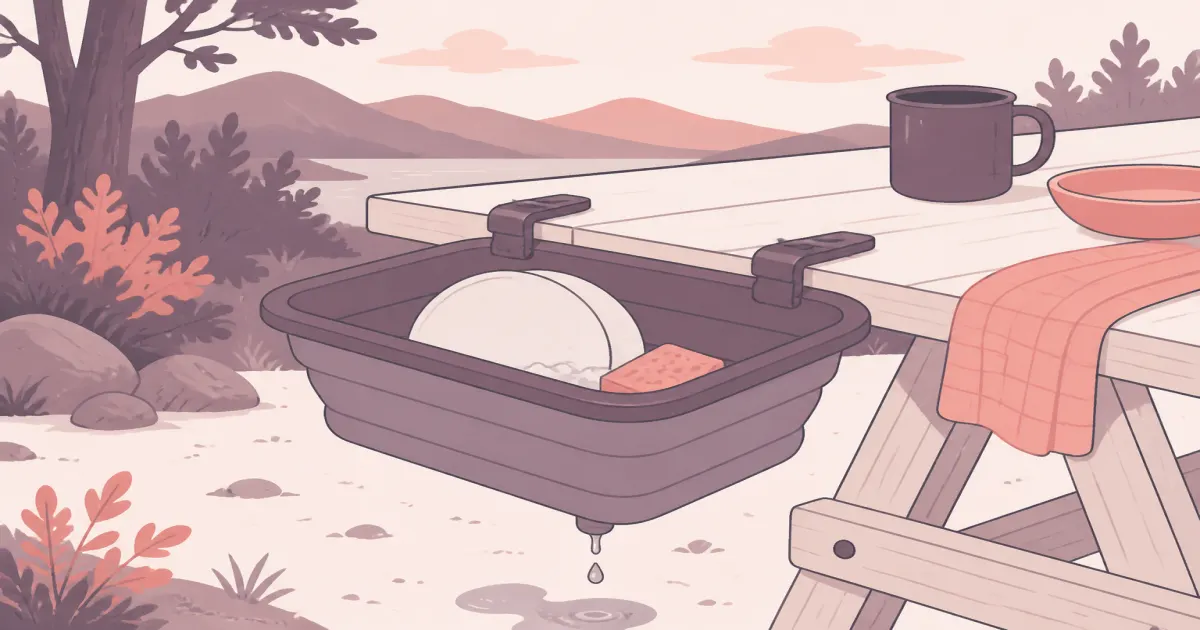
Table height saves your back. Clipping a basin to the picnic table keeps dirty water off the cook zone and off the dirt. Soft walls collapse for the ride home so the sink does not steal half the tote.
A rigid tub still works. Choose collapsible when trunk space is tight and you already carry a camp kitchen box full of pots. Skip fancy sinks if you only camp with a hotel kitchenette and never wash outside.
Solo backpackers rarely need one. A mug and a wipe often cover trail cleanup. This tool is for car camp and basecamp weekends where real plates and pans show up.
Wash and rinse layout
Set the collapsible camping sink on the wash end of the table, away from the cutting board. Food safety likes distance. Keep soap, sponge, scraper, and trash bags in the same zone so nobody hunts mid-scrub.
Two basins beat one. Basin one: hot water plus a few drops of biodegradable camp soap. Basin two: clear rinse. Wash, then dunk. Change rinse water when it clouds. That workflow is the core of how to wash dishes camping. For which bottle to pack, see best camping dish soap.
Boil wash water in a pot or camping kettle. Soft sinks are not cookware. Pour carefully so you do not melt thin plastic rims. Warm water cuts grease. Ice-cold creek water just moves fat around.
Scrape plates into the trash before they hit the sink. Food scraps turn gray water into a clog and attract animals. A silicone scraper earns its clip space here.
Features that matter
Look for a stable rim. Wire stays or firm collars stop the walls from folding when you load a cast iron lid. Weak rims collapse and spill soapy water onto shoes.
Drain plugs help when you can empty into a utility sink. On dry camps, a plug still lets you carry the basin to the dump point without tipping mid-walk. Strain solids with a mesh bag or small colander before you dump.
Clips and hooks are useful on picnic tables with thick edges. Test the clip at home on a similar lip. Some clips only like thin tabletops. A freestanding base helps when you cook on a folding table with skinny rails. See folding camp table if your table is the weak link.
Capacity should dunk your largest plate. Oversized sinks tempt people to fill gallons of water they will not heat. Match size to the group, not to a hardware-store flex.
Gray water and site rules
Campground sinks and utility drains are the easy path when they exist. Use them. Do not invent a better plan that dumps grease behind the tent.
On dispersed sites, strain food bits into the trash, then scatter gray water widely away from water sources and sleeping areas if local rules allow that. Pack out food solids. Grease belongs in a sealed trash bag, not in a creek.
Never wash pots in the lake. Soap and food film do not belong in swimming water. Bring the collapsible camping sink so the lake stays for swimming, not for cleanup theater.
Keep the wash station downwind of the sitting area when you can. Soap smell and splash are minor, but flies follow wet food film. A tidy camp kitchen organization layout keeps wash on its own end.
Packing and care
Collapse the sink only when it is dry. Trapped moisture smells after a week in a closed tote. Wipe the interior, air it for a few minutes, then fold.
Store soap upright in a leakproof bottle. A soapy surprise in the utensil pouch ruins the next trip. Pack the sponge in a mesh bag so it can dry.
If the sink uses metal stays, check for rust and sharp edges before the season. Soft fabric walls puncture on knife tips. Keep knives in a sheath and prep on a board, not in the basin.
Replace a sink that will not lock open. A half-collapsed wall mid-wash is how you rewash everything on the ground.
Wash kit: sink plus clean water
The working pair is the Sea to Summit Collapsible Camp Kitchen Sink 10L and the Reliance Products Jumbo-Tainer 2.0, 7 Gallon. One holds wash water. One holds clean rinse or drinking water with a spigot.
Wash away from natural water sources per local guidance, strain scraps, and pack trash out. A sink does not make grey water disappear.
Common mistakes
Washing greasy pans in the prep zone puts dirty water next to the cutting board. Separate zones. That is basic campsite kitchen setup.
Skipping the scrape step turns the sink into a compost bin. Scrape first every time.
Filling a giant basin with cold water “to save fuel” wastes water and fails on bacon pans. Heat a smaller volume. You will use less in the end.
Dumping gray water at the tent peg line invites animals overnight. Walk it to the allowed spot.
When to skip a collapsible camping sink
Skip it for ultralight trips, hotel-based road trips, and one-night car camps where you will wash everything at home. Skip third basins and dish-drying towers until two basins already feel easy.
If your real gap is soap and a scraper, buy those first. Add the collapsible camping sink once dishes are a nightly habit and back pain from ground buckets is the complaint.
Bottom line
A collapsible camping sink is a small, pack-flat wash station for car-camp dishes. Use two basins when you can, scrape before you soap, heat water in a kettle, and follow the site’s gray water rules. Cleanup gets faster when the sink has a clear job and a clear place on the table.
Frequently Asked Questions
Do I need a collapsible camping sink or will a bucket work?
A bucket works. A collapsible sink is nicer because it sits at table height, often clips to the edge, and packs flat. Buckets are cheaper and fine for short trips.
How many sinks should I bring?
Two is the sweet spot: wash and rinse. One basin forces dirty rinse water back onto clean dishes. Solo cooks can get away with one if they scrape well and change water often.
Where do I dump gray water?
Follow site rules. Many campgrounds want dish water in a utility sink. Dispersed sites often want strained water scattered away from lakes and tents. Never dump greasy water into a creek.
Can I heat water in a collapsible camping sink?
Most fabric or soft plastic sinks are not for stove heat. Boil water in a pot or kettle, then pour it into the basin. Check the temperature rating on yours.
What size collapsible camping sink is best?
Enough to dunk a dinner plate and a pot lid. Giant sinks waste water and pack bulk. Measure your largest plate before you buy.
How do I stop the sink from collapsing mid-wash?
Fully expand the walls, lock any rim stays, and do not overload with a huge stack. Clip or set it on a stable table edge so kids cannot yank it down.