Camping Utensils: Spatula, Tongs, and Eating Gear That Earn the Tote
Cookware
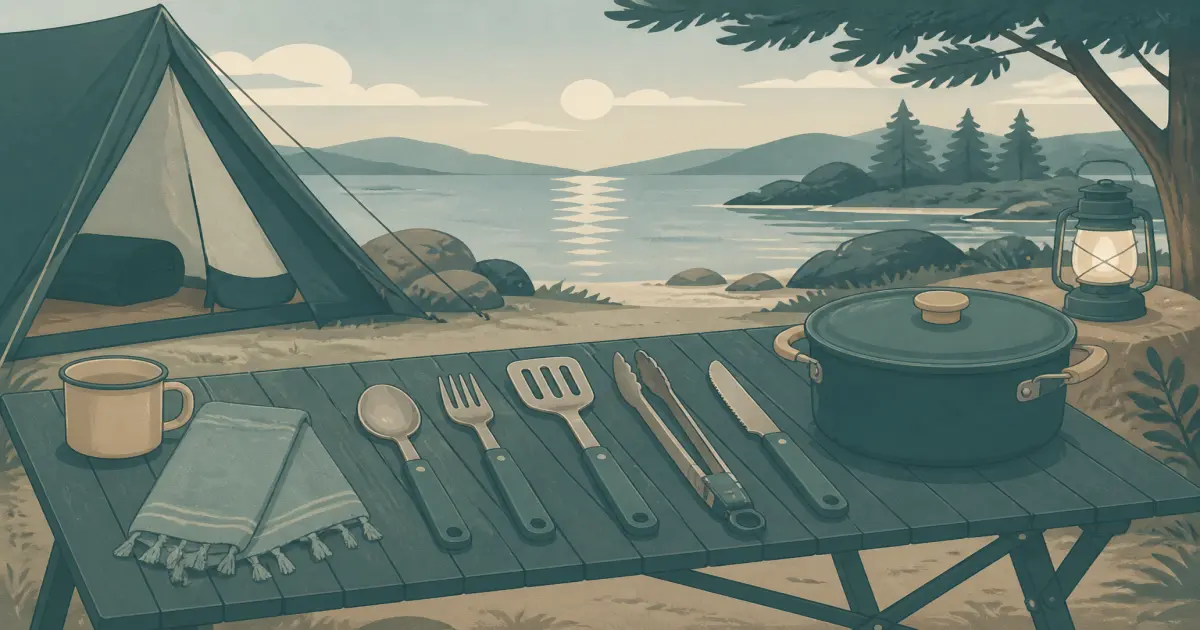
Camping utensils are the small tools that make meals work: spatula, tongs, spoon, and a knife you trust. Pack heat-safe pieces, then keep them clean and dry.
Our picks
Pots heat food. Utensils move it. Weekend trips fall apart when you can boil pasta but cannot drain, flip, or serve it. Pack a spatula, a long spoon, and tongs you can actually grip with gloves. A flimsy spork is how pasta ends up in the dirt. The camp cookware category covers the pots and kits these tools serve, and the best camping cookware guide frames the set.
Pair with camping kitchen checklist, camp kitchen organization, and how to wash dishes camping. Canned dinners also need a camping can opener in the same pouch.
Cooking utensils vs eating utensils
Plates matter as much as spatulas. When the tote needs dishes, not another spoon, see camping plates.
Split the kit in your head. Cooking utensils touch the pan: spatula, tongs, ladle, stirring spoon, tongs for coals if you use cast iron. Eating utensils touch mouths: forks, spoons, knives for the table.
Keep them in one pouch if you want, but wash logic differs. Eating gear needs soap attention. A soot-stained fire poker should never share a mug.
Car camp totes can hold both categories easily. Backpacking kits collapse toward one spoon and maybe a long-handle spork that reaches the bottom of a tall pot.
The short list that earns space
Spatula. Eggs, burgers, grilled cheese, and anything that sticks. Choose a head that fits your pan size. Giant diner spatulas fight small camping skillets.
Tongs. Move foil packets, flip sausages, grab hot toast from a grate. Locking tongs pack flatter and stay closed in the tote.
Stirring spoon or ladle. Chili, oatmeal, and sauce need a spoon that reaches. A ladle helps with serving into bowls from a deep pot.
Knife plus sheath. One sharp knife beats three dull ones. Protect the blade and protect hands. Add a small camping cutting board from your cookware kit.
Eating set. Fork and spoon per person. Table knives optional if the cook knife already plates food.
Can opener and bottle opener. Only if menus or drinks need them. Do not assume every multi-tool on a keychain works well on stubborn cans.
Heat, coatings, and melted handles
Nonstick camping pans want silicone or wood-ish heads, not sharp steel scraping. Bare stainless and cast iron tolerate metal tools if you accept light surface marks.
Watch cheap plastic handles near a roaring dual-burner. Handles melt when left resting on a hot grate. Park tools on a clean plate or utensil rest, not across the burner.
Long handles help on deep pots and keep knuckles away from steam. Ultra-short minis look cute and burn fingers.
If you cook on cast iron, pack a scraper or chainmail for cleanup and still bring a silicone spatula for eggs. See cast iron camping cookware for pan care.
Packing and organization
Store camping utensils upright in a bin cup or flat in a labeled pouch. Sharp points face the same way. Sheath the knife every time, even for a short drive between sites.
Keep a microfiber cloth in the pouch for quick wipes between courses so sauce does not dry on the spatula. Full wash still happens after the meal.
Do not mix the lighter and the spoon in a greasy bag. Fuel and food tools should not share residue. Same rule as keeping soap away from the cutting board in camp kitchen organization.
On group trips, color-tape personal forks. Shared cooking tools can live in the cook bin. Personal eating tools live with the mess kit.
Backpacking vs car camping
Backpacking favors one long-handle spoon, maybe a tiny spatula disk, and a folding knife you already carry. Every extra tool is weighed.
Car camping favors real tongs and a spatula because menus get wider. The weight cost is nothing next to the cooler. Pack the tools you reach for at home when you cook similar meals.
If you swing between both styles, keep a tiny backpacking spoon in the lid of the cook pot and a fuller utensil pouch in the car-camp tote. Do not force one kit to do both poorly.
Utensil kits that stop the junk drawer
The GSI Outdoors Destination Kitchen Set 24 packs cutlery, spatula, cutting board, spices, and a scrubber in one case. That is the car-camp answer when you are tired of fishing for tongs in a grocery bag.
If you mainly need a board and a pot, the Stanley Wildfare Core 26-Piece Complete Camp Kitchen Cook Set keeps prep and cooking together without 24 pieces.
For pure eat-and-go, the Goetland 304 Stainless Steel US Military Mess Kit covers the plate and cookware side so utensils stay fewer.
Common mistakes
Buying a 20-piece gadget roll with corn holders and citrus zesters is a classic miss. You will not zest limes on a rainy Tuesday. Buy the five tools you use.
Using the only knife as a pry bar for coolers ruins the edge. Bring a dedicated pry tool or open the cooler like a normal person.
Sealing wet utensils in a zip bag creates the sponge smell that ruins the next trip. Air-dry first. Wash at home if camp washing was rushed, then dry again before storage.
When to upgrade vs when to stop
Upgrade when stuck food and burned fingers are regular. A better spatula is cheaper than ruined pans. Stop buying when the pouch already covers your real menus.
If plates and bowls are the chaos point, fix the camping mess kit next. Utensils cannot fix missing bowls.
A simple pouch layout that works
Put the knife in its sheath along one edge. Stack the spatula and tongs next. Drop eating forks and spoons in a smaller inner pocket so dirty cooking tools do not coat clean mouths gear after a rushed wipe. Keep the can opener in the same pouch every trip so it stops living in random glove boxes.
At pack-out, shake crumbs out of the pouch before it goes in the tote. Grease crumbs attract ants in warm weather and smell by the next Friday load-out. The same tidy habit that keeps folding camp table surfaces usable keeps utensil pouches from becoming trash pockets.
Bottom line
Camping utensils are a short, honest tool list: flip, grab, stir, cut, and eat. Choose heat-safe heads for your pans, sheath the knife, and dry before you pack. Small tools, fewer dinner problems.
Frequently Asked Questions
What camping utensils do I actually need?
For most weekend kitchens: a spatula, tongs or a long spoon, a sharp knife with a sheath, eating forks and spoons, and a can opener if menus need it.
Plastic or metal utensils for camping?
Plastic and silicone are kinder to nonstick pans. Metal handles last and can get hot. Many kits mix a silicone head with a sturdy handle.
Are sporks enough?
Sporks work for backpacking and simple meals. Car camping with steaks, salads, or kids usually feels better with real forks and spoons.
How do I store camping utensils?
Use a breathable pouch or a dedicated bin cup. Do not seal soaking-wet tools in a zip bag for days.
Can I bring kitchen utensils from home?
Yes if you accept scratches and camp soot. Dedicated camp tools keep home drawers cleaner and pack as a known set.
What utensil do people forget most?
Tongs or a spatula. Stirring spoons are memorable. Flipping burgers without a spatula is how dinner becomes a science project.