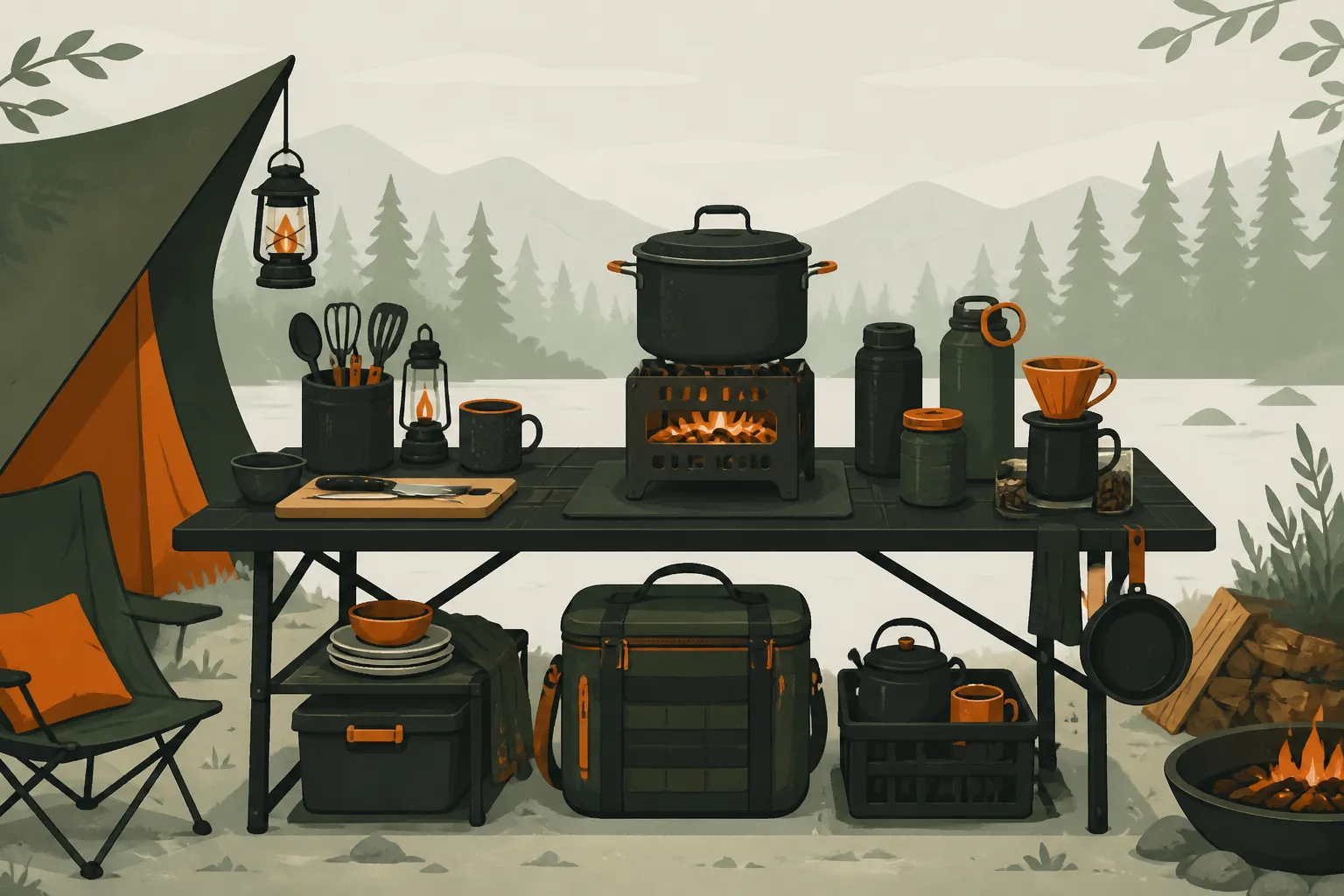
Campsite Kitchen Setup: Table, Stove, and Wash Station
Cookware
A good campsite kitchen setup is three zones: prep table, stove platform, and wash station. Here is how to lay them out without overbuying.
Our picks
Most camp meals fail before the food hits the pan. The stove tips. The cutting board slides. Dirty dishes pile up because nobody planned where rinse water goes. A deliberate campsite kitchen setup fixes that without turning dinner into a project. The camp cookware category collects the tables, sinks, and sets that build this kitchen, with the best camping cookware guide as the core.
Start with heat and pots. Our best camping stove guide covers burners. Our best camping pot set guide covers nesting cookware. For bin systems and packing flow, see camp kitchen organization. For a gear list, use the camping kitchen checklist. This page is the layout between those purchases and the first real meal.
For the cook-focused buy page, see best camping cook table.
The three zones every setup needs
Think in zones, not gear lists. Zone one is prep: cutting board, knife, oil, spices, and a dry towel. Zone two is heat: stove, fuel, lighter backup, and a wind break if the site is exposed. Zone three is wash: bins or collapsible sinks, biodegradable soap, sponge, and trash bags.
Each zone should have a home before you light the stove. Moving hot pots across a cluttered table is how burns happen. Label bins at home so setup becomes muscle memory by trip three.
Table and surface choices
A folding camp table is the backbone of most car-camp kitchens. Look for stable legs, a wipeable top, and enough width that a dual-burner stove sits without overhang. If you use a picnic table at the site, treat half of it as kitchen-only and keep personal gear on the other half.
Height matters for comfort. Too low and your back complains. Too high and small stoves feel tippy. Many campers use a low table for the stove and the picnic bench for prep. Test your combo in the driveway once.
Stove placement and safety
Place the stove where wind hits it least, or add a screen that does not trap heat against a canister. Keep fuel upright and away from the flame. Leave a clear foot of space on each side so a pot handle does not hang over the table edge.
Teach everyone at the site that the stove zone is hands-off when burners are on. Kids, dogs, and loose jacket sleeves do not mix with open flame. A small fire extinguisher or bucket of water nearby is cheap insurance at group sites.
Wash station that actually gets used
Campers skip washing when the plan is vague. Use two bins: one with hot water and a few drops of camp soap, one with rinse water. Scrape plates first into a trash bag, not the ground. Change rinse water when it turns cloudy. For leave-no-trace detail, read how to wash dishes camping.
If water is scarce, still scrape and wipe. Finish a deeper clean at home for greasy pans. A collapsible sink clips to the table edge and saves bending. Dry dishes on a rack or towel before packing so your bin does not turn into a swamp.
Solo vs couple layouts
Solo campers can run a tight setup: one burner, one pot, coffee gear nested inside, and a single wash bin. The whole kitchen fits in one bin and deploys in five minutes. That is enough for boil-and-rehydrate menus and simple one-pot dinners.
Couples and small groups need more horizontal space. Two burners let pasta boil while sauce simmers, or coffee water heat while eggs cook. Split prep and wash across two people. Assign one person to dishes before dinner so the post-meal pile does not grow.
Packing and deployment order
Pack heavy items low in the bin: stove, fuel, pots. Soft items on top: towels, sponge, cutting board. At the site, deploy in order: table, stove, wash bins, then cookware. Light the stove last.
Repack wet gear in a separate bag or dry it first. A damp sponge sealed in a closed bin smells bad by Saturday night. Shake out crumbs before you drive home so the next trip starts clean.
Common layout mistakes
Using the whole table as storage. Groceries, headlamps, and rain jackets crowd the stove. Clear a dedicated kitchen half.
No backup ignition. Piezo igniters fail. Matches or a lighter live in the kitchen bin, not the glove box you forgot to open.
Washing near the tent. Spills and smells drift. Keep wash water downwind and away from sleeping areas.
Buying car-camp gear for walk-in sites. A huge dual-burner on a mile hike is misery. Match the setup to how far you carry gear.
Skipping a trash plan. Every meal generates wrappers and grounds. Tie a bag to the table leg before you cook.
Setup kit for a stable kitchen zone
Start with the Coleman Triton 2-Burner Propane Stove and the ALPS Mountaineering Dining Table. Level ground, stove centered, fuel seated, walkway clear of tent guy lines.
Add wash and trash downhill or downwind from cooking when the site allows. A pretty layout that blocks the fire ring path is a bad layout.
Cold storage belongs next to the cook line. See the best camping cooler picks when ice days matter more than another tote.
Bottom line
The best campsite kitchen setup is boring on purpose: stable table, safe stove zone, working wash station, and gear that nests in one bin. Solo trips stay compact. Couple trips earn the second burner and extra prep space. Lock your stove and pot set first, then spend one driveway practice run on layout before the campground rush hits.
Frequently Asked Questions
How big should a camp kitchen table be?
A 24 to 48 inch folding table covers most couple and family setups. You need room for a stove, a cutting board, and a coffee station without stacking hot gear on top of each other.
Where should the stove go?
Downwind from tents and dry brush, on a flat surface, with a clear zone around the flame. Never run a stove inside a closed tent or vehicle.
Do I need a dedicated wash station?
Yes, even a simple two-bin system beats washing in a random puddle. One bin for hot soapy water, one for rinse, keeps food safe and speeds cleanup.
What goes in a camp kitchen bin?
Pots, stove fuel, utensils, soap, sponge, trash bags, and a small cutting board. Keep coffee gear in the same bin or a labeled side pouch so mornings stay fast.
Solo vs couple setup differences?
Solo campers can use one burner and a smaller table. Couples benefit from dual burners and a wider prep zone so coffee and breakfast do not compete for the same square foot.
Should cookware nest inside the kitchen bin?
Yes. Nesting sets like those in our pot set guide save space and keep lids from wandering. Test the packed layout at home before the first trip.