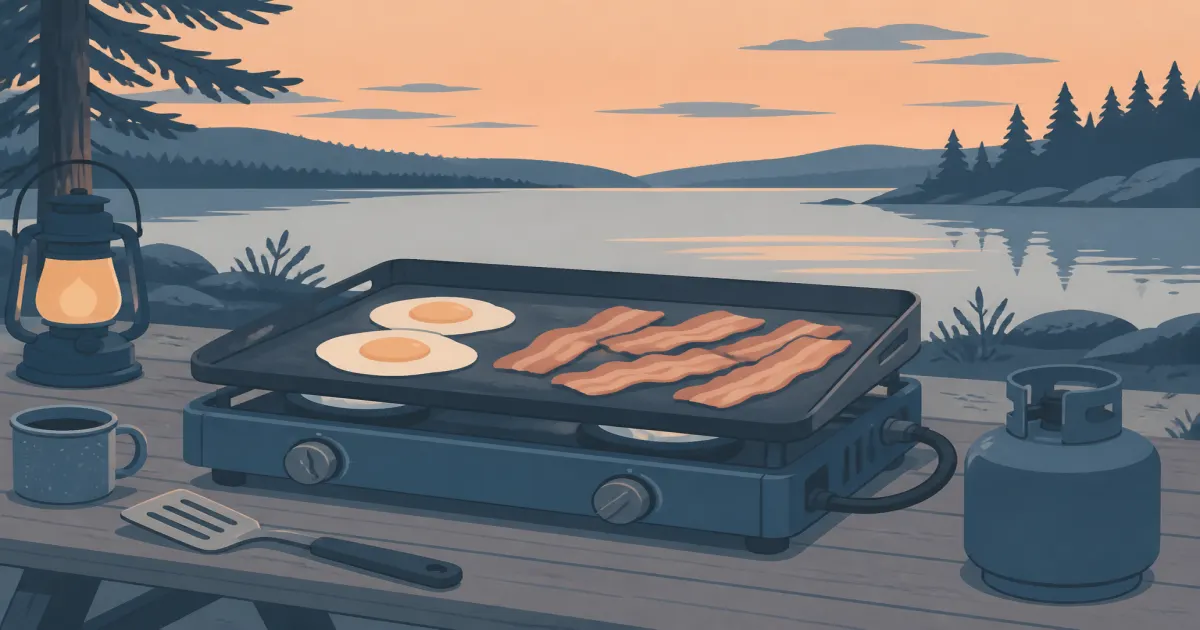
Camping Griddle: Flat-Top Eggs, Bacon, and Crowd Breakfasts
Cookware
A camping griddle turns one burner into a flat breakfast station. Match the size to your stove, keep the surface oiled, and scrape while the plate is still warm.
Our picks
A skillet browns one batch at a time. A griddle spreads heat across a wide plate so eggs, bacon, and pancakes share the same surface. That is a car-camp tool. Tiny backpacking burners cannot heat a wide plate evenly. Wind hits a flat top harder than a deep pot, so park the cook station out of the gust line.
Browse more cookware picks in the camp kitchen collection and the best camping cookware pillar. Match the plate to the stove. A Blackstone is its own propane station, with grease channels and (on the 22-inch) two heat zones. A Lodge plate rides on the dual-burner you already pack, and it weighs about nine pounds of iron you must dry. Pair with camping skillet, two burner camping stove, and cast iron camping cookware. For named buying shortlists, see best camping griddle.
When a camping griddle beats a pan
Choose a camping griddle when breakfast is a group event, not a single omelet. You get more surface, easier flipping room, and fewer “waiting for the next batch” delays. Taco nights and smash-burger camps also love a flat top.
Skip it if you mostly simmer stews, boil pasta, or cook for one. A camping skillet plus a pot covers those menus with less bulk. Skip novelty electric griddles that need campground outlets you may not have.
If your stove is a single tiny canister burner, a wide plate will stay cold at the edges. Fix the heat source first with a two burner camping stove before you add a large griddle.
Size and stove match
Measure the grate. The camping griddle should sit mostly over the burners, not cantilever off the ends. Overhang cools unevenly and can tip if someone leans on the handle.
For couples, a compact rectangular plate that fits both burners of a common propane range is enough. Families often want a longer plate or a full-width cover that still leaves space for a kettle on the side table.
Handles matter. Removable or folding handles pack better in a camp kitchen box. Fixed handles feel secure when you move a hot plate, but they eat tote length. Either works if you have gloves and a stable landing pad.
Grease channels help on bacon-heavy mornings. Smooth plates are easier to wipe. Pick based on how often you cook fatty foods versus dry toast and eggs.
Cast iron, steel, and coatings
Cast iron camping griddles hold heat and build a seasoning layer that likes oil and patience. They are heavy. That is fine in a trunk and rough on a backpack. See cast iron camping cookware for care habits that also apply here.
Carbon steel heats quicker and often weighs less for the same footprint. It still needs oil after washing. Thin stamped steel warps if you blast one burner under a cold plate. Preheat gently.
Nonstick coatings sound easy until you scrape with a metal spatula or stack pots on the surface in the tote. If you choose coated, pack soft tools only and store the plate so nothing digs into the finish.
Never assume an open-fire rating. Many “camp” plates are stove-only. Fire grates and direct coals punish thin metal and ruin coatings. Check the maker notes before you plan a fire-only cook.
Heat control and cooking flow
Preheat the camping griddle on medium. Spots under each burner heat first. Give the plate time so the middle catches up, or you will scramble eggs on hot rings and pale zones.
Oil lightly. Too much oil pools and smokes. Too little sticks. A thin film and a wipe with a towel is enough for eggs. Bacon can start with almost no oil once the plate is seasoned.
Cook in zones. Keep bacon on one end and eggs on the other so grease does not flood the soft food. On a two-burner setup, you can run one burner hotter for searing and one cooler for holding.
Keep a spatula and a scraper in reach. Flipping room is the whole point of a griddle. Crowding the plate back into “skillet mode” defeats the purchase. For utensil picks, see camping utensils.
Cleanup at camp
Scrape while the camping griddle is warm, not blazing. Warm residue lifts. Cold grease fights you. Wipe with a paper towel and a drop of oil for most nights.
Use biodegradable camp soap only when food films stay sticky, then rinse and dry fully. Re-oil cast iron and steel before packing. Moisture in a closed tote is how rust starts. Wash station layout lives in how to wash dishes camping.
Do not cool a screaming-hot plate in a cold stream. Thermal shock and leave-no-trace rules both say no. Let it cool on a heat-safe pad, then wipe.
Pack the griddle in a sleeve or between towels so the cooking face does not chew soft lids in the kitchen box. Cast iron can ride low in the tote with the stove.
Griddle picks that match real campsites
The Blackstone 1666 22" Tabletop Griddle is the easy car-camp answer for big breakfast crews. Two heat zones on one plate mean bacon can render while eggs wait. Dedicated propane means you do not fight skillet overcrowding. It is bulky. Season it, scrape it warm, oil it, and dry it before the cover goes on.
If you already run a two-burner stove and hate packing another fuel system, the Lodge Double Play Reversible Grill/Griddle sits across both burners. One side is flat. Flip it for a ribbed grill face. It is heavy, needs dry storage, and wants a grate wide enough that the plate does not overhang wildly.
When 22 inches feels like overkill, the Blackstone 1971 Original 17" Omnivore Tabletop Griddle still fries eggs and hash with less table footprint. One heat zone instead of two. Couples and short weekends are the sweet spot. Group pancakes push you back to the 22-inch.
Common mistakes
Buying a huge flat top for a solo canister stove is the classic miss. The plate never heats. The fuel can dies. Measure stove and plate together.
Treating the griddle like a cutting board dulls knives and scars the surface. Bring a camping cutting board for prep.
Storing a damp cast iron plate overnight is how orange spots appear by Sunday. Dry and oil before the lid closes.
Leaving grease to harden overnight turns Monday cleanup into a project. A two-minute scrape after dinner beats a twenty-minute scrub in the morning.
When to skip a camping griddle
Skip it on backpacking trips, tight trunk puzzles, and menus that are all one-pot pasta. Skip electric models unless you know the site has power and you accept cord management.
If your real gap is a better pan for sautéing, buy the skillet. If your gap is group breakfast speed on a propane range, the camping griddle is the right tool.
Bottom line
A camping griddle is a car-camp surface for flat food and group batches. Match it to a real two-burner stove, oil and scrape like cast iron care, and keep prep on a board so the plate stays a cook surface. That is how breakfasts stay fast without a sink full of pans.
Frequently Asked Questions
Do I need a camping griddle if I already have a skillet?
Not for solo eggs. A griddle shines when you cook for a group, want bacon and pancakes at once, or want a wide even surface a round pan cannot match.
Cast iron or steel camping griddle?
Cast iron holds heat and browns well. Steel heats faster and often packs thinner. Both need oil and dry storage. Skip coated plates that cannot take scrape tools.
Can I use a camping griddle on a backpacking stove?
Usually no. Tiny canister burners do not heat a wide plate evenly. Pair griddles with two-burner propane ranges or solid fire supports rated for the cookware.
How do I clean a camping griddle at the site?
Scrape food while warm, wipe with a little oil and a paper towel, then dry. Deep scrub with soap only when needed, then re-oil. See dish wash tips in how to wash dishes camping.
Is a camping griddle worth the weight?
For car camp breakfasts and taco nights, yes. For backpacking, almost never. Keep grams for the trail and save the plate for trunk trips.
What size camping griddle should I buy?
Match the stove grate footprint. A plate that hangs far past the burners warps heat and wastes fuel. Measure before you buy.