Best Backpacking Cookware (2026): Light Kits for Trail Meals
Cookware
Backpacking cookware is about ounces, nesting, and one-pot meals. Do not buy a car-camp bundle for a trail pack.
Our picks
Car-camp pots and backpacking cookware share a grocery aisle online. They are not the same purchase. Trail kits win on ounces, packed diameter, and a lid that nests with the stove. A 10-piece nonstick set will punish you on a 12-mile day. A 750 ml titanium cup will not fry bacon for four at a campground. When you want the wider lineup, the camp cookware category gathers every pot, pan, and kit, and the best camping cookware guide covers the car-camp default.
If you mostly drive to the site, use best camping pot set. Match flame size to pot diameter with best camping stove. Write your three most common trail dinners before you shop. If all three are boil water and add a pouch, buy small. If you cook rice sides, you need the 1100 ml class.
How backpacking cookware differs from car-camp kits
Buying the wrong lane is the most expensive mistake in this category. A 10-piece nonstick car set will not make you happier on a 12-mile day. A 750 ml titanium cup will not fry bacon for four at a campground.
Comparison table
Top pick: TOAKS Titanium 1100ml with Pan
The TOAKS Titanium 1100ml with Pan is the best backpacking cookware for most weekend hikers who want one pot that can still fry a quesadilla. Around 1100 ml covers rehydrated meals and simple pasta for two. The pan lid adds a little fry surface without a full skillet. Titanium stays light and shrugs off dents better than thin aluminum.
Handles run hot. Use a cloth. Food sticks if you crank an empty pot. A lid is not optional for efficient boils. Measure your stove diameter against the pot base. A tiny burner under a wide pot wastes fuel and feels tippy on uneven ground.
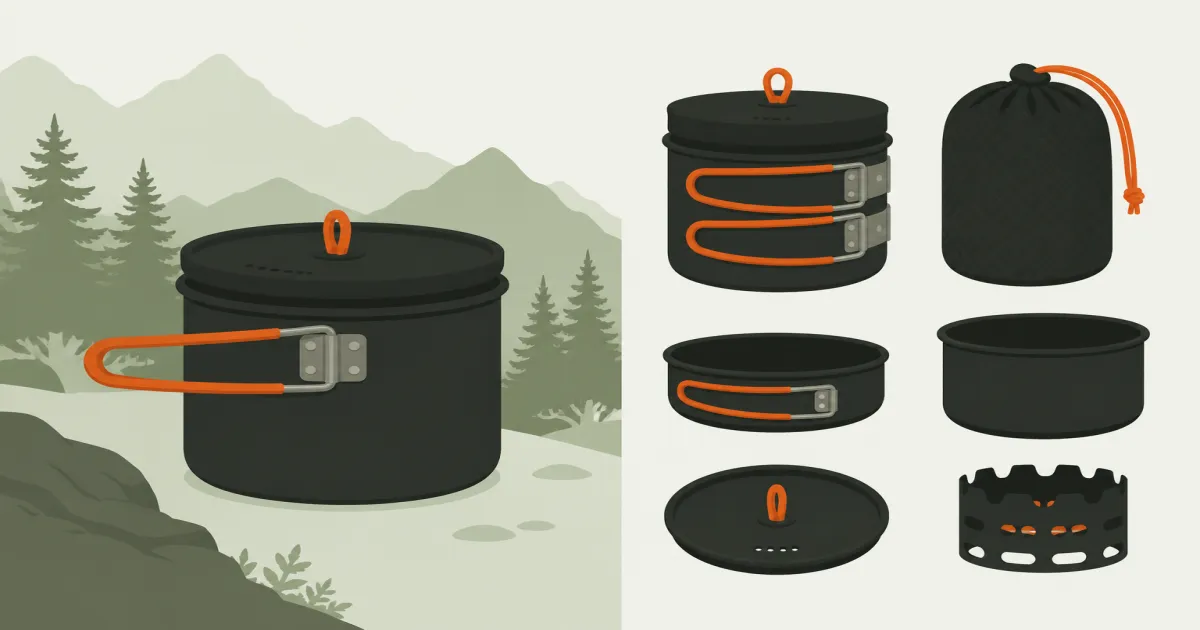
Packed, the pot, lid, and often the stove nest as one unit. Test that fit at home. This is the default trail kit. Skip it if you only ever boil water for a pouch. The 750 ml is lighter for that menu.
Who it is for: Weekend backpackers, experienced hikers cutting weight, and duos sharing one cook system.
Pros
- Pan lid adds frying flexibility
- Enough volume for real trail dinners
- Packs tight with the right lid
- Strong value versus premium branded sets
Cons
- Costs more than aluminum
- Handles can feel hotter
- Food can stick without technique
Shop: TOAKS 1100ml with Pan on Amazon
Best budget: TOAKS Titanium 750ml Pot
Sometimes the best backpacking cookware is barely cookware: a mug-sized pot and a lid. The TOAKS 750ml accepts menu limits and gains space for a warmer sleep system or more water. Fast boils, simple cleaning, tiny packed size.
You will not fry. You will not cook for two ambitious eaters from one pot. Accessories erase the weight savings if you start bolting on extra cups. Buy it for freezer-bag meals and snow melts. Pair it with a long-handle spoon that reaches the bottom without dunking your knuckles.
Who it is for: Short trips, shoulder-season overnights, and hikers who mostly boil water.
Pros
- Minimal weight and bulk
- Fast boils
- Simple cleaning
- Low cost vs larger titanium sets
Cons
- Tiny capacity
- Poor frying options
- Easy to overbuy accessories that erase weight savings
Shop: TOAKS 750ml on Amazon
Best integrated boil: Jetboil Flash Camping Stove
The Jetboil Flash is cookware and stove in one nest when the menu is hot water. Fast boils, a protected burner, piezo ignition, packed as one unit. It is the wrong tool for a wide skillet and a real sauté. Carry a lighter anyway. Piezo fails.
If you already own a good pot, the PocketRocket-style burner in best camping stove is more flexible. If you hate assembling a stove every night, Flash is the simpler trail boil.
Who it is for: Solo weekend trips and freeze-dried menus.
Pros
- Fast boils with a protected burner
- Pot and stove nest as one unit
- Simple for solo weekend trips
Cons
- Less flexible than an open pot set for real cooking
- Wide skillets feel tippy
- Can struggle in deep cold
Shop: Jetboil Flash on Amazon
Menu design drives the kit
Write your three most common trail dinners before you shop. If all three are boil water, add pouch, buy the TOAKS 750ml. If you cook rice sides and sauté, you need more capacity and the TOAKS 1100ml with pan. Honest menus prevent gear that looks capable online and sits unused in the stuff sack.
Spoons beat sporks for some pot shapes. Long-handle spoons keep hands out of deep pots. Pack one utensil that matches your pot depth.
Cozies, lids, and fuel economy
A lid is not optional for efficient boils. A cozy helps for freezer-bag style meals and keeps food warm while you set up shelter. Neither needs to be fancy. Both save fuel, which saves canister weight over a long trip.
Windscreens compatible with your stove design matter as much as pot material. A light pot in open wind still performs poorly. Site selection and stove choice remain part of the cook system.
Mistakes backpackers make
Buying car-camp sets just in case. The extra pieces cost weight every mile.
Matching capacity to home habits. Trail appetite plus dehydrated food rarely needs a stockpot.
Ignoring packed shape. A light pot that does not nest with the stove wastes backpack volume.
Overheating nonstick. Empty preheats and metal scrapers ruin coatings fast.
Forgetting cleanup reality. If you cannot wash with much water, prefer simpler interiors and menus that leave less grease.
Where this sits vs the cookware pillar
The main camping cookware guide covers weekend car kits, larger nesting sets, and frying-forward setups. This page stays on trail constraints. Many people own one system for each lane. That is rational, not redundant.
If you only buy one kit and your trips are mostly trail overnight, start here. If your calendar is mostly campground weekends with occasional short hikes from the car, start with the pot set guide and borrow a mug-pot for rare backpack nights.
Quick pack check before you leave
Nest the pot, lid, and stove together at home once. Note whether a canister fits inside the pot or rides beside it. Pack a long-handle spoon that reaches the bottom without dunking your knuckles. Add a small scraper if your menu includes cheesy or oily meals. Those three checks prevent most trail-kitchen surprises before mile one.
Bottom line
Choose the best backpacking cookware by matching ounces to the meals you will actually cook. Buy the TOAKS 1100ml with pan for the default trail kit, the TOAKS 750ml for fast-and-light boil-only trips, or the Jetboil Flash when hot water is the whole menu. Everything else is extra weight.
Frequently Asked Questions
Titanium or aluminum for beginners?
Aluminum usually costs less and heats quickly. Titanium like TOAKS saves weight and handles abuse well, but can run hotter at the handle and costs more. Either works if the size matches your meals.
Do I need a fry pan on trail?
Rarely. Most backpacking menus are boil-and-rehydrate or one-pot. The TOAKS 1100ml pan lid covers the odd quesadilla without a full skillet.
How many pieces for two people?
Often one 1.1 L pot plus two mugs or insulated cups. The TOAKS 1100ml with pan covers that lane. A second pot helps only if you cook sides every night.
Are nonstick coatings worth it?
Nice for eggs and cleanup with little water. They need softer utensils and careful packing so the coating does not get gouged by stove parts.
Can I use backpacking cookware on a dual-burner car stove?
Yes for boiling, but small trail pots look silly on a big grate and tip more easily. Keep car-camp cookware for car-camp heat.
What about nesting with my stove?
Ideal. Many canister stoves nest inside the pot with a cozy. Test the fit at home with the canister removed or installed per the maker's packing advice.