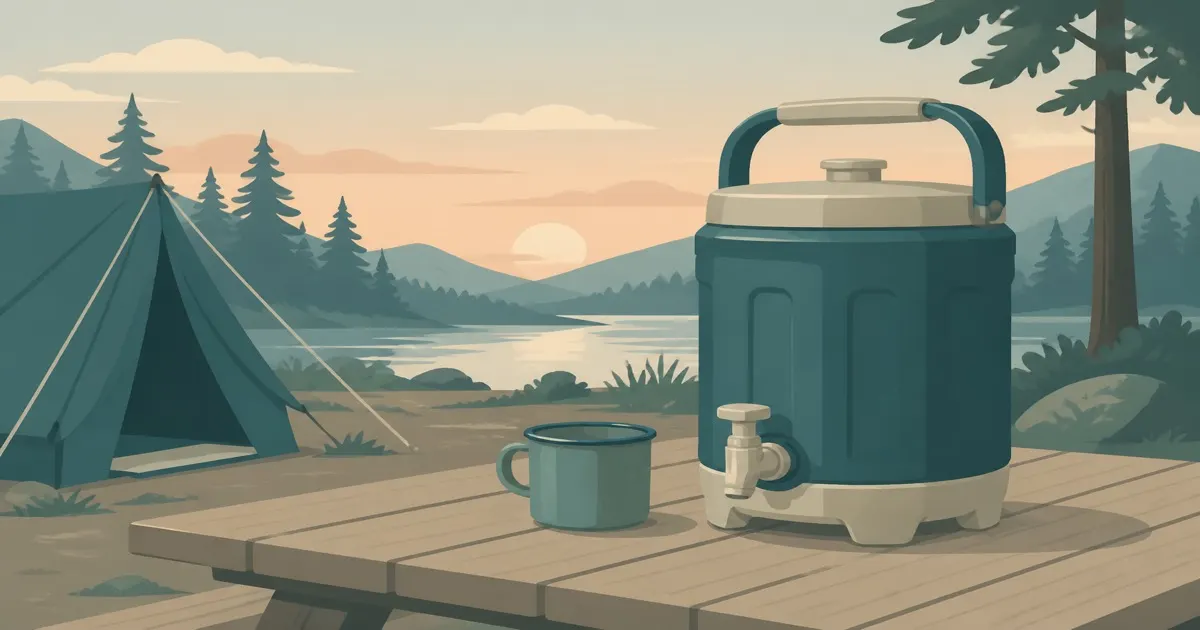
Camping Water Jug: Spigot Water Without Trips to the Tap
Cookware
A camping water jug keeps rinse water and drinking water at the picnic table so you are not walking to the spigot every five minutes. Pick a size you can lift full, and clean it like food gear.
Our picks
Hauling a bottle from the faucet every time you rinse a spoon gets old fast. A camping water jug turns the table into a small kitchen. Look for a spigot that shuts off cleanly, a jug you can lift when full, and a lid that keeps debris out. A slow drip on the table is how the cook zone gets sticky. Water storage sits with the kitchen gear in the camp cookware category, and the best camping cookware guide covers the rest.
Pair with how to wash dishes camping, collapsible camping sink, and how to boil water while camping.
For filter and purifier picks, see best camping water filter.
What a camping water jug is for
Want faucet-style flow from the jug without tipping five gallons? Pair storage with a camping water pump.
Drinking water at the table. Hand rinse before food. Dish rinse after dinner. Coffee and oatmeal water waiting for the kettle. A jug is plumbing you can pack.
It is not a substitute for treating questionable backcountry water unless you add a real treatment step. It is not a fuel can. Label clearly if your group uses more than one similar container.
Car camp and cabin-adjacent sites see the biggest win. Walk-in sites still benefit if the communal spigot is a hike from your picnic table.
Size and weight you can actually move
A full gallon of water weighs about eight pounds. A 5-gallon camping water jug is heavy when full. If you cannot lift it from the car to the table without dragging, you bought a boat anchor.
Two to three gallons often covers a couple for a night of cooking and light washing if you refill once. Larger groups and heavy dish nights want more, or a second jug. Split clean drinking water and wash water when rules or habits call for it.
Measure trunk space. Tall rigid jugs steal cooler real estate. Wide low jugs can be more stable on uneven ground.
Spigots, caps, and leak control
A spigot lets you wash hands without tipping a heavy jug. Look for a spout that opens and closes cleanly and does not weep into the tote. Soft plastic threads can crack if you overtighten.
Pour-only jugs are simpler. They work well for filling a kettle or a camping kettle basin. They are clumsier for a running rinse over a dish tub.
Vent caps matter. Some jugs need a second opening cracked so the spigot flows. Read the design before you fight a dry spout at dinner.
Keep spare O-rings if your model uses them. A dripping jug in a closed trunk is a weekend mood killer.
Hard plastic vs collapsible
Hard camping water jugs take knocks and usually pour more predictably. They do not pack flat. Collapsible jugs and water carriers save space on the way home when empty. They can feel soft when full and may need a stand.
If you already run a camp kitchen box, a hard jug that sits beside it is often easier than a floppy bladder that wants a hook.
Insulated jugs exist for hot or cold drinks. Most camp kitchen water is ambient. Do not assume “thermos” performance from a thin picnic cooler jug.
Fill sources and water roles
Fill from campground taps, known potable hose bibs, or home before you leave. If you are unsure about a source, treat or boil what you will drink. A jug does not purify water by itself.
Separate roles when you can. One camping water jug for drinking and coffee. Another for wash rinse if your group is fussy, or if dish soap rules are strict. See dish habits in how to wash dishes camping.
Never store stove fuel or white gas in a drinking jug, even “temporarily.” Smell transfers. People get sick of guessing which jug is which.
Cleaning and storage
Empty leftovers before the drive home when you can. Rinse with clean water. A jug brush reaches corners better than a hopeful splash. Mild dish soap is fine; rinse thoroughly so soap film does not flavor the next fill.
Air-dry with the cap off. Sealed damp plastic grows that stale smell fast. Store the camping water jug open in a garage corner if trips are weekly.
Sanitize occasionally with a method the maker allows if the jug sat unused for months. Skip bleach guesses that leave residue you can taste. Follow food-container guidance and rinse well.
Water jug pick, plus a wash basin
The Reliance Products Jumbo-Tainer 2.0, 7 Gallon is the standard rigid jug with a hideaway spigot. Fill it before you leave pavement when the campground water is unreliable.
It is not a dish tub. For washing, add the Sea to Summit Collapsible Camp Kitchen Sink 10L so dirty dishes are not perched on the picnic table boards.
Common mistakes
Buying the biggest jug on the shelf. You fill it once, regret the weight, and then underfill forever. Match size to lift strength and group size.
Ignoring a slow drip. A bad spigot soaks cardboard and towels. Fix or replace seals early.
Using the jug as a step stool or table weight. Cracked bases leak. Treat it like cookware, not furniture.
Forgetting shade. Plastic water in full sun gets warm and less pleasant to drink. Move the jug under the table or awning in heat.
How it fits the camp kitchen
A camping water jug plus a basin or collapsible camping sink covers most wash stations. Add a small towel and a trash plan for food scraps. Keep the jug in the same zone as camp kitchen organization so nobody hunts for it at dark.
Coffee kits still need a heat source. The jug only stages water. Boil plans stay on how to boil water while camping.
Bottom line
A camping water jug cuts trip after trip to the tap and makes dishes and coffee less annoying. Pick a size you can lift full, keep drinking water clean, and dry the jug open after every outing. Simple plumbing beats clever packing every time you rinse a spoon.
Frequently Asked Questions
What size camping water jug should I buy?
Weekend car camp for two often lands near 2.5–5 gallons if you cook and wash dishes. Solo trips can use smaller jugs. Bigger is not better if you cannot lift it full.
Is a spigot better than a pour jug?
A spigot is easier for handwashing and dish rinse when the jug sits on a table. Pour jugs are simpler and have fewer parts to leak. Choose based on how you wash up.
Can I use a camping water jug for drinking water?
Yes if you fill from a trusted tap or treated source and keep the jug food-clean. Do not mix fuel rinse water and drinking water in the same container.
How do I clean a camping water jug?
Rinse after trips. Use a mild bottle brush or jug brush on the interior. Air-dry with the cap open. Stale water smell means you stored it sealed while damp.
Hard or collapsible camping water jug?
Hard jugs are tougher and usually have better spigots. Collapsible jugs pack flatter and can be fiddly when full. Car campers often prefer hard jugs.
Where should I place the jug at camp?
On a stable table edge or a stand so the spigot clears a basin. Keep it in shade in heat. Do not leave it where a kid can tip a full 5-gallon load.