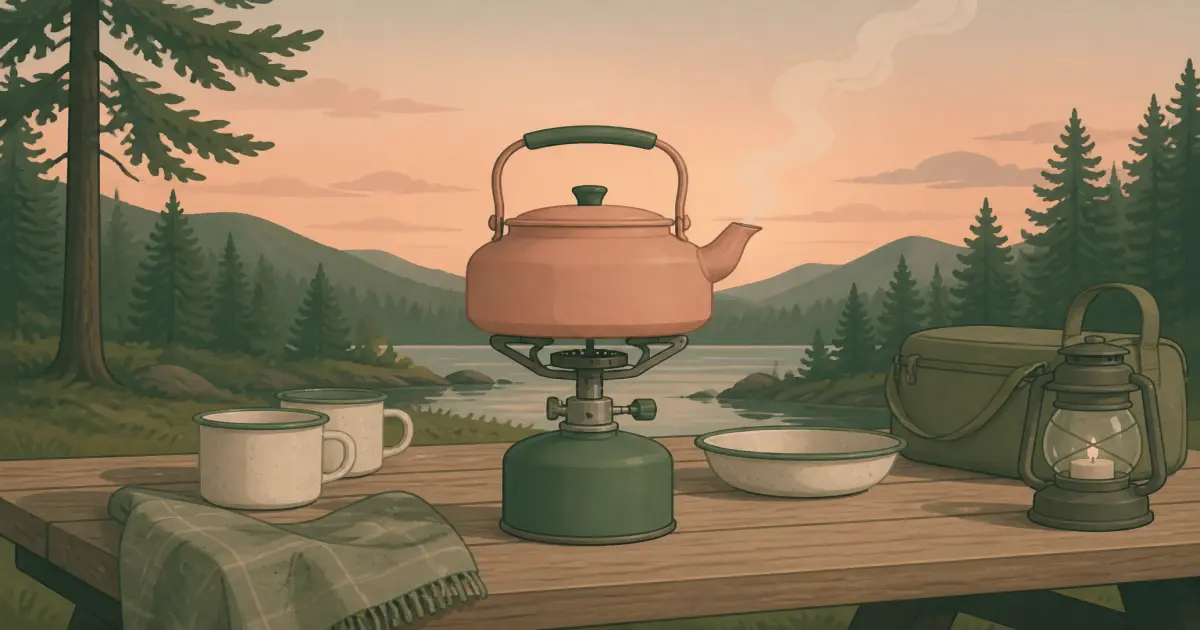
Camping Kettle: Boil Water Fast Without a Full Cook Set
Coffee
A camping kettle boils water fast for coffee, tea, and freeze-dried meals. Pick a size that matches your group, then keep the spout clear of soot and ash.
Our picks
A pot can boil water. A kettle pours it where you want it. That matters when you are filling a French press, drip cone, or mug without dripping down the side of a wide pot rim. Match kettle size to how many mugs you pour, keep the base inside the grate, and use a glove. A spout beats a wide pot when you are filling a press. The coffee category covers kettles and brewers that pair with morning drinks.
Pair with how to boil water while camping, best camping coffee maker, and how to brew coffee camping.
When a kettle beats a pot
Use a camping kettle when morning drinks are a daily habit, not a one-off. Clean pours save mess on picnic tables and in vestibules. Narrow spouts also help with pour-over cones and percolator fills.
Skip a dedicated kettle if you already nest a lid-tight pot that pours well enough and you hate extra pieces. Solo backpackers often boil in the cook pot and drink from it. Car campers with coffee rituals usually like the kettle more.
If your menu is mostly skillet meals and one coffee each, a kettle still helps because it frees the skillet while water heats on the other burner. Dual-burner tables make that combo easy. See two burner camping stove if you are building that kitchen.
Size and fill lines
Match liters to cups, not to wishful group size. A liter covers roughly two to three mugs depending on how full you pour. Couples who make coffee and a thermos often want 1.2–1.5 liters so they are not waiting on a second boil.
Leave headspace. A kettle filled to the brim boils over and can drown a canister stove. Most designs have a max fill mark near the spout base. Respect it.
For backpacking, smaller is kinder. A 0.8 liter kettle that nests with your mug beats a giant car-camp whistle kettle that never leaves the tote.
Materials and lids
Stainless camping kettles handle abuse in a kitchen box. They take longer to heat than thin aluminum but clean up predictably. Aluminum heats quickly and stays lighter. Watch soft metals on uneven fire grates.
Titanium shows up in ultralight kits. It is strong for the weight and usually expensive. Worth it only when you already care about grams.
Lids matter. A tight lid speeds the boil and keeps debris out. Removable lids are easier to dry. Fixed whistle lids are fine if you like the alert and accept the extra noise.
Folding handles pack flatter. Fixed bail handles feel secure when the kettle is full. Either works if the grip stays cool enough to lift or you use a glove.
Stove fit and safety
Set the camping kettle centered on the burner. Tall, narrow kettles can feel tippy on tiny backpacking stoves. A wider base helps. Windscreens help more. Review camping stove windscreen before windy ridge camps.
Keep plastic spout guards and silicone sleeves away from direct flame. Some “camp” kettles are really picnic pieces. Read heat limits before you put them on a roaring dual-burner.
Never leave a rolling boil unattended on a crowded picnic table. Kids and dogs bump tables. A spilled kettle is a burn risk and a soaked sleeping bag if you cook near the tent.
Open-fire use needs a kettle rated for it. Expect black soot. Plan to bag the sooty kettle separately on the ride home so it does not stain the rest of the camp kitchen box.
Coffee and tea workflow
Boil, then rest a few seconds if your brew method hates a violent pour. Fill the press, cone, or mugs on a stable surface. Keep the kettle on a heat-safe pad, not on a nylon tablecloth.
For percolator users, a kettle is still handy for topping water and for tea drinkers in the same group. See how to use a camping percolator for the brew side.
If you only make instant coffee, a kettle is optional but still nicer than ladling from a wide pot. Instant plus a clean spout is a low-drama morning.
Cleaning and packing
Empty leftover water before packing when temps can freeze. Mineral film builds with hard water. A vinegar rinse at home clears most scale. Exterior soot wipes easier when warm, not blazing hot.
Dry the lid and spout before nesting. Trapped moisture smells after a week in a closed tote. Pack the kettle with the spout protected so it does not punch a soft pouch.
If the kettle shares a stuff sack with a stove, keep fuel separate and caps tight. Fuel smell in tea water is a one-time lesson people remember.
Kettle pick, plus a boil alternative
Our main recommendation is the GSI Outdoors Glacier Stainless Tea Kettle 1 qt. It pours cleaner into a French press or mug than a wide cook pot, and stainless handles trunk life.
If you mostly boil water for freeze-dried meals and coffee and want one integrated system, look at the Jetboil Flash Camping Stove instead of a separate kettle. You lose the classic spout pour, but you gain speed and a packed unit.
Common mistakes
Buying a huge enamel kettle “for the look” and then never packing it is common. Buy the size you will actually boil twice a day.
Using a thin kettle as a frying stand or pot support is another miss. Kettles are for water. Skillets are for food. Keep jobs separate so coatings and spouts last.
Ignoring the fill line causes boil-overs that extinguish canister flames. Relighting with wet fuel residue nearby is a bad morning. Fill sanely.
When to skip a camping kettle
Skip it on fast-and-light trips where one pot already does dinner and drinks. Skip novelty glass or fragile designs that do not belong in a rattling trunk. Skip if your group drinks cold brew from the cooler and never heats water.
If your real gap is cookware, fix the best camping pot set first. Add a kettle once boiling water is a daily habit worth optimizing.
Bottom line
A camping kettle is a small upgrade with a clear job: heat water and pour it cleanly. Pick a volume for your mugs, a material for your trip style, and a stable stove setup. Keep a pot for food and let the kettle own coffee, tea, and quick boils.
Frequently Asked Questions
Do I need a camping kettle if I already have a pot?
Not always. A pot with a lid works. A kettle pours cleaner for coffee and tea and often boils a bit faster because of the shape and spout.
What size camping kettle should I buy?
Solo trips often land near 0.8–1.0 liter. Couples like 1.0–1.5 liters. Bigger groups may want 1.5–2.0 liters or two boils.
Stainless, aluminum, or titanium?
Stainless is tough and common for car camp. Aluminum heats fast and stays lighter. Titanium is pricey and shines when grams matter.
Can I put a camping kettle on a fire?
Some kettles handle open fire; many thin models are stove-only. Check the maker notes. Soot and warp risk rise on open flame.
Is a whistling kettle worth it at camp?
A whistle helps if you walk away. Keep volume in mind on quiet loops. Some campers prefer silent lids and a timer habit instead.
How do I clean a camping kettle?
Rinse after mineral-heavy water. Wipe soot from the exterior when cool. Avoid abrasive pads on coated interiors. See also how to clean camping cookware.