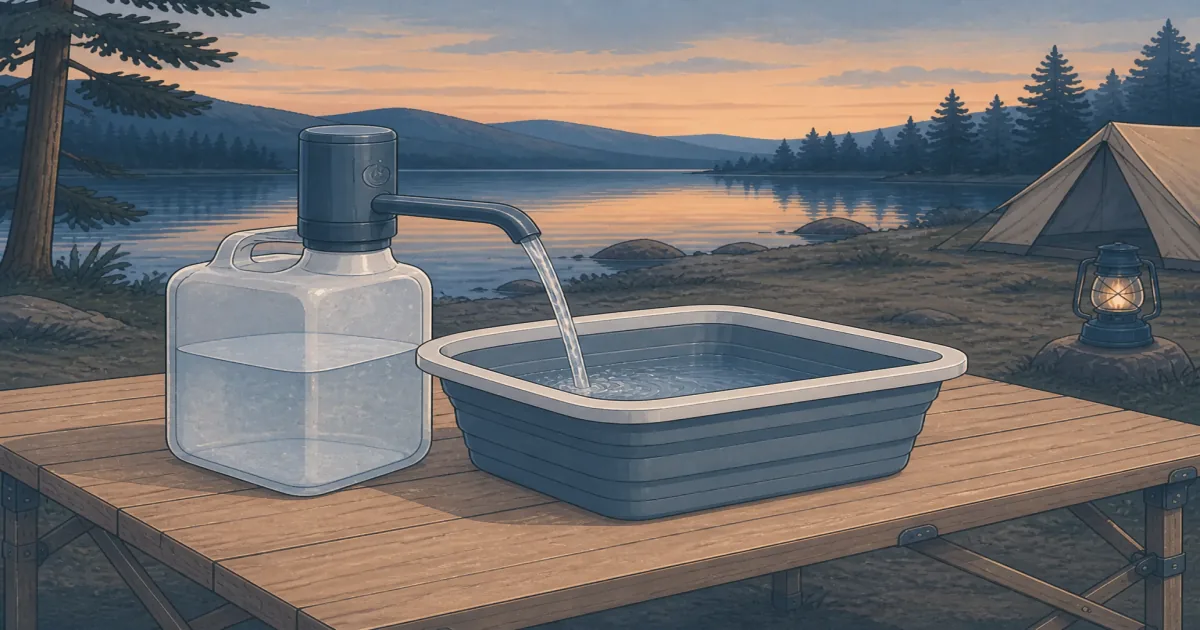
Camping Water Pump: Hands-Free Flow From Jug to Basin
Cookware
A camping water pump turns a jug into a small faucet so rinsing hands and dishes does not mean tipping five gallons. Pair a faucet-style pump with a reliable jug.
Our picks
A camping water jug solves storage. A camping water pump solves control. Together they turn the picnic table into something closer to a sink: wet hands, rinse a spoon, fill a kettle, stop the flow without wrestling five gallons sideways. That is a car-camp and base-camp tool. Ultralight backpackers still pour from a bottle. Pump and jug gear sits in the camp cookware category with the rest of the wash kit, plus the best camping cookware picks for the sink side.
Start with water storage in our camping water jug guide, then come back here for flow. Pair the pump with a collapsible camping sink and the habits in how to wash dishes camping so gray water stays out of the creek.
When a camping water pump helps
Use a pump when the table sits far from the campground tap and you cook or wash more than once a day. Handwashing before food prep gets easier. Dish rinse stops being a two-person tip-and-pray routine. Kids can use a faucet motion instead of wrestling a heavy jug.
Skip the pump when your jug already has a reliable spigot and you only rinse a mug or two. Extra parts mean charging, cleaning, and one more thing to lose in the tote. A pump is leverage for busy kitchens, not a badge.
Tailgates and cabin-adjacent sites love faucet-style kits. Walk-in sites still benefit if you haul a jug once and want clean pours without lifting every time.
Setup kit: faucet plus bottle pump
Think in kits, not orphan gadgets. Kit item one is a faucet-style pump for the cook zone. Kit item two is a simple bottle-top pump for the jug you already trust. Many weekends only need one. Pack both when you split drinking water and wash water across two containers.
Kit item 1: Dometic GO Hydration Water Faucet
The Dometic GO Hydration Water Faucet is the camp-kitchen pick. One-touch operation and a magnetic base make it feel closer to a real faucet than a squeeze bottle. Park it on a metal surface between pours, keep the jug stable, and aim into a basin so splash stays controlled.
This is the piece for people who already care about camping hand washing station layout and want the rinse step to feel intentional. Expect to pay more than a basic jug pump. You are buying control and a cleaner table ritual.
Kit item 2: Cozy Blue Water Dispenser Portable Water Bottle Pump
The Cozy Blue Water Dispenser Portable Water Bottle Pump is the practical bottle-top option. It fits common 3–5 gallon necks, charges over USB, and has the review volume you want when a product lives on a drinking jug. Use it when your “camping water pump” need is really “stop tipping this bottle.”
It looks more home-kitchen than trail. That is fine. Car camp is allowed to be convenient. Keep a pour backup if the battery dies mid-weekend.
How to build the wash station
- Place a rigid jug on a stable table.
- Fit the pump or faucet per the neck design.
- Set a basin under the spout.
- Keep soap and a scrubber beside the basin, not in the creek.
- Collect gray water and dump where campground rules allow.
Gravity still matters. A half-empty jug can starve a weak pump. Refill before dinner rush. Vent the jug if the design needs air for flow. A sealed jug with no vent fights every pump.
For tote layout around the station, see camp kitchen organization. For packing lists that remember soap and a spare jug cap, see camping kitchen checklist.
Clean water vs wash water
Run separate containers when you can. Drinking water stays sealed and food-clean. Wash water can be a second jug with its own pump or spigot. Label both. Nobody wants dish soap in the coffee water at 6 a.m.
Sanitize parts that sit in drinking necks. Rinse the pump stem before storage. Air-dry pieces so the next trip does not smell like a locker room. If a pump rode in the same bin as fuel bottles, wash it before it touches drinking water again.
Charging, cold weather, and backups
Rechargeable pumps hate dead batteries and freezing nights. Charge at home. Pack the cable. Keep the pump in a pocket or tote on cold mornings so plastics and batteries are less brittle.
Always keep a pour path. Caps, spare spigots, and the ability to tip a smaller bottle save dinner when electronics quit. A camping water pump is a convenience layer on top of a jug, not a replacement for basic water sense.
Common mistakes
Buying a pump without checking neck fit. Test at home with your exact jug.
Skipping the basin. Flow without a catch tray floods the table.
One jug for everything. Soap residue and drinking water should not share a life story.
Leaving the pump compressed in a wet bag. Mold grows fast on damp stems.
Aiming at the stove. Water and open flame share a table poorly. Separate zones.
Bottom line
A camping water pump turns stored water into controlled flow. Build a small kit around the Dometic GO Hydration Water Faucet when you want faucet manners at the picnic table, or the Cozy Blue Water Dispenser Portable Water Bottle Pump when a standard jug just needs a better spout. Add a solid jug, a basin, and a gray-water plan, and dish night stops feeling like a wrestling match.
Frequently Asked Questions
Do I need a camping water pump if I already have a jug with a spigot?
Not always. A good spigot covers most rinse jobs. A pump helps when you want faucet-style control, higher placement, or flow from a bottle that lacks a decent spout.
What is the best camping water pump setup?
For a camp-kitchen feel, pair the Dometic GO Hydration Water Faucet with a rigid jug and a basin. For a simple bottle top, the Cozy Blue Water Dispenser is the easy jug-pump path.
Can a camping water pump replace a sink?
It replaces tipping and pouring. You still need a basin, gray-water plan, and soap. See our collapsible camping sink and dish-washing guides for the rest of the station.
Is a rechargeable pump worth it?
Yes if you rinse often and hate weak gravity spigots. Charge before the trip and pack a cable. Manual pour remains the backup when batteries die.
Can I use a camping water pump for drinking water?
Yes if the jug and pump stay food-clean and you fill from a trusted source. Do not share one pump between fuel rinse water and drinking water.
Where should the pump sit at camp?
On a stable table edge above a basin, out of the main walkway, and in shade when heat sits on plastic bottles. Keep cords and bottles away from stove flame.
Will a pump work with any jug?
No. Match neck size and lid design. Some faucet kits want a specific jug system. Bottle-top pumps want standard 3–5 gallon necks. Test at home before the first night.