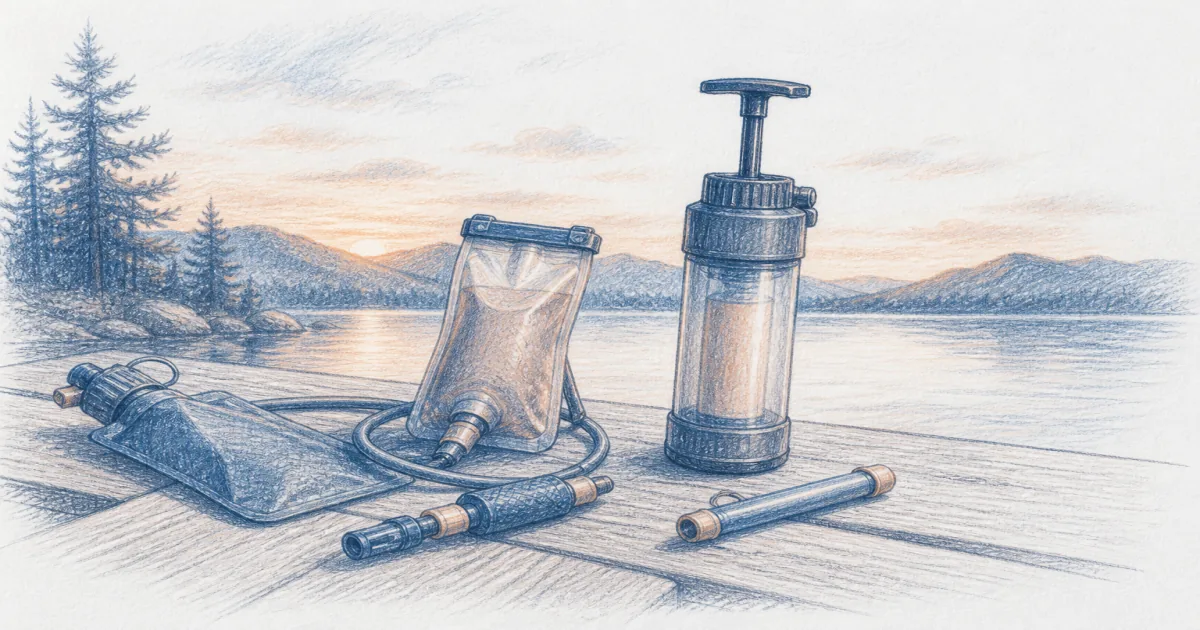
Best Camping Water Filter (2026): Squeeze, Purify, or Straw
Cookware
The best camping water filter matches your water risk and pack weight. Squeeze systems win most US trail miles; a press purifier covers sketchier sources; a straw stays a light backup.
Our picks
The best camping water filter for weekend backpacking and mixed car-camp trail days is the Sawyer Squeeze when your water is typical US backcountry: clear streams, lake edges, and snowmelt. It is light, fast, and flexible enough that one kit covers solo hikers and a small group filling bottles at the same time.
Start in the cookware category and the best camping cookware pillar if you are building a full kitchen kit. Store treated water in a camping water jug at the picnic table, and use how to boil water while camping when heat is part of the plan.
What kind of camping water filter you actually need
Camping water treatment splits into three jobs. Hollow-fiber filters remove bacteria and protozoa from most US wilderness water. Purifiers add virus protection and often better chemical taste cleanup. Straws are personal sip tools that shine as backups, not as your only group water plan.
Match risk before brand. Clear mountain streams in popular US forests are a different problem than murky roadside ditches, international taps, or floodwater. If the source looks wrong, walk farther or carry water from a known tap.
Weight and flow matter as much as the lab chart. A filter that sits in the pack unused because it is annoying will lose to a slightly heavier system you actually fill every morning.
Sawyer Squeeze for most camping trips
The Sawyer Products SP129 Squeeze Water Filtration System wins when you want one kit that fills bottles, soft flasks, and hydration packs without a hanging bag ritual. Squeeze pouches make camp fills fast. Thread adapters keep the filter useful when pouches wear out.
Best for overnight backpackers, day hikers who refill mid-route, and car campers who still hike to water sources away from the spigot. Skip it if you need virus protection or you refuse to backflush when flow slows.
Keep the filter from freezing. Ice can crack hollow fibers. Sleep with the wet filter in a jacket pocket on cold nights, and never leave it in a frozen cup overnight.
GRAYL GeoPress when purification matters
The LifeStraw Go Series Water Filter Bottle is the pick when you want fill-press-drink simplicity and broader pathogen coverage. You scoop questionable water, press the inner bottle, and drink from a sealed cup without plumbing a bag tree.
Best for travel-adjacent camping, sketchy taps, and anyone who wants virus protection without tablets. Skip it for ultralight thru-hikes where every ounce fights for a slot, or when you only refill from clear alpine streams.
Cartridge life is finite. Track presses and carry a spare on long remote trips. The bottle form also doubles as your drinking vessel, which cuts one item from the kitchen kit.
LifeStraw as the tiny backup
The LifeStraw Personal Water Filter is not the best primary camping water filter for groups. It is the best ultralight insurance policy when your main filter clogs, freezes, or gets left at the last camp.
Best for emergency kits, kids' daypacks, and minimalists who already carry a squeeze system. Skip it as your only tool if you need to fill cook pots, coffee kettles, or three bottles before breakfast.
Sip from clear, flowing water when you can. Standing puddles still clog filters and taste worse even after treatment.
How to choose without overbuying
Buy one primary system and one tiny backup. Two half-used kits in the tote usually means neither one is ready when you need it.
Pair filtration with storage. Filter into a clean jug or bottles, then keep the dirty scoop separate so rinse water never mixes back into drinking water.
Mistakes that wreck camp water plans
Waiting until you are thirsty to learn the filter. Practice at a home faucet so pouch threads and backflush steps are muscle memory before the trailhead.
Filtering muddy water without settling. Dirt is the enemy of flow. Give sediment a few minutes in a pot, then filter the top layer.
Assuming boil and filter are the same. Boiling helps biology and cooking. It does not remove sediment or chemical taste. Filters and purifiers do not heat oatmeal. Many trips need both tools on different mornings.
Field habits that keep filters working
Treat the dirty scoop like food-contact gear that never touches the clean bottle mouth. Cap the clean side before you pack. Label a small dry bag as the water kit so pouches, backflush tools, and spare O-rings stay together.
On multi-day trips, schedule a midday water stop before you are empty. Rushing a clogged filter at dusk is how people drink untreated water. If flow collapses, settle, backflush, and try again before you declare the filter dead.
Cold mornings slow everything. Warm the filter in a pocket, start with a small flush of relatively clear water, then move to the main fill. Frozen hollow fibers are a fail, not a maybe.
Camp kitchen links that help
Clean water feeds coffee, dishes, and handwashing. Keep a rinse jug on the table, wash dishes away from the creek, and store the filter with food gear so it does not live in the muddy boot bag.
For dish wash flow, see how to wash dishes camping. For pumps that move stored water, see camping water pump. For the wider kitchen layout, browse more cookware guides.
Frequently Asked Questions
What is the best camping water filter overall?
For most US camping and backpacking trips, the Sawyer Products SP129 Squeeze is the best camping water filter. Choose the GRAYL GeoPress when you need virus protection, or keep a LifeStraw Personal as a tiny backup.
Do I still need to boil water if I filter?
Filtering and boiling solve different jobs. A hollow-fiber filter clears many bacteria and protozoa. Boiling helps when you want heat for meals or extra certainty. See our guide on how to boil water while camping.
Does a camping water filter remove viruses?
Most squeeze and straw filters do not. Purifiers like the GRAYL GeoPress are built for virus-level protection. Match the tool to your water risk, not the marketing photo.
Can I filter cloudy lake water?
Pre-settle muddy water in a pot or jug, then filter the clearer layer. Heavy sediment clogs hollow-fiber membranes faster and slows every refill.
How often should I clean a squeeze filter?
Backflush when flow slows. Pack the plunger or syringe that comes with the kit. A clogged filter is usually a cleaning problem before it is a dead filter.
Is a camping water jug a filter?
No. A jug stores clean water at the picnic table. Filter or treat first, then fill the jug for coffee and dishes. Pair with our camping water jug guide.
What about chemical pollution?
Filters and many purifiers do not fix agricultural runoff or industrial chemicals. Skip suspect sources when you can. Carry known-safe water for drinking near farms and roads.