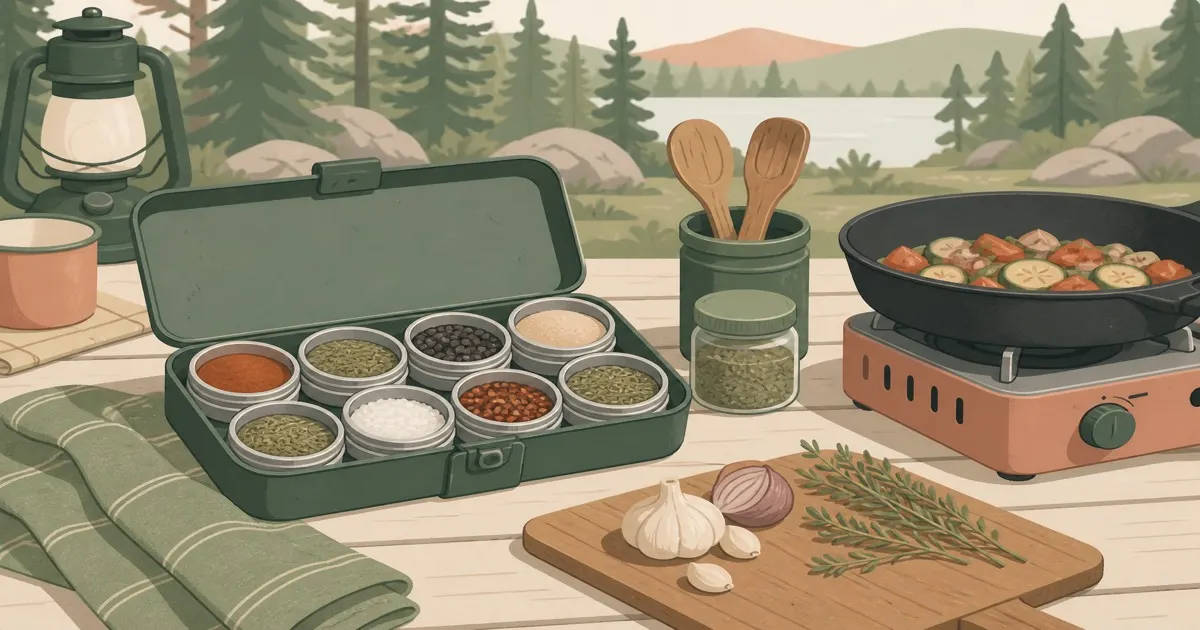
Camping Spice Kit: Flavor Without a Cabinet of Bottles
Cookware
A camping spice kit keeps salt, pepper, and a few workhorse seasonings ready for skillet meals. Pack small sealed containers, label them, and keep moisture out so powder does not turn to paste.
Our picks
Bland eggs and sad pasta are a packing problem, not a talent problem. A camping spice kit fixes that without turning the picnic table into a spice aisle. Salt, pepper, chili flake, and garlic powder cover most weekend meals. Skip giant racks that rattle empty jars around the tote. Small flavor kits live in the camp cookware category beside the main cook set, including the best camping cookware picks.
Pair with camping kitchen checklist, camping skillet, and camp kitchen organization. For salt and pepper alone in a twin sealed unit, see camping salt and pepper shakers.
Why a camping spice kit beats loose bottles
Grocery spice bottles are tall, half empty, and eager to spill in a tote. A camping spice kit downsizes to what you will use this weekend. You find salt in one pouch instead of hunting three bags.
It also keeps powder away from camping utensils and the cutting board. Shared tote chaos is how pepper ends up in the tea bags.
If you already run a camp kitchen box, the spice kit should have a fixed pocket so it does not migrate under the stove every trip.
What to pack first
Salt. Black pepper. Garlic powder. One heat option such as chili flake or cayenne. One flexible blend you already like for eggs or meat. That set covers most skillet nights.
Add smoked paprika, cumin, oregano, or cinnamon only if your real menu uses them. Do not pack a twelve-spice fantasy for three meals of pasta and eggs.
Oil and acid matter too, but they are not always part of the spice kit. A small oil bottle and a lemon or vinegar packet often live beside the kit, not inside it.
Sweet drinks and cocoa are not spices. Keep them in a separate food bin so sugar ants have fewer targets.
Containers that survive the tote
Small plastic jars with tight lids are the car-camp default. Metal tins look sharp and can dent. Flip-top spice racks sold for camping work if the closures are honest and the rack fits your box.
Zip bags are light and leak powder into everything when a corner fails. Double-bag if you must. Tape labels so ink does not smear when condensation hits.
Refill from home. Do not buy tiny full-price jars of everything if you already own pantry stock. Decant what you need.
Labels matter. “Mystery brown powder” is how someone salts with cinnamon. Use a marker that survives damp fingers.
Moisture, heat, and clumping
Camp kitchens are wet. Steam from pasta water and rain on the table both clump powder. Open one jar at a time. Close lids before you cover a simmering pot.
Keep the camping spice kit off the stove grate. Plastic lids warp. Powders near open flame are a bad idea for more than flavor reasons.
A dry pouch or small hard case beats a mesh bag that drinks splashes. If you wash dishes nearby, move the kit before the rinse water flies. Dish habits live in how to wash dishes camping.
Menu fit: skillet, griddle, dutch oven
Skillet dinners love salt, pepper, garlic, and chili. A camping skillet or camping griddle is where the kit earns its keep.
Dutch oven stews want bay, paprika, or cumin if that is your style. See dutch oven camping for the cookware side. Do not pack stew spices for a trip that is only eggs and ramen.
Breakfast kits often want cinnamon or a savory blend for potatoes. Pack for the meals on your list, not for a cookbook you did not bring.
A short written meal list helps. If Friday is tacos and Saturday is eggs, cumin and chili belong; cinnamon can stay home. The camping spice kit should shrink when the menu shrinks.
Oil, salt, and the “almost spices”
Salt is non-negotiable. A dedicated small salt jar beats hoping the blend jar is salty enough. Pepper follows. After that, garlic powder does more work per gram than most specialty jars.
Cooking oil is not a spice, but it lives next to the kit. Pack a leakproof bottle with a tight cap and store it upright. A greasy spice pouch is a mess you will remember.
Hot sauce bottles are optional. They flavor fast and spill faster. If you bring one, bag it separately from powder jars.
Spice kit pick without a junk drawer
The GSI Outdoors Destination Kitchen Set 24 includes a waterproof salt and pepper module plus condiment bottles. That covers most weekend seasoning without glass jars that shatter in the tote.
If you only carry oil and one rub, skip a 24-piece kit and use the Stanley Wildfare Core 26-Piece Complete Camp Kitchen Cook Set for prep space, then pack two small leakproof spice vials you already own.
Common mistakes
Bringing five unfinished grocery bottles. They roll, spill, and waste space. Decant.
Packing spices you never cook with at home. Camp is not the time to discover you hate cumin.
Leaving lids loose because “we will use it soon.” Powder escapes on the drive. Tighten for travel.
Storing the camping spice kit with dish soap and fuel bottles. Smells transfer. Keep food seasonings in the food zone of camp kitchen organization.
How it fits the kitchen checklist
Add the camping spice kit to the same list as oil, utensils, and a cutting board. If it is not on camping kitchen checklist, it will be forgotten until the onions hit the pan.
A mess kit or plate set does not replace seasoning. Flavor is its own line item. Keep the kit small enough that you always bring it.
Bottom line
A camping spice kit is a short list of sealed seasonings you will actually cook with. Salt and pepper first, a few workhorse powders next, tight lids always. Small flavor beats a tote full of grocery bottles you will not open.
Frequently Asked Questions
What should go in a camping spice kit?
Start with salt, pepper, garlic powder, chili flake or paprika, and one blend you actually use. Add cumin, oregano, or cinnamon only if your menu needs them.
Jars, tins, or zip bags?
Hard jars and tins stack and seal better in a tote. Bags save weight and can leak powder into everything. Car campers usually prefer small rigid containers.
How do I keep spices dry?
Use tight lids, keep the kit off wet tables, and avoid steaming pots with lids open over the stove. A silica packet in the pouch helps in humid weeks.
Can I bring glass spice jars?
You can if you pack them padded. Many people switch to plastic or metal to avoid breakage. Tape lids for the drive if threads are loose.
How much spice do I need for a weekend?
Less than you think. A few teaspoons of each workhorse cover most skillet dinners. Refill from home jars instead of packing restaurant bottles.
Where should the camping spice kit live?
In the kitchen tote near utensils and oil, not under the cooler melt zone. See camp kitchen organization for zone habits.