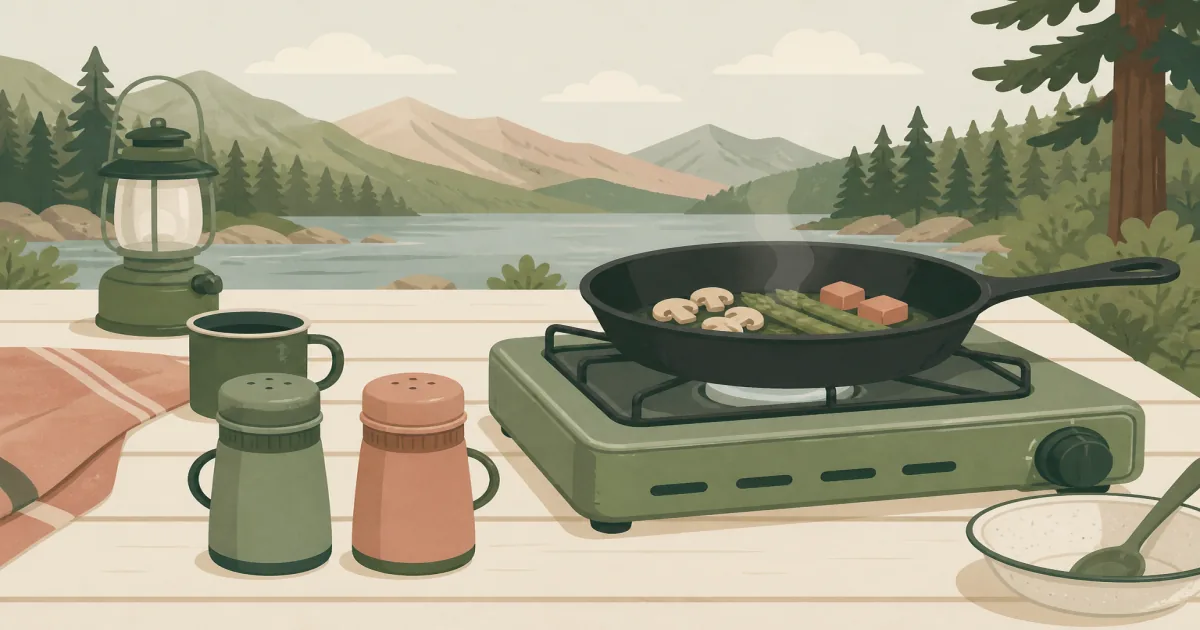
Best Camping Salt and Pepper Shakers (2026): 2 Picks That Stay Dry
Cookware
The best camping salt and pepper shakers solve the tiny problem that ruins bland camp meals: damp spice bottles and loose lids in the tote. Pack a sealed twin shaker or a kit that already includes one.
Our picks
Bland camp food is rarely a recipe problem. It is a packing problem. Salt lives in a baggie that tore. Pepper got damp. Someone brought a tall glass shaker that leaked into the spatula pocket. Camping salt and pepper shakers exist to end that routine. Seasoning gear joins the broader camp cookware category, and the best camping cookware roundup covers the kits it seasons.
This guide stays on the shaker decision: sealed twin units, kit-included shakers, refill habits, and where they sit in the tote. For a broader seasoning system beyond salt and pepper, use the camping spice kit guide. For bin layout, see camp kitchen organization.
What makes a camp shaker different
Home shakers assume a dry cabinet and gentle handling. Camp shakers assume condensation, tip-overs, and a tote that gets tossed into a trunk.
Look for caps that actually seal, compartments that keep salt and pepper apart, and a size that fits a mess kit or utensil pocket. Clear bodies help you see when you are low. Removable screens make refills less messy.
Weight is usually tiny. The win is reliability, not grams.
Twin shaker versus full kitchen kit
A dedicated twin shaker is the clean answer when salt and pepper are the only gap in an otherwise finished kit. Buy it, fill it, clip it into the same pouch every trip.
A full kitchen set makes sense when you are still missing spatula, tongs, and seasoning hardware together. You pay for breadth. You gain fewer missing-piece mornings.
Filling, labeling, and moisture control
Fill at home on a dry day. Use a small funnel or a folded paper guide so grains do not coat the threads. Wipe threads before you tighten the caps.
If you swap spices into the compartments, label with a tiny piece of tape. Cloudy plastic after a season can make both sides look identical in low light.
Store the shaker upright when you can. Caps fail less often when they are not swimming under a wet dish towel.
On humid trips, silica packets in the spice pouch help the wider kit. The shaker still needs dry fills. Wet salt clumps and blocks the screen.
How much capacity you actually need
Weekend trips rarely empty a compact twin shaker. Week-long family camps might. Pack a small refill bag of salt and pepper in a sealed container if you cook three meals a day for a crowd.
Do not bring five boutique peppers. Bring what you will shake onto eggs, foil packets, and skillet dinners. Ambition belongs in the wider spice kit, not in twelve loose vials.
Where shakers sit in the camp kitchen flow
Seasoning happens at the stove and at the table. Keep the shaker with utensils, not buried under pots. If you use zones in a kitchen box, put it in the cook zone, not the wash zone where soap residue lives.
After dinner, cap it before dishes start. Wet hands on open threads are how you invent salt cement.
For a full packing list around the kitchen, lean on the camping kitchen checklist. For site layout, the campsite kitchen setup guide helps you place the cook table so seasoning is within reach without crowding the flame.
Mistakes that waste the product
Buying a cute ceramic set for Instagram photos is the first mistake. It chips, leaks, and takes space.
Leaving caps loose in the tote is the second. Vibration unscrews lazy threads. Then pepper dust coats everything.
Washing the shaker and packing it while damp is the third. Moisture inside is worse than a little dust on the outside.
Refill habits for longer trips
For a two-night trip, fill once at home and forget it. For a week with three cooked meals a day, plan a refill.
Keep a small sealed bag of salt and a small sealed bag of pepper in the food crate. Refill the shaker at midday when hands are dry, not during a greasy dinner rush. Wipe the threads every time.
If salt cakes against the screen, empty the side, dry it fully, and refill with drier product. Do not poke wet clumps through the screen at the table. That sprays white dust onto everything.
Pepper oils can leave a film on plastic after many trips. A warm water rinse and full dry cycle between seasons keeps the twin shaker from smelling stale.
When packets still make sense
Single-use packets are fine for one picnic or a flight-to-camp overnight when you refuse any refill gear. They are worse for a season of weekends because trash adds up and flavor control is crude.
If you use packets, still pack a tiny camping salt and pepper shaker for the trips where you cook real meals. The packet stash becomes backup, not the primary plan.
Top pick: GSI Outdoors 79500 Salt and Pepper Shaker
The GSI Outdoors 79500 Salt and Pepper Shaker is the best camping salt and pepper shaker for most people. It packs two seasonings into one small unit, weighs about an ounce, and uses waterproof screw caps to keep contents dry.
The body is copolyester, so it shrugs off a drop from waist height. The dispensing screens and caps come off for refilling, and the sealed design holds up in a tote that gets tossed into a truck. Fill it at home, clip it into a pocket, and stop thinking about seasoning.
Who it is for: Backpackers, car campers, and anyone who wants salt and pepper handled in one small unit.
Who should skip it: Cooks who season aggressively, or families who go through a full shaker in a weekend.
Kit pick: GSI Outdoors Destination Kitchen Set 24
The GSI Outdoors Destination Kitchen Set 24 is the best camping salt and pepper shaker route when you are building the cook bin from scratch. It folds shakers into a broader set of camp utensils, so seasoning is not a separate errand.
Buying the kit means one purchase covers tools and seasoning, and every piece has a known pocket. That cuts down on the missing-piece mornings that stall dinner before it starts.
Who it is for: Car campers assembling a first cook kit, and anyone tired of loose tools in a tote.
Who should skip it: Anyone who only needs shakers, or cooks who already have a full utensil roll.
Salt shaker versus full kitchen kit
A dedicated twin shaker is the clean answer when salt and pepper are the only gap in an otherwise finished kit. Buy it, fill it, clip it into the same pouch every trip.
A full kitchen set makes sense when you are still missing spatula, tongs, and seasoning hardware together. You pay for breadth. You gain fewer missing-piece mornings.
Either path beats glass bottles from the kitchen cabinet. Dry salt and pepper make camp food taste finished without turning the tote into a spice aisle.
See more kitchen accessories on the blog, or browse from the homepage while you build the rest of the kit.
Frequently Asked Questions
Why use camping salt and pepper shakers instead of restaurant packets?
Packets work for one night. Twin shakers refill, seal better in a damp tote, and season every meal without hunting paper scraps.
Will a regular glass shaker work at camp?
Glass breaks and lids often leak. Outdoor shakers are built around sealed caps and small packed size.
How full should I pack them?
Leave a little air space so contents can settle. Overfilling makes caps hard to close cleanly.
Can I put other spices in the twin compartments?
Yes. Garlic powder and chili flake are common swaps. Label the sides if the clear plastic gets cloudy.
Do I still need a bigger spice kit?
If you cook ambitious menus, yes. Shakers cover daily salt and pepper. A wider camping spice kit covers the rest.
How do I clean them?
Empty, rinse, and dry fully before refilling. Trapped moisture is what clumps salt on humid trips.
Where should they live in the kitchen bin?
In a small pocket near utensils, not loose under the stove where heat and grease find them.
What are the best camping salt and pepper shakers?
For most campers it is the GSI Outdoors 79500 Salt and Pepper Shaker. It is about an ounce, seals both compartments with screw caps, and holds enough for a week of meals. Choose the GSI Outdoors Destination Kitchen Set 24 if you are still assembling the rest of the utensil kit.
How do you take salt and pepper camping?
Fill a sealed shaker at home, not ziplock bags. Keep it in the utensil pouch so it stays out of the wash zone, and add a few grains of rice to the salt side to keep it flowing on humid trips. The twin shaker beats loose bottles every time.