Camping Mess Kit: Nesting Plates, Bowls, and Cups That Pack Flat
Cookware
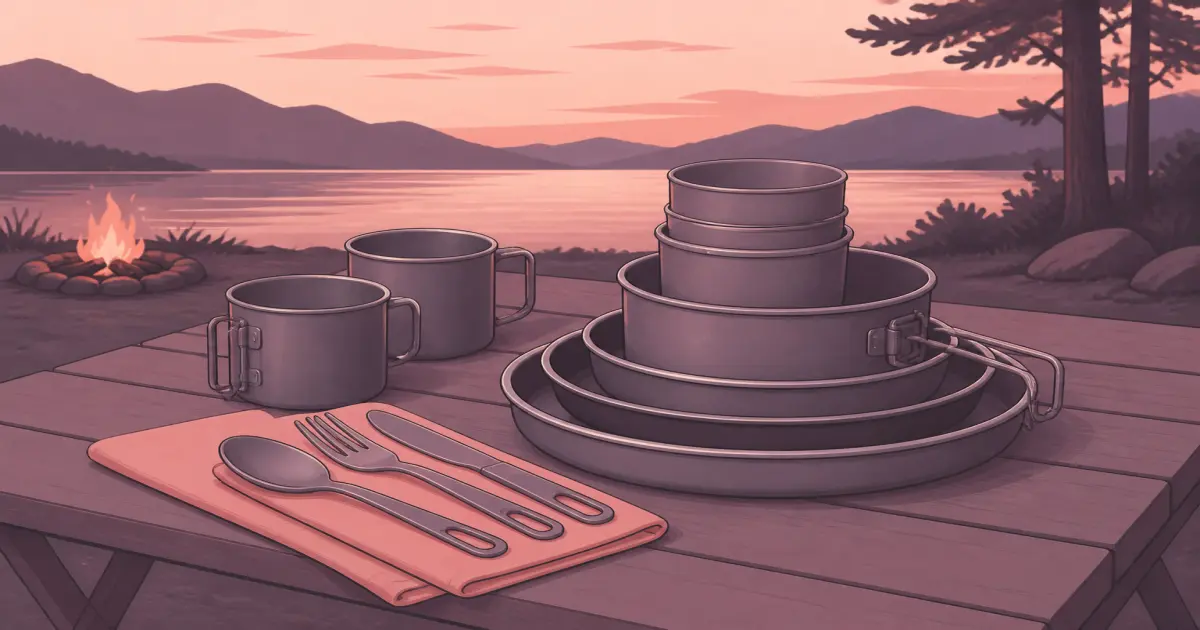
A camping mess kit nests plates, bowls, cups, and utensils so weekend meals pack small. Choose pieces you will actually eat from, then keep the stack dry.
Our picks
Fancy cookware does not help if you are eating chili out of a frisbee. A mess kit makes meals calmer and packing smaller. Count pieces you will eat from, not the photo on the box. A plate, bowl, cup, and utensils that nest beat a tower of novelty cups. The camp cookware category has the rest of the nesting sets and single pieces, with the best camping cookware guide for larger kits.
Pair with best camping pot set, camping kitchen checklist, and best backpacking cookware.
Mess kit vs cook set
If you only need plates and already own bowls, see our camping plates guide before you buy another full kit. If the missing piece is a flat-pack silicone bowl, read the camping collapsible bowl guide instead of forcing another hard dish into the stack.
A cook set heats food. A camping mess kit holds food while you eat. People blur the names because some nesting pot lids double as plates. Keep the jobs clear when you shop so you do not buy three fry pans and no bowl.
Car campers can run a roomy mess kit without sweating ounces. Backpackers want fewer pieces that nest with the cook pot and a mug that does double duty.
If you already own solid bowls from home, you do not need a branded kit. You need a nesting story that survives the trunk. A strap or stuff sack that keeps the stack together is enough.
What to include
Start with one plate or shallow bowl per person, one deeper bowl for stew-style meals, one cup or mug, and a fork-spoon-knife set you like using. Add a small lid or plate that can cover leftovers in the cooler.
Skip novelty fifth plates “for guests” until you actually host at camp. Extra disks become Frisbees that never get washed.
A mug that handles hot coffee matters more than a matching color story. If your coffee setup already includes insulated mugs, do not pack redundant cups.
Utensils can live in the mess kit or in a separate pouch with the spatula and tongs. Either works if the pouch is on the camping kitchen checklist.
Materials that survive weekends
Hard plastic and polypropylene kits are light, cheap, and quiet in a tote. They can stain with tomato sauces and can warp near high heat. Keep them off burner grates.
Stainless steel feels sturdy and handles hot meals without drama. It clinks, shows scratches, and can burn lips on metal rims if you sip too soon. Many car campers accept that trade.
Bamboo and wood-look composites photograph well. They need thorough drying and do not love long soaks in the wash bin. Fine for careful packers; annoying for soggy noodle nights.
Avoid mystery coatings that peel after a season of scrubbing. Simple surfaces clean faster after how to wash dishes camping.
Nesting and packing tips
Nest wide-to-narrow so the stack is stable. Put soft cloth or a thin towel between metal pieces if rattling drives you nuts on washboard roads. Keep sharp knives sheathed, not loose in the bowl.
Pack the mess kit in the eat zone of your kitchen box, not under the stove fuel. You want plates at dinner without unpacking the entire car.
After washing, air-dry before the final nest. A wet stack sealed for the drive home is how kits smell like old sponge by the next trip. Crack the lid of the tote when you get home.
Label kids’ kits with tape or a paint pen. Shared plastic bowls vanish into the wrong pack at group camps.
Solo, couple, and family setups
Solo car campers can live with one deep bowl, one mug, and a spork if menus are simple. Add a plate when you cook separately from sides.
Couples often like two matched place settings that nest as one column. That keeps “whose bowl” fights down and packs as a single unit.
Families should prioritize durable kid pieces and a few adult plates rather than a 12-piece banquet set. Matching matters less than counting heads before you leave the driveway.
Group trips can share cook pots and still need personal mess kits. Shared utensils get weird fast. Personal forks solve that.
Gear that earns a mess kit slot
If you want one nesting kit and done, start with the Goetland 304 Stainless Steel US Military Mess Kit. Stainless survives scrubbing and trunk bangs better than cheap aluminum, and the nesting size fits solo or duo meals.
On a tight budget, the Rothco 5-Piece Aluminum Mess Kit still covers pan, pot, plate, and cup. Expect softer metal and more dents over time. That is fine for learning camp cooking.
For a slightly tougher compact stainless option, the Stanley Adventure Cook Set for Two 1.0L is a good solo overnight kit. Skip giant 10-piece sets until you know which pieces you actually heat.
Common mistakes
Buying a huge vintage-style kit with a fry pan you never use is classic. If you already carry a skillet, you do not need a second thin pan in the mess kit.
Packing the kit dirty “until home” invites pests and smells. Wash the same night when residue is soft. Cold beans overnight bond with plastic.
Assuming one mug works for soup and coffee is fine until someone wants both at once. One extra cup is cheaper than a mood.
When to skip a retail mess kit
Skip retail kits if your home bowls already nest and you have a strap. Skip ultralight titanium place settings for car camping where plastic is fine. Skip anything with a hundred tiny parts that only fit one way and frustrate kids.
If your real gap is pots, fix cookware first. A mess kit will not boil water. See campsite kitchen setup for how eat gear sits next to the stove zone.
Quick weekend check before you leave
Count heads. Count bowls. Count mugs. Confirm the knife sheath is in the pouch and the cup you want for coffee is not still in the dishwasher at home. A two-minute kitchen doorway check beats a store run near the trailhead.
If you cook cast-iron meals that need a wide plate, make sure the mess kit plate is wide enough. Tiny dessert plates fight steak. Adjust the stack once, then leave the winning set alone.
Bottom line
A camping mess kit is the nesting stack you eat from. Keep the piece count honest, choose materials for your trip style, and dry before you nest. Calm meals beat matching colorways you never pack twice.
Frequently Asked Questions
What is in a camping mess kit?
Usually a plate or shallow bowl, a deeper bowl or cup, a mug, and a utensil set that nests or clips together. Some kits add a small fry pan lid piece.
Is a mess kit the same as a cook set?
No. Cook sets focus on pots and pans for heat. Mess kits focus on eating gear. Many campers carry both, or a cook set that includes a lid that doubles as a plate.
Plastic, steel, or bamboo?
Hard plastic is light and quiet. Steel is tough and hot-food friendly. Bamboo looks nice and needs more care around soaking and heat.
Do kids need their own camping mess kit?
Labeled kid sets reduce mix-ups. Bright colors help. Keep edges smooth and skip razor-thin metal rims for little hands.
How do I stop a mess kit from smelling?
Wash soon after meals, dry fully before nesting, and air the tote at home. Trapped dampness is the usual culprit.
Can one kit cover a couple?
Some double kits nest two place settings. Couples can also share a cook set and pack two simple plate-bowl-cup stacks.