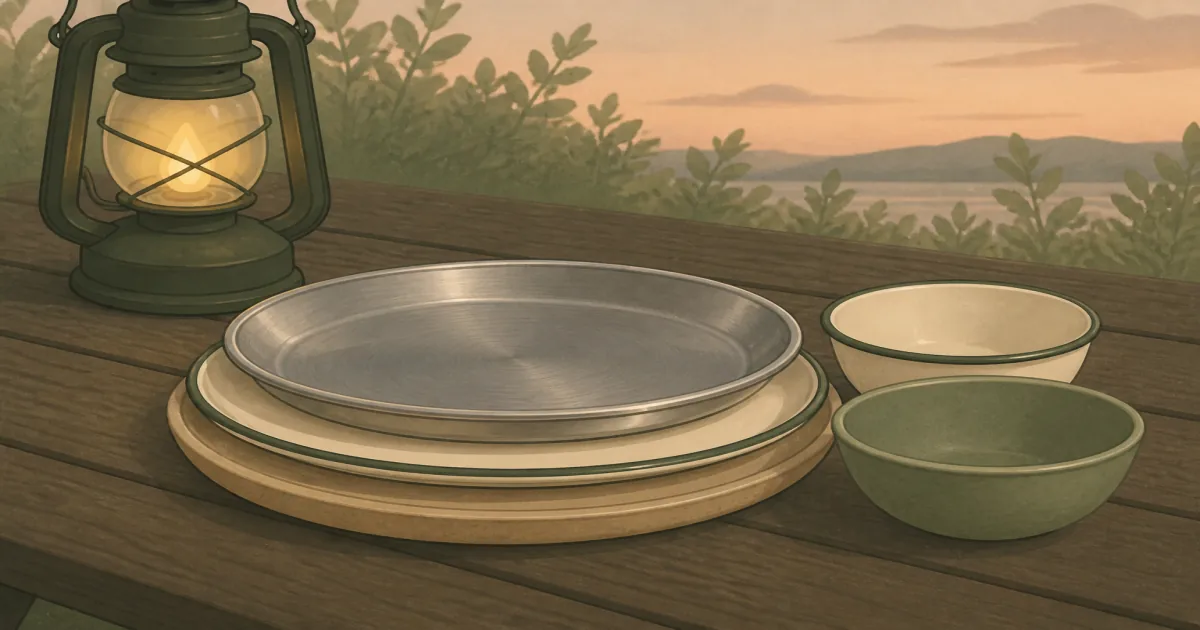
Camping Plates: Melamine, Enamel, and Steel That Survive Picnic Tables
Cookware
Camping plates should stack flat, rinse without drama, and survive a picnic table. Pick stainless for abuse, enamel for classic car camp, or a light set for quick weekends. If you need a bowl that packs nearly flat instead of another hard dish, see [camping collapsible bowl](/blog/camping-collapsible-bowl).
Our picks
Camping plates sound like the least exciting item in the kitchen tote until the first night you try to eat chili from a bent paper plate. A real plate keeps heat, holds a proper portion, and stacks without collapsing. The goal is simple: food stays on the plate, plates survive the drive home, and dish night does not turn into a trash bag full of soggy cardboard. Plates, bowls, and cups gather in the camp cookware category, with the best camping cookware guide for pots and pans.
If you want a full nested eating system with cups and bowls in one buy, start with our camping mess kit and best camping mess kit guides. This page is for shoppers who specifically need plates, whether they are replacing broken enamel, adding seats for kids, or building a kit piece by piece with camping utensils.
What camping plates need to do
A camping plate has three jobs. Hold hot food without warping. Stack or nest so the tote stays sane. Survive picnic tables, gravel, and hasty packing.
Weight matters, but less than at home people expect. Four steel plates still weigh less than a cast iron skillet. Chip resistance and rinse speed matter more for weekend car camps. Backpackers who weigh every ounce should look at a single stainless plate or a shallow bowl that doubles as a plate, not a twelve-piece party set.
Shape matters too. A shallow rim keeps stew on board when the table tips. A dead-flat tray looks neat in photos and spills at the first elbow. Deep enough for pasta, shallow enough to rinse, is the sweet spot.
Stainless vs enamel vs light sets
Stainless camping plates take abuse. They do not chip like enamel. They can clang in a bin, so pack a towel between them if noise bothers you. Food cools a bit faster on thin steel, which is fine for most camp dinners.
Enamel plates feel closer to home dinnerware. The glazed face cleans quickly after tomato sauce. The tradeoff is chips when plates slam into rocks or stove legs. Treat enamel like gear you respect, not like frisbees.
Lightweight wheat straw or melamine-style sets cut weight and noise. They shine for sandwiches, salads, and kid meals. Keep them away from open flame and knife abuse. Hot stew is fine. Using the plate as a cutting board is not.
Top pick: MSR Alpine Stainless Steel Camping Plate
The MSR Alpine Stainless Steel Camping Plate is a true camping plate, not a picnic afterthought. Thin stainless keeps weight reasonable. The rim holds chili and scrambled eggs without feeling like a pie tin. It nests with other Alpine pieces, so the kitchen bin stays compact when you already own MSR bowls or pots.
Buy one per person. This is not a family carton. That is the point. You get a durable plate you can replace one at a time when a kid loses one under the picnic table. Pair it with a real camping cutting board so knives never meet the plate face.
Who it is for: Couples, backpackers who still want a proper plate, and anyone building a steel kit over time.
Who should skip it: Families who want one box with four plates, bowls, and cups. Those shoppers should look at the enamel set below.
Best family set: Coleman 24-Piece Enamel Dinnerware Set
The Coleman 24-Piece Enamel Dinnerware Set solves the “we forgot bowls” problem. Plates, bowls, cups, and flatware for four land in one purchase. That is why families like it for car camps and cabin weekends even when they already own a cook set.
Enamel cleans fast after pasta nights. Pack plates with a soft divider so they do not chip each other on washboard roads. If a plate chips to bare metal, retire it for serving dry snacks or replace it. Do not serve acidic stew on a heavily chipped face all weekend.
Who it is for: Car-camp groups of three or four who want matching tableware without building a kit from scratch.
Best lightweight set: Wheat Straw Dinnerware Sets For 4
The Wheat Straw Dinnerware Sets For 4 is the quiet option. Plates, bowls, and cups for four without the weight of enamel or the rattle of steel. It suits sandwich lunches, salads, and quick dinners when the stove stays simple.
Treat it as serving gear. Plate food from a skillet. Do not set the plate on a burner. Keep sharp knives on a board. Rinse soon after sticky sauces so stains do not set in the tote.
Who it is for: Families who want less weight, quieter packing, and a full four-person set for milder menus.
Plate vs mess kit vs cook set
Camping plates are eating surfaces. A mess kit is an eating system that nests. A cook set is pots and pans. Mixing those words is how people buy three pots and still eat from a frisbee.
If your tote already has bowls and mugs, buy plates. If you need one nested stack for solo or couple trips, a mess kit is cleaner. If you are shopping pots, stay in cookware guides and leave plates for this page.
For the wider table layout, see campsite kitchen setup. For rinse habits that keep plates from smelling like last week’s chili, see how to wash dishes camping.
Packing and washing habits that keep plates usable
Scrape leftovers into the trash before the basin. Grease on a plate turns wash water into soup. Wash in a dedicated tub, not the creek. Rinse, air-dry on a rack or clean towel, and pack only when dry.
Stack like with like. Steel on steel with a towel. Enamel with a soft layer. Light sets nested by size. Label the tote “clean plates” so dirty cookware does not ride on top.
Skip disposable plates for hot stews and windy tables. They fold, fly, and fill the trash bag by breakfast. Real camping plates pay for themselves in two weekends of family meals.
Common mistakes
Buying party plates for camp stew. Thin disposables collapse under chili and heat.
Expecting enamel to survive rock-tumbler packing. Soft packing prevents chips.
Using a plate as a cutting board. Dulls knives and scars soft sets. Use a board.
Packing wet. Moisture plus a closed tote equals smells and, on steel, flash rust on seams.
Buying twelve plates for two people. Two plates plus one spare beat a tower you never wash.
Bottom line
Camping plates should match how you eat outside, not how a catalog photo looks. Buy the MSR Alpine Stainless Steel Camping Plate when you want a tough single plate that nests. Buy the Coleman 24-Piece Enamel Dinnerware Set when four people need matching plates and bowls. Buy the Wheat Straw Dinnerware Sets For 4 when you want a lighter, quieter full set. Then keep wash habits tight so the same plates still look fine next season.
Frequently Asked Questions
What are the best camping plates for most trips?
For hard use and nesting, start with the MSR Alpine Stainless Steel Camping Plate and buy one per person. For family car camps, the Coleman 24-Piece Enamel Dinnerware Set covers plates, bowls, and cups together. For lighter weekends, the wheat straw four-person set keeps weight down.
Are stainless camping plates better than enamel?
Stainless wins when you toss gear in a bin and hate chips. Enamel wins when you want a classic plate feel and a full matching set for four. Both beat flimsy party plates for hot stew.
Can I put camping plates on a camp stove?
Most dinner plates are for serving, not for burners. Heat food in a pan or pot, then plate it. Thin steel can get hot fast if you misuse it as a skillet.
Do I need a mess kit if I only want camping plates?
Not always. A mess kit is a nested plate-bowl-cup system. If you already own bowls and cups, buy plates alone. If you want one purchase that covers eating gear, see our camping mess kit guide.
How many camping plates should I pack?
One plate per person plus one spare for chopping or staging sides. Families that plate leftovers often want a second spare.
How do I wash camping plates at camp?
Scrape first, wash in a basin away from the creek, rinse, and air-dry before the tote closes. Greasy chili needs hot water and a scrubber. See our dish-washing guide for basin layout.
Are melamine or wheat straw plates safe for hot food?
They handle normal serving heat from cooked food. Keep them off open flames and away from broiler-style heat. If you sear cast iron, plate onto steel or enamel instead.