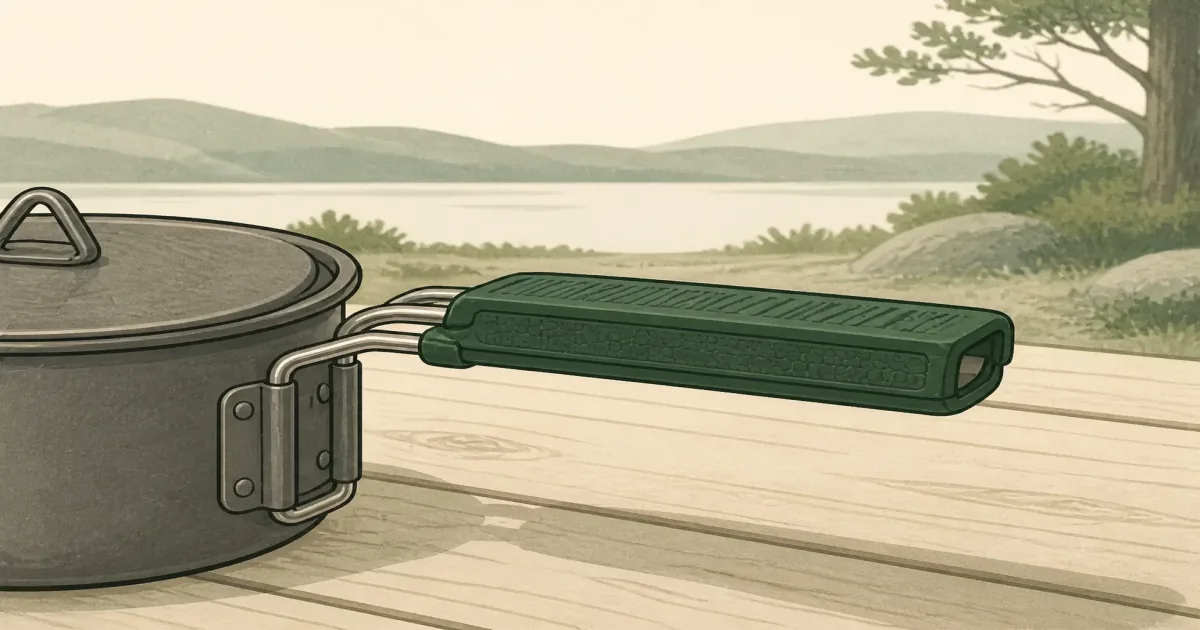
Camping Pot Holder: Silicone Pads That Grip Hot Handles Without Melting
Cookware
A camping pot holder is a heat pad for hot handles, lids, and short carries. Silicone grips stay cleaner than cloth, pack flat, and double as a light trivet on the picnic table.
Our picks
A camping pot holder is the quiet piece of cookware that stops burn blisters. You boil water, grab a metal kettle handle with bare fingers, and learn the lesson once. A silicone pad with a real pocket lets you lift, pour, and set down without hunting for a towel that is already wet.
This is cookware heat protection for stove meals, not a fire mitt. Browse the camp cookware guides for related kitchen gear, and start pot shopping with the best camping cookware pillar when you still need the pans themselves. If your cook set uses a clamp-on lifter instead of fixed handles, read the camping pot handle guide first so you do not buy the wrong tool.
Pot holder vs gripper vs gloves
Three tools get mixed up in camp kitchens.
A camping pot holder is fabric-lined silicone (or thick cloth) that sits between your hand and a hot handle. You slip fingers into a pocket or fold the pad over a bail.
A pot gripper is a metal clamp that becomes the handle for rim-only pots. It does not replace heat protection if the clamp itself gets warm.
Campfire gloves cover wrists and take open-coal heat. They are bulkier and better for dutch oven lids and fire rings than for flipping eggs on a two-burner.
Buy for the job you actually do. Car-camp breakfasts live on pot holders. Cast-iron baking nights lean on gloves.
What makes a camping pot holder worth packing
Grip. Smooth silicone that slips on oily handles is useless. Ribs or a diamond pattern help when grease hits the rim.
Pocket or fold. A backside pocket keeps the top of your hand protected while you pour. Flat pads without a pocket force awkward folds.
Cleanability. Camp cooking is greasy. Silicone rinses; thick quilted cloth holds smells in a closed bin.
Packed size. The pad should live in the kitchen tote, not become another orphan on the picnic bench. A hanging loop or magnet helps you find it at night.
Skip novelty thin pads sold as “heat resistant” with no thickness. Skip decorative cloth squares that look cute and pass heat in three seconds.
Comparison: silicone pad vs fire gloves
The OXO pad is the everyday camping pot holder. The RAPICCA gloves cover the heat jobs that burn through thin pads. Full glove shopping lives in best campfire gloves.
How to use a camping pot holder safely
Dry the pad before you grab anything. Wet fabric and wet silicone both transfer heat faster.
Grip the intended handle, not the pot wall. Steam from a lid gap burns as fast as metal.
Set the pot down on a camping trivet, mineral soil, or a stove grate that is meant for heat. A pot holder under a full cast-iron dutch oven is a scorched table waiting to happen.
Keep the pad off burner grates and open flames. Hang it or park it on the table edge when you are not using it.
Practice pouring with a cool kettle at home if you are new to bail handles. Control matters more than brand names when hot water is involved.
Packing and care
Rinse grease after dinner, shake off water, and air-dry before the tote closes. A damp pad sealed overnight smells like last week’s chili.
Store it with utensils or next to the stove kit so every cook can find it. One shared pad beats three pads buried under paper towels.
Inspect for tears or delaminating fabric. A split pocket dumps your fingers onto hot silicone edges. Replace cheap pads early; they are not a repair project.
Common mistakes
Using a thin dish towel as a camping pot holder. Towels soak, slip, and burn.
Grabbing coal work with a silicone pad. That is glove territory. See dutch oven camping for lid heat.
Leaving the pad on a hot grate. Silicone is not a burner cover.
Buying only gloves and skipping a pad. Gloves are clumsy for light skillet moves. A pad is faster for coffee and eggs.
Assuming one tool fits every pot. Rim grippers, fixed handles, and bails need different habits.
Bottom line
Pack a camping pot holder if you cook on a stove and hate burned fingers. The Lodge 2-in-1 Silicone and Fabric Trivet/Potholder with Magnet covers most weekend meals and sticks to steel when the tote is chaos. Add RAPICCA gloves when coals enter the menu, and keep a metal gripper only when your cook set needs one.
Frequently Asked Questions
What is a camping pot holder?
A heat-resistant pad, usually silicone with a fabric pocket, used to grab hot handles, lids, and short pot carries. It is not the same as a metal camping pot handle gripper that clamps a rim.
Pot holder or campfire gloves?
Use a camping pot holder for stove-top handles and picnic-table moves. Use campfire gloves when you work over open coals, dutch oven lids loaded with briquettes, or long exposures to fire heat.
Can a silicone pot holder be a trivet?
Yes for light pots and coffee presses. For coal-covered dutch ovens and bare picnic tables under cast iron, use a dedicated camping trivet or mineral soil.
Will silicone melt on a camp stove?
Quality silicone pads handle normal pot and pan heat. Do not press them into an open flame or leave them draped on a burner grate.
Cloth pot holders or silicone?
Silicone shrugs off grease and rinses faster at camp. Cloth can work if thick and dry, but it soaks spills and stays wet in a tote.
Do I still need a pot gripper?
If your cook set uses a removable rim clamp, yes. A pad protects hands; a gripper is the mechanical handle. Many kits need both.
How many pot holders should I pack?
One per cook is enough for weekend stove meals. Couples often share one pad and keep gloves for fire work.