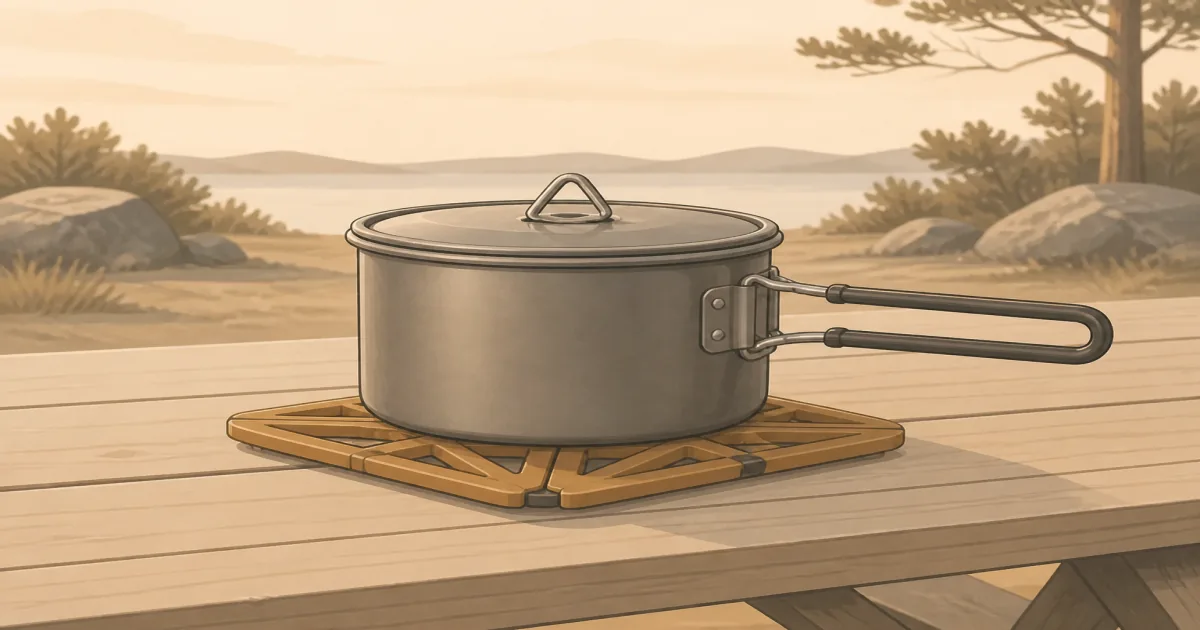
Camping Trivet: Keep Hot Pots Off Picnic Tables and Soft Ground
Cookware
A camping trivet gives hot cookware a safe landing spot. Use a silicone pad under stove pots on picnic tables, and steel lid tools when coals enter the picture.
Our picks
Hot metal needs a place to land. Without a camping trivet, that place becomes the picnic table, a plastic cutting board, or the lid of the cooler. You get scorch rings, warped plastic, and a bad smell that follows the tote home.
This guide is about landing pads, not cookware shopping. For pans and pots, start in the cookware category and the best camping cookware pillar. For coal baking placement, keep dutch oven camping open beside this page.
What a camping trivet actually does
A trivet creates air and distance under a hot pot. That protects the surface below and, for some steel stands, gives a dutch oven lid a clean place to rest while you stir.
Silicone pads and foldable X-trivets shine on picnic tables under skillets, kettles, and coffee presses. A thick silicone pot holder used flat is often enough for stove nights.
Steel camp tools double as lid stands near a fire ring. They shrug off ember heat that would ruin silicone. They are heavier and belong with cast-iron kits, not everyday propane breakfasts.
Rocks can work in a pinch on mineral soil. Do not invent a rock stack on a wooden table or a plastic cooler.
Setup kit: table silicone + fire steel
Table pad: Lodge 2-in-1 Silicone and Fabric Trivet/Potholder with Magnet. Use it flat under a warm skillet, kettle, or French press on a picnic table. It also covers hot handles when you pour. It is not a coal grate. Keep it for stove nights.
Lid stand steel: Stanbroil 15-Inch Dutch Oven Lid Lifter. When you bake with coals, you need somewhere safe for a hot lid. A T-bar lifter parks lids cleanly and keeps hands farther from briquettes. Pair it with gloves and the habits in dutch oven camping. Skip it if your whole menu lives on a propane stove.
Together they cover the two surfaces camp kitchens actually use: the picnic table and the fire ring. One product rarely does both jobs well.
Car camp vs backpacking
Car camping is where a camping trivet earns its keep. You have a picnic table, a cooler, and enough cookware to make scorch marks likely. A silicone pad weighs almost nothing in a tote and saves the table you share with the next guest.
Backpacking is different. Most trail cooks boil in one pot, eat from it, and never park a hot vessel on finished wood. A dedicated trivet is dead weight unless you regularly set a hot pot on a foam sleeping pad or a painted picnic shelter table at a trailhead. In that case, a tiny silicone disc or the same pad you use as a hand protector is enough.
Group car camps and scout weekends need more than one landing spot. Coffee press, skillet, and dutch oven lid can all be hot at once. Plan two pads or one pad plus a steel perch so people stop improvising on plastic lids.
Surface by surface
Wooden picnic tables. Soft wood scorches fast. Use silicone under stove pots. Never park a coal-hot dutch oven on wood, even for a “quick” rest.
Plastic coolers and folding tables. Heat softens plastic and can warp lids. Treat them like they are not heat-safe, because they usually are not.
Mineral soil and fire pans. Fine for cast iron when site rules allow. Clear needles and trash first so you are not starting a ground fire under the pot.
Metal camp tables and stove stands. Better than wood, still check for painted coatings that can blister. Keep fuel canisters away from residual heat.
Tent floors and footprints. Never. Embers and radiant heat punch through fabric faster than people expect.
How to place pots without wrecking camp
Clear a landing zone before you lift. Looking for a spot while holding a full pot is how spills happen. Say the landing spot out loud if kids are nearby so nobody walks into the path.
Use silicone under aluminum and stainless stove pots. Use steel or mineral soil under cast iron that just left coals. If you only have silicone and you must move cast iron, let the pot cool a few minutes first and still prefer dirt over the picnic table.
Keep trivets away from hanging stove fuel lines and plastic tablecloths that can melt from radiant heat. A cheap vinyl cloth under a skillet is a melted mess waiting to happen. Pull the cloth back or cook on bare wood with a pad.
If wind is strong, park heavy pots lower to the ground on a steel stand or dirt, not on a tall wobbly table edge. Wind also cools food faster, so cooks rush and skip the landing pad. Do not.
After cooking, let metal cool before you toss silicone pads into a closed bin. Trapped heat and grease make a sticky mess and can soften nearby plastic utensils.
Packing and cleaning
Wipe the silicone pad dry before the tote closes. Grit stuck to the face scratches soft tabletops on the next trip, so knock dirt off before packing. A quick rinse with camp soap after bacon nights keeps the magnet face from smelling like last weekend.
Store the steel lid lifter with the dutch oven or fire kit. It is easy to leave at the ring when you are tired. Put it in the same stuff sack as the lid lifter gloves so the whole coal kit travels together.
Wash silicone with camp soap, rinse, and air-dry. Steel needs a dry wipe so it does not rust in a damp tote. A light oil film is optional on bare steel tools if your climate is wet.
Common mistakes
Setting a coal-hot dutch oven on a silicone pad. Wrong material. Use steel or dirt.
Using a cutting board as a camping trivet. Boards scorch and pick up grease you later cut vegetables on. Keep prep boards for knives only. See camping cutting board if you need a real prep surface.
Skipping a trivet because “the table is old.” Scorch marks still ruin a shared picnic table, and embers can start trouble.
Buying six decorative trivets and zero fire plan. Match the tool to stove nights versus coal nights.
Leaving hot cookware on a cooler lid. Plastic warps and lids stop sealing. Food safety and ice life both suffer.
Treating a pot gripper as a trivet. A camping pot handle lifts pots. It does not protect the table once the pot is down.
Bottom line
A camping trivet is cheap insurance for tables and coolers. Keep the OXO silicone pad in the kitchen tote for stove meals. Bring the Stanbroil 15-Inch Dutch Oven Lid Lifter when dutch oven lids and coals are on the menu. Hot pots deserve a planned landing spot, not an accident.
Frequently Asked Questions
What is a camping trivet?
A stand or pad that holds hot cookware off a table, cooler, or soft ground. Camping trivets range from silicone table pads to steel lid stands used near coals.
Do I need a camping trivet if I cook on a stove?
Yes if you set hot pots on a wooden picnic table. The stove grate is not your only landing zone when you move a skillet to serve.
Silicone or steel?
Silicone for stove meals and coffee on tables. Steel for dutch oven lids, coal work, and anything that can throw embers. See dutch oven camping.
Can a pot holder replace a trivet?
A thick camping pot holder can park a light kettle for a minute. It is a weak plan for cast iron and a bad plan for coal-loaded lids.
Will a silicone trivet melt?
Food-grade silicone pads handle normal pot bottoms. Keep them off open flames and do not use them as a fire grate.
How do I pack trivets?
Keep the silicone pad in the utensil pouch. Keep the steel lid lifter with the dutch oven kit so it is not left at the fire ring.
Is dirt an acceptable trivet?
Mineral soil works for dutch ovens when regulations allow. Soft grass, plastic tables, and tent footprints do not.