Camping Pot Handle: Gripper Fit, Safe Lifts, and When Fixed Handles Win
Cookware
A camping pot handle, often called a pot gripper, lets you lift a hot pot without a fixed handle on the cook set. Match the jaws to the rim, test the lift, and keep a landing spot ready.
Our picks
A small camping pot saves space because it can nest with bowls, mugs, and a stove. The drawback is that a bare metal pot has nowhere safe to grab once it is hot. A removable pot handle, often called a pot gripper or lifter, solves that problem when it is compatible with the cookware.
The key word is compatible. A gripper is not a universal set of tongs. It needs to hold the intended part of the pot securely and keep your hand away from both flame and steam. For help choosing the cookware itself, see the camp kitchen guides, the best camping cookware pillar, and our guide to the best camping pot sets.
What a camping pot handle does
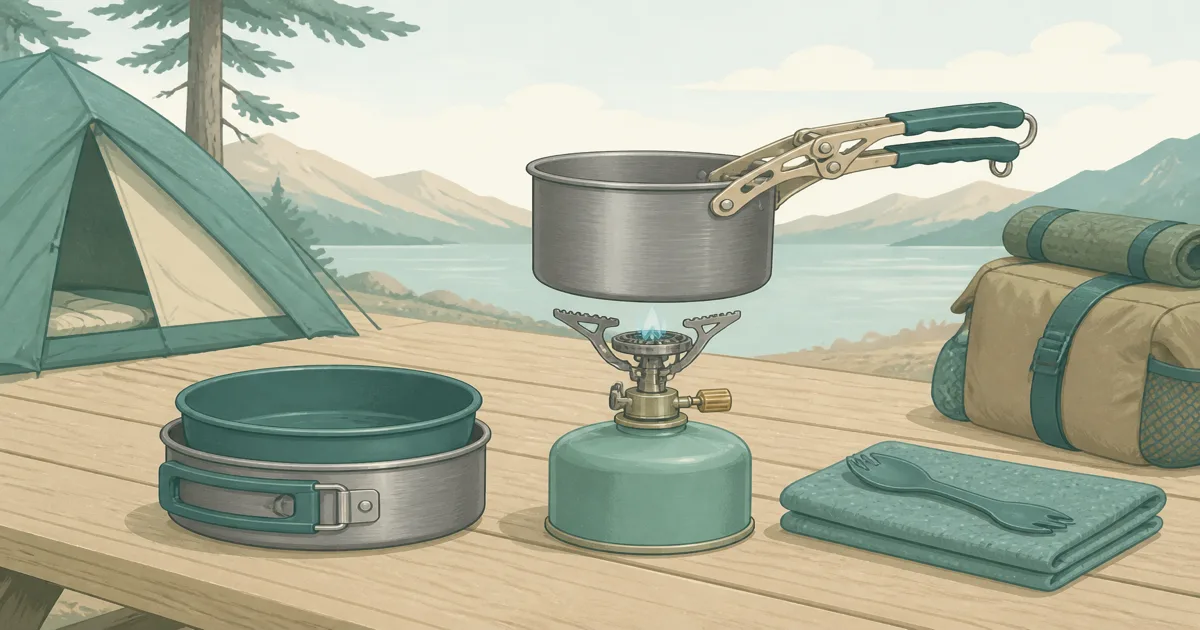
Most pot grippers use two jaws that clamp onto the rim or a designed handle tab. You squeeze the handle, place the jaws over the correct spot, release the squeeze, and lift. The design lets manufacturers make pots that nest tightly without a bulky fixed handle.
That small packed size is especially helpful for backpacking pots and compact car-camp kits. You can slide a lifter inside the largest pot, then add a cloth or sleeve to prevent rattling. It is one less external item to lose if you give it a regular place in the cook kit.
Fixed folding handles are another common option. They are faster to use, but they take up room and can get hot if the pot sits over a wide flame. Neither system is automatically safer. The best choice is the one designed for your specific pot and used with care.
Check compatibility before you buy
Read the cookware maker's instructions first. Some grippers are made for one product line and lock onto a small bracket or formed rim. Others work with several thin-rimmed aluminum pots. A gripper that barely catches the edge of a pot is not safe, even if it feels fine when the pot is empty.
Look at the pot's rim thickness and shape. A rolled rim can be easier to grip than a sharp, thin lip. Pots with a nonstick coating need extra care because metal jaws can scratch a surface if the gripper is not designed for it. Do not improvise with pliers, kitchen tongs, or a multitool.
Consider the weight you actually lift. A one-liter pot of water weighs more than two pounds before you count the pot itself. A large pot of pasta or soup weighs much more. If you cook family meals, a pot with sturdy fixed handles may be a better choice than a tiny detachable lifter.
Setup kit: gripper plus heat pad
The SOTO Handle Lifter and Pot Grabber is a compact option for compatible small cookware. The aluminum and stainless lifter weighs about 0.5 ounces and is designed for SOTO pots.
That intended compatibility is its main strength. It is a neat choice when you already use the matching cook set and want a lifter that nests easily. It is not a reason to force a gripper onto a pot with an incompatible rim, and it is not meant for heavy Dutch ovens or cast-iron skillets.
Add the Lodge 2-in-1 Silicone and Fabric Trivet/Potholder with Magnet when your kit also has kettle bails, skillet handles, or lids that need hand protection. A clamp and a pad solve different problems. Full buying notes for pads live in the camping pot holder guide.
Match the gripper to pots that have a compatible rim. If there is any doubt, use a pot with a built-in handle or carry heat-safe gloves. This lifter is not for Dutch ovens or cast-iron skillets.
Use a pot gripper safely
Set the stove on a stable, level surface before cooking. A gripper cannot make an unstable stove safe. Keep the pot centered so flames do not climb up the sides and heat the handle area. Turn the pot handles or gripper point away from the walking path.
When it is time to lift the pot, remove it from the burner only after checking the grip. Squeeze the gripper, place its jaws fully over the designated rim or tab, and let the jaws close. Lift the empty or lightly filled pot a fraction of an inch first. If it shifts, set it down and reposition.
Use a slow, two-handed move for anything heavy. One hand should hold the gripper while the other steadies the pot only if there is a cool, intended handle or a heat-safe glove. Never put an unprotected hand near the pot wall, where steam and heat can burn you quickly.
Have a landing spot ready before you lift. A heat-safe camp table, stove surface after it cools, or a stable camping trivet works. Do not walk a full pot across uneven ground looking for somewhere to place it. If you are boiling water, our camping water-boiling guide has more stove-safety basics.
Avoid the common mistakes
The most common mistake is assuming every pot gripper is universal. A secure-looking clamp can slide off a rounded rim once the pot is full and hot. Use the gripper only as its maker intended and stop if it does not engage firmly.
Do not grip the lid unless the manufacturer says the lifter is designed for it. A lid can tilt, release steam toward your hand, or pull the whole pot with it. Lift lids away from your face and leave a small opening for steam to escape.
Avoid lifting with greasy gloves or wet hands. The gripper handle needs a controlled squeeze, and moisture can make that harder. Keep a dry towel nearby, but never use a thin dish towel as a substitute for a real handle if the pot is heavy.
Finally, do not use a small pot gripper with cast iron. Cast iron is heavy and retains heat for a long time. Use the sturdy handles built into the cookware and proper heat protection instead. Our camping skillet guide covers cookware that needs a different approach.
Care and packing
Wash the gripper after each trip, especially around the spring and jaw surfaces. Food residue can make the mechanism sticky. Dry it fully and fold it only after checking that the pivot moves smoothly.
Store it inside a pot or in a small marked pocket. A loose gripper is easy to leave on a picnic table after breakfast. A cloth sleeve also stops it from scratching a nonstick pot during travel.
Inspect the jaws and spring before a trip. Bent metal, loose rivets, or worn grip pads are signs to replace the tool. This is not a piece of gear to repair with tape when you will be lifting hot water over a stove.
Is a removable pot handle worth packing?
For a compatible compact cook set, yes. A removable pot handle keeps the kit smaller and gives you a controlled way to move hot cookware. For large meals or cookware with no designed attachment point, fixed handles are simpler and safer.
The SOTO Handle Lifter and Pot Grabber makes sense for the matching cookware and small, light meals. Check the fit at home, practice lifting a pot with cool water, and keep the pot centered over the burner. Those habits matter more than saving an ounce.
Frequently Asked Questions
Do I need a pot gripper for camping?
You need one only if your pot has no insulated fixed handle and the manufacturer supports a separate gripper. A pot with folding handles does not need an extra lifter.
Can a pot gripper lift any camping pot?
No. The jaws must fit the pot rim or intended handle point. Check the cook set instructions before using a gripper with a full pot.
Why does a pot handle get hot on a camping stove?
Heat travels through metal, and flames that curl around the pot can heat a handle very quickly. Keep the pot centered over the burner.
Can I use a pot gripper on cast iron?
Usually no. A small gripper is not intended for the weight or thick rim of cast iron cookware. Use built-in handles plus gloves or a camping pot holder.
Pot gripper or silicone pot holder?
A gripper is a mechanical handle for rim-only pots. A silicone pad protects hands on fixed handles and bails. Many car-camp kits need the pad even when they never use a clamp.
Where should I set a hot pot after lifting?
Plan a camping trivet, cool stove surface, or mineral soil before you lift. Do not wander looking for a spot with a full pot in hand.