Camping Toaster: Better Toast on a Camp Stove
Cookware
A camping toaster can make crisp bread on a propane stove without taking much room in your kitchen bin. The key is low heat and close attention.
Our picks
Toast is easy at home because an electric toaster surrounds bread with controlled heat. At camp, one small burner sends heat into the center of a metal plate. That difference explains why camp toast can be pale around the edge and black in the middle. Breakfast gadgets sit with the wider camp cookware category, near the best camping cookware picks for pots and pans.
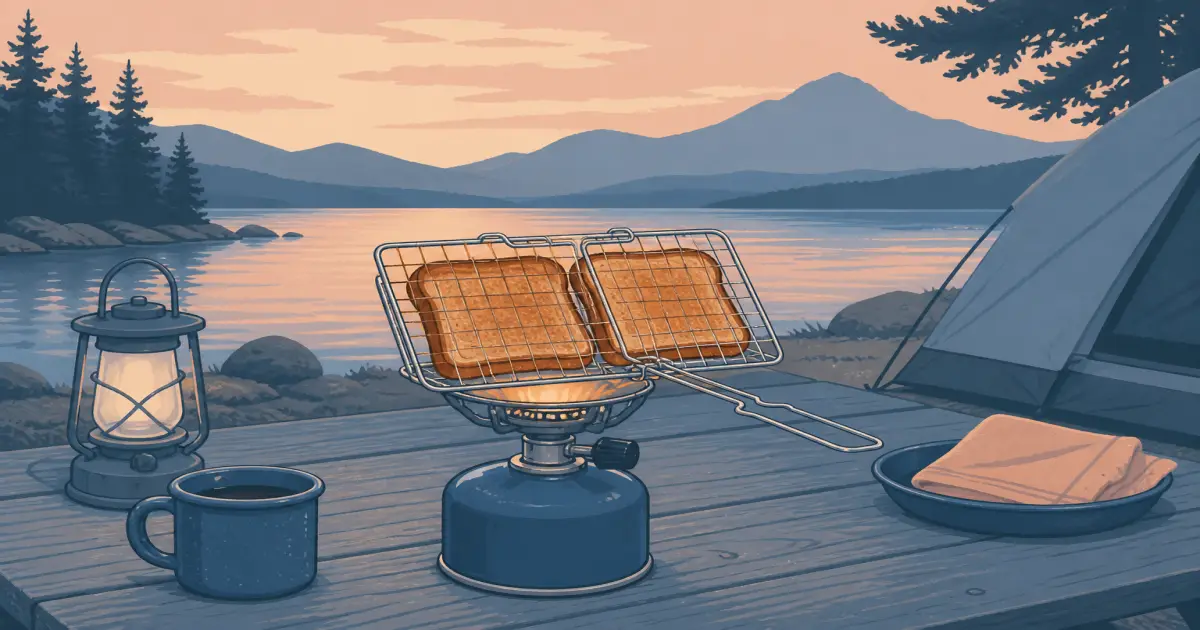
A folding camping toaster can still make a good breakfast. You just need a low flame, a stable stove, and a willingness to watch it. If your burner is not set up yet, start with our camping stove setup guide.
Choose the right kind of camping toaster
The common folding toaster has a perforated steel base and wire supports for four slices. It sits directly over a gas burner and redirects heat toward the bread. This style is inexpensive, light, and easy to store, but it needs hands-on cooking.
A single-slice mesh toaster is smaller and often works better on compact burners. It also takes longer when several people want breakfast. A cast iron sandwich cooker makes filled toast over a fire, but it is heavier and does a different job.
For most car campers, the four-slice folding model is the useful middle ground. It packs beside a plate, makes enough toast for two people in one round, and does not add another pan to wash.
How to use a camping toaster without burning breakfast
Set the stove on firm, level ground with plenty of air around it. Open the toaster fully and center its base over the burner. Keep fuel hoses, paper towels, and dry grass away from the cooking area.
Light the stove before adding bread. Start at low heat and give the metal about 20 seconds to warm. Place slices on the wire supports, leaving a little space between them. Thin sandwich bread browns faster than dense sourdough or bagels.
Watch the lower edge of each slice. As soon as it starts to color, turn or rotate the bread. You may need to move every slice through each position because the center receives more heat than the outside.
Do not walk away to make coffee. The difference between pale and burnt can be less than a minute once the toaster is hot. Use tongs when moving bread, and let the metal cool completely before folding it.
Our simple pick for a camp stove
The Coghlan's Camp Stove Toaster is the straightforward option for a car-camp kitchen bin. The steel frame folds almost flat, and the wire holders make room for four standard slices. Keep the flame low and rotate so one side does not charcoal.
Owner feedback is consistent about the tradeoff. It makes real toast, packs easily, and costs little, but even browning takes attention. The metal also discolors over direct heat. That is normal for this kind of tool and does not mean it has stopped working.
This is a single-hero recommendation because the basic wire design is simple. You do not need a complicated comparison between nearly identical folding frames. Buy it if toast appears on most trip menus. Skip it if a skillet already handles breakfast and pack space is tight.
Camping toaster or skillet?
A camping toaster makes dry, crisp toast without oil. It keeps your skillet free for eggs and requires almost no cleanup beyond shaking off crumbs after it cools.
A camping skillet is better when you like bread browned in butter or want one tool for several jobs. Press each slice onto a lightly greased pan over medium-low heat, then flip it when the underside turns golden. The result is richer and usually more even.
The skillet also wins in strong wind because the pan stores more heat. The folding toaster wins on packed size and cleanup. For two people with a full breakfast menu, using both can make sense: eggs in the skillet and toast on the second burner.
Bread, heat, and timing
Soft sandwich bread cooks fastest. Keep it away from the center hot spot and expect to turn it several times. Thick bakery bread needs more time at lower heat so the surface browns before the middle dries out.
Bagels are awkward on many four-slice stands because the halves are thick and can lean toward the burner. A skillet usually handles them better. English muffins work well if you face the cut side toward the heat first and rotate early.
Wind stretches cooking time and pushes flame to one side. Use the stove's built-in wind protection or a safe freestanding screen with adequate clearance. Never wrap a fuel canister or trap heat around it. Check the stove maker's guidance before adding any windscreen.
Small details that make it easier
Pack silicone-tipped tongs with the toaster. Fingers are too close to hot wire, and a fork can knock the whole frame off balance. A small cutting board or plate gives finished slices a clean landing spot.
Keep toppings ready before you start. Toast cools quickly outside, especially on a chilly morning. Butter spreads more easily if it is not straight from an icy cooler. Store jam in a small sealed jar rather than bringing a sticky full-size container.
Shake crumbs out only after the toaster is cool. Wipe off grease or food residue, dry the steel, and leave it unfolded until no moisture remains. Then slide it beside plates or cutting boards where the wires will not snag soft gear.
Common mistakes
Using full flame. High heat makes a dark circle in the center while the corners stay pale. Lower heat gives you time to rotate the bread.
Leaving the stove unattended. This is not an electric pop-up toaster. It needs someone watching from the first slice to the last.
Touching the frame too soon. Thin steel heats fast and stays hot longer than it looks. Use tongs and allow a full cooldown.
Putting it on an unstable backpacking burner. Four slices create a wide, top-heavy setup. Use a burner and grate that support the toaster securely.
Packing it with crumbs and moisture. Clean, dry steel stores better and does not spread stale food smells through the kitchen bin.
Bottom line
A camping toaster is a small luxury, but it earns its space when toast is part of every breakfast. The Coghlan's Camp Stove Toaster has a simple folding design, a long review history, and enough room for four slices. Keep the flame low, rotate often, and use a skillet instead when you want buttered bread or a more versatile tool.
Frequently Asked Questions
Can you use a camping toaster on a propane stove?
Yes. Center it over one burner, start with a low flame, and rotate the bread often. Follow the toaster and stove instructions.
How long does a camping toaster take?
Allow about four to eight minutes for a batch, depending on the burner, bread thickness, wind, and how dark you like it.
Can you use a camping toaster over a campfire?
A controlled stove is easier and safer. Open flames create uneven heat and can damage a toaster not designed for direct fire.
Why does my camp toast burn in the middle?
The burner is probably too high or too concentrated. Lower the flame and rotate both the toaster and slices more often.
Is a skillet better than a camping toaster?
A skillet is more versatile and makes good buttered toast. A wire toaster is useful when you want dry toast and do not want to wash a pan.
How do you clean a camping toaster?
Let it cool completely, shake out the crumbs, then wipe off grease or food residue and dry the steel. Leave it unfolded until no moisture remains so it stores without stale smells.