Best Hiking Water Bottle (2026): Day-Hike Tested Picks for the Trail
Hydration
A hiking water bottle has to match the trail, the weather, and how much weight you want to carry. Pick by mouth size, threads, and insulation, not by the cleanest spec sheet.
Our picks
A hiking water bottle has to match the trail, the weather, and how much weight you want to carry. Most day hikers carry one bottle. Some carry two. The right bottle threads onto a filter, fills from a stream, and does not leak in a side pocket. The hydration category covers bottles, jugs, and treatment gear for the trail. The overnight-backpacking companion is covered in the best water bottle for backpacking guide.
Hiking water bottles split into three jobs. Hard plastic is the workhorse for trail reliability and refill speed. Double-wall stainless is the choice for hot summer trails where cold water matters more than weight. Lightweight insulated stainless is the middle ground for hikers who want cold retention without the YETI weight.
Match the bottle to the longest water carry on the trail. Most US day hikes are under 8 miles with reliable refill points. A 24 to 32 ounce bottle covers most routes. Hot-weather hikes in the desert or the South need insulation, and weight becomes worth it.
Comparison at a glance
Top pick: Nalgene 32 oz Wide Mouth
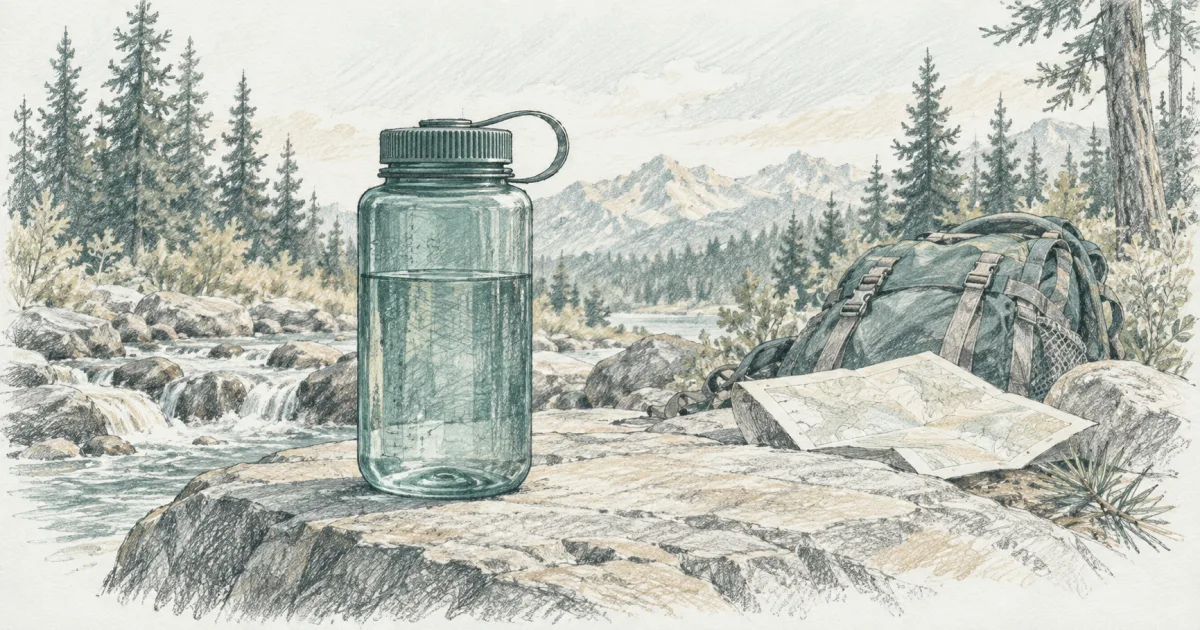
The Nalgene 32 oz Wide Mouth Water Bottle is the trail-tested default for day hikes. Tritan plastic survives drops on rocks, the wide mouth fills fast from streams and pots, and standard threads fit most backcountry filters. The bottle has been on the market for decades and every US outdoors store stocks it.
The 32 ounce size covers most 4 to 6 mile summer hikes without a refill. Volume markings on the side help mix drinks in the bottle at the trailhead. The dishwasher-safe Tritan body needs no special cleaning. Countryfile Magazine called the Nalgene "a plastic bottle built to last" in their 2024 hiking bottle review.
Best for trail reliability, refill speed, and any hike where you might need to filter untreated water. Skip it for hot summer trails in the desert where cold water matters more than weight, and for ultralight setups where every ounce counts.
Who it is for: Day hikers, group hikes, and anyone who values reliability over insulation.
Who should skip it: Hot-weather hikers who want cold water and ultralight setups where every ounce counts.
Pros
- Threads onto Sawyer, Platypus, and Katadyn filters without adapters
- Volume markings on the side help split water at the trailhead
- Dishwasher-safe Tritan plastic that holds up to drops on rocks
Cons
- Water warms fast on a hot afternoon since the plastic does not insulate
- Hard bottle adds fixed bulk to a side pocket
Shop: Nalgene 32 oz Wide Mouth on Amazon
Best insulated: YETI Rambler 26 oz with Chug Cap
The YETI Rambler 26 oz Bottle is the hot-weather pick for day hikes. Double-wall vacuum insulation keeps ice water cold for 30-plus hours under trail conditions. The chug cap is leakproof when closed and drinks one-handed while walking. The 18/8 stainless body has no metallic taste and is dishwasher-safe.
Countryfile found "hot water after 10 hours" in their insulation test, confirming that the YETI also works for hot drinks on cold hikes. Advnture called the chug cap "easy to drink out of without dumping water on your face" in their 2023 buying guide. The 1.4 pound empty weight is the trade; it is more than twice a Nalgene but the cold-water payoff is worth it on a hot afternoon.
Best for summer trails in Arizona, Texas, Utah, and California where cold water matters more than weight. Skip it for cool-weather hikes and ultralight setups where every ounce counts.
Who it is for: Hot-weather hikers, summer desert trails, and anyone who hates warm water.
Who should skip it: Cool-weather hikers and ultralight setups.
Pros
- Chug cap drinks one-handed while walking
- Ice cubes still rattling after a 7-mile summer hike
- No metallic taste, dishwasher-safe 18/8 stainless
Cons
- At 1.4 lbs empty, it weighs more than twice a plastic bottle
- Heavier in the side pocket than plastic on a long day
Shop: YETI Rambler 26 oz on Amazon
Best mid-weight: Hydro Flask 24 oz Lightweight Trail Series
The Hydro Flask 24 oz Lightweight Trail Series Wide Flex Cap is the mid-weight pick when you want insulation without the YETI weight. The Trail Series stainless is about 25 percent lighter than the standard Hydro Flask 24 oz, the double-wall vacuum insulation keeps cold water cold through a hot afternoon, and the Flex cap is leakproof when closed. Empty weight is about 11 ounces.
Countryfile's 2024 test found "we had hot water after 10 hours" on the Trail Series, matching the YETI for hot retention. The wide mouth fills fast from streams and pots, and the flex cap threads onto most 28 mm backcountry filters. The trade: the wide mouth is harder to drink from while walking than a chug cap, so this is the pick for hikers who stop to drink, not drink-on-the-move hikers.
Best for mid-weight insulation, cool-to-hot weather hiking, and anyone who wants a Hydro Flask at a lower trail weight. Skip it for ultralight setups where every ounce counts and for hot-weather hikers who want one-handed drinking.
Who it is for: Mid-weight insulation, cool-to-hot weather hikes, and hikers who stop to drink.
Who should skip it: Ultralight setups and hot-weather hikers who want one-handed drinking.
Pros
- About 25 percent lighter than the standard Hydro Flask 24 oz
- Cold water stays cold for 24 hours under trail conditions
- Flex cap is leakproof and threads onto most 28 mm filters
Cons
- Wide mouth is harder to drink from while walking than a chug cap
- Lid becomes stiff when icy
Shop: Hydro Flask 24 oz Lightweight Trail Series on Amazon
How to choose without overbuying
Pick one bottle that matches the trail and weather. Two bottles on one hike usually means one stays in the pack and the other does the work. Choose two of the same pick if you can.
For most US day hikes, the Nalgene 32 oz Wide Mouth is the right call. For summer desert trails, the YETI Rambler 26 oz wins on cold retention. For mid-weight insulation at a lower price, the Hydro Flask 24 oz Lightweight Trail Series is the middle ground.
Mistakes that wreck day-hike water plans
Choosing a narrow-mouth bottle. Wide mouths fill faster, accept ice cubes, and accept backcountry filters. Narrow mouths drink cleaner but slow every refill. Most day hikers land on wide mouths.
Forgetting the threads. A bottle that does not thread onto your filter means extra adapters and slow refills. Most US backcountry filters use 28 mm threads. Check the bottle before you buy.
Skipping a backup bottle. A single bottle that leaks or falls in a stream ends the hike. Always carry at least one backup bottle or a small soft flask as a redundancy.
Filling too early in the trail. A full bottle sloshes and weighs more than you think. Fill at the last water source before the summit, not at the trailhead.
Water treatment basics that pair with the bottle
A water bottle without treatment is half a system. Pair the bottle with a filter for clear streams, a purifier for sketchy sources, or both for travel. The Sawyer Squeeze threads onto the Nalgene and weighs about 3 ounces. The Platypus QuickDraw threads onto most 28 mm bottles for the lightest setup.
For camp use, store treated water in a camping water jug at the picnic table. Use a camping water pump when the group needs to refill jugs fast from a shallow stream or lake. The best camping water filter guide covers the matching filters.
For overnight trips with longer water carries, the best water bottle for backpacking guide covers collapsible soft bottles, insulated picks, and the weight-versus-capacity tradeoffs of multi-day trips.
Bottom line
The best hiking water bottle matches the trail, the weather, and how much weight you want to carry. Pick the Nalgene 32 oz Wide Mouth for trail reliability, fast refill, and filter use. Pick the YETI Rambler 26 oz for hot summer trails where cold water matters more than ounces. Pick the Hydro Flask 24 oz Lightweight Trail Series for mid-weight insulation without the YETI weight. Pair the bottle with a backcountry filter, carry a backup, and you stop worrying about water on the trail.
Frequently Asked Questions
What is the best hiking water bottle overall?
For most day hikes, the Nalgene 32 oz Wide Mouth is the best hiking water bottle. It is tough, fills fast, and threads onto every common backcountry filter. Choose the YETI Rambler 26 oz for hot summer hikes where cold water matters more than weight. Choose the Hydro Flask 24 oz Lightweight Trail Series when you want insulation without the YETI weight.
How big should a hiking water bottle be?
Most day hikers carry one 24 to 32 ounce bottle. A 32 ounce Nalgene covers a 4 to 6 mile summer hike without refills. A 26 ounce YETI covers the same miles with cold water. A 24 ounce Hydro Flask Trail Series is the lightest insulated pick and works for shorter hikes with reliable refill points.
Do hiking water bottles need to filter?
The bottle is just a container. Pair it with a backcountry filter or purifier for untreated water. The Sawyer Squeeze and Platypus QuickDraw both thread onto standard 28 mm bottles. The Nalgene Wide Mouth 32 oz is the easiest bottle to filter into at a stream.
Is a Nalgene or a YETI better for hiking?
A Nalgene is tougher, lighter, and threads onto filters. A YETI Rambler keeps cold water cold through a hot afternoon and survives any drop. Most day hikers pick the Nalgene for reliability and refill speed. Hot weather hikers pick the YETI for the cold-water payoff.
Can you freeze a hiking water bottle?
Plastic bottles like the Nalgene freeze fine and double as ice packs in a day pack. Stainless bottles like the YETI and Hydro Flask should not be filled to the top before freezing. Leave room for the ice to expand.
What about insulated water bottles for hiking?
Insulated bottles keep cold water cold through a hot afternoon, which matters on summer trails in Arizona, Texas, Utah, and California. The trade is weight. A YETI Rambler 26 oz empty weighs about 1.4 pounds, which is more than twice a Nalgene 32 oz at 6.2 ounces.
How do you clean a hiking water bottle?
Wide-mouth hard bottles go in the dishwasher. Collapsible soft bottles need a bottle brush and a few drops of camp soap. Insulated stainless bottles can be hand-washed with a long brush and a bottle-specific cleaner. Air dry fully before storage to stop mold on the inside.
Why do hikers like Nalgene?
The bottle has been on the market for decades, every US outdoors store stocks it, and the threads fit every common backcountry filter. The Tritan body survives drops on rocks and the volume markings help mix drinks at the trailhead. The trade is no insulation: water warms on a hot afternoon.