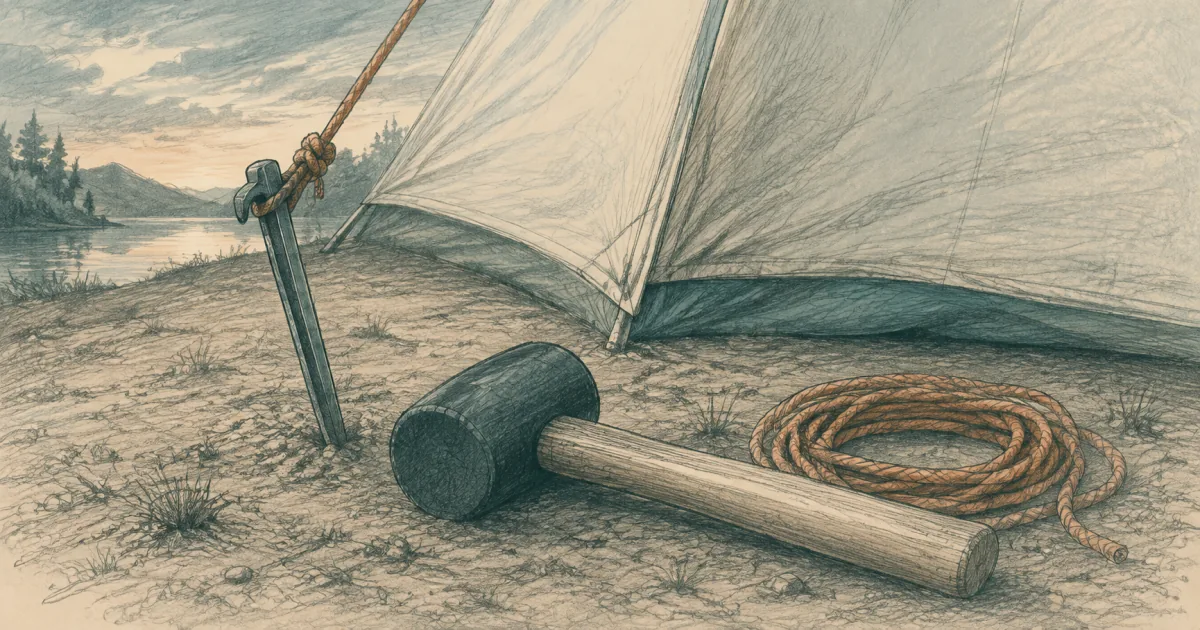
Best Camping Mallet: Drive Steel Stakes Without Bending Them
Stoves
The best camping mallet is the one that drives your stakes straight without bending them. Rubber for steel, dead-blow for backpacking, and a hook on the back to pull stakes out at the end of the trip.
Our picks
Steel tent stakes do not sink into hard ground on their own. You can step on them, but the head bends and the stake leans sideways. A small mallet turns the job into a one-handed strike. The right head weight protects the stake and your wrist at the same time. The wrong head splits plastic pegs and cracks in cold weather. Stake and setup tools live in the stoves category alongside camp fire gear, with the best camping stove guide for cooking.
This guide covers rubber versus wood versus dead-blow heads, what weight matters for car camp versus backpacking, and how to drive and pull stakes without bending them. For choosing the stakes themselves, see best camping stakes. For how a mallet fits into a camp setup, see camping stove setup.
Why a rubber mallet is the safest pick
A rubber head bounces off steel without scarring it. Steel tent stakes already have a paint or galvanized coating. A claw hammer dents the coating and rust starts in the scratch. A rubber mallet strikes the head and stops without leaving a mark.
Rubber also protects plastic stakes. Many car campers carry a mix of plastic pegs for soft ground and steel nails for hard ground. One rubber mallet drives both without splitting the plastic heads.
Wood heads look classic and work on steel, but they can split in cold weather. A cracked wood head flies off mid-swing and ruins a trip. Skip wood unless you want a wall mallet that stays inside the camper.
Dead-blow heads (steel shell filled with sand or shot) hit the hardest for the weight. They make sense for rocky ground or commercial canopies. Most weekend campers do not need the extra force.
What weight to pack
Car camp mallet weight sits between 12 and 16 ounces. A 12-ounce head strikes a 10-inch steel stake with enough force to seat it flush in two to three hits. A 16-ounce head does the same job with one to two hits, at the cost of wrist fatigue over a long setup.
Backpackers drop to 8 to 12 ounces. A smaller mallet fits in a side pocket and saves pack weight. Driving takes a few extra hits per stake, but on trail you usually have fewer stakes and softer ground.
Anything over 24 ounces belongs in a workshop. Campers tend to swing a heavy mallet sideways when tired, and that bends the shaft of a steel stake in two hits. Keep the weight honest.
How to drive stakes without bending them
Hold the mallet so the head strikes flat on the stake cap. The face should be parallel to the top of the stake. An angled strike glances off and bends the head over time.
Drive straight down, not at an angle. Angled stakes pull out the first time the wind catches the guyline. A mallet striking straight down keeps the stake vertical and the load true.
Stop when the stake head is flush with the ground. Driving it past the head leaves a trip hazard and gives the wind a lever to work against. Flush stakes hold better and survive packing.
How to pull stakes without wrecking the head
Most rubber mallets have a small notch or hook on the back of the head. Slide it under the stake cap, lift straight up, and the stake pulls clean. Pull straight up, not sideways. Sideways force bends steel and cracks plastic.
If the ground has dried hard, rock the stake back and forth gently while pulling up. A few small side-to-side wiggles break the soil seal without bending the shaft. Avoid prying the mallet like a crowbar.
For deeply set stakes, a separate stake puller is faster. A small D-handle puller grips the stake head and levers it out with mechanical advantage. Most car campers only need the puller when ground is rock-hard.
Where a camping mallet fits in the kit
A mallet belongs in the same bin pocket as the stakes. Keep them together so setup and teardown use the same hand. Spread the load across a few kit zones: stakes and mallet in one, guylines in another, pole repair in a third.
For a campfire pit, a mallet also helps seat a portable fire pit base or drive fire poker supports into hard ground. Same swing, different accessory. Skip the mallet for actual wood splitting. That is a hatchet job.
When to skip a camping mallet
Skip a dedicated mallet if all your stakes are plastic pegs for soft grass. A boot heel seats a 7-inch plastic peg in two to three presses. Carry the mallet only when steel is on the gear list.
Skip a heavy mallet for short car camps where you only set one or two guylines. A small folding tent already includes the stakes you need. The mallet is overkill for a quick overnight.
Skip a rubber mallet when you also need to split kindling. Wood splitting chews up a rubber face fast. Pair the rubber mallet with a camping hatchet for kindling and a camping fire poker for log management.
Common mallet mistakes
Swinging sideways to "drive around a rock" bends the stake and ruins the head. Lift the stake, move it an inch, then drive straight down again.
Hitting the stake cap with a claw hammer dents the cap. A dented cap lets the stake flex in the ground and pull out in wind. Switch to rubber before the head bends.
Storing the mallet in a wet bin pocket grows mildew on the rubber face. Wipe the head dry before packing. A quick towel wipe at teardown keeps the rubber soft for years.
Mallet picks for camp kits
The Estwing DFH-12 Rubber Mallet, 12 oz is the car camp pick for steel stakes. The rubber head protects stake coatings, the 12-ounce weight seats 10-inch steel in two to three hits, and the hook on the back doubles as a stake puller.
The Stanley 16-Ounce Rubber Mallet is the backpacking-friendly backup. It hides in a side pocket, hits hard enough to drive steel in soft ground, and handles plastic pegs without splitting. Pick the Stanley when every ounce counts and the mallet must pull double duty as a tent repair tool.
Drive straight down, pull straight up, and store the mallet dry. A small rubber mallet turns a bag of stakes into a shelter that holds through real wind.
Frequently Asked Questions
Do I really need a camping mallet?
For steel stakes, yes. Trying to drive a 10-inch steel nail with a rock or a boot heel bends the head and leaves the stake crooked. A small rubber mallet fits in any car camping bin and pays for itself the first trip.
Rubber, wood, or dead-blow head?
Rubber is the safest for most stake heads. Wood works on steel but can split. Dead-blow gives the most force for rocky ground but adds weight.
How heavy should a camping mallet be?
12 to 16 ounces covers car camp. Backpackers drop to 8 to 12 ounces and accept slower driving. Heavier is not always better because wrist fatigue builds fast.
Can I use a regular hammer?
A claw hammer works on steel but dents the stake head and cracks plastic. The narrow face concentrates force on a small spot. A wider rubber face spreads the blow and saves the stake.
Will a mallet bend my stakes?
No. Rubber or wood heads bounce off metal without bending. The risk is sideways force on the shaft, which is why you drive straight down and pull straight up.
How do I pull stakes with a mallet?
Most rubber mallets have a small V-notch or hook on the back. Slide it under the stake head and lever up. Pull straight up, not sideways, so steel does not bend.
What if my mallet is too small?
Move to a heavier one. A 12-ouncer bends plastic stakes. A 16-ouncer drives steel. A 24-ouncer belongs in a workshop, not a camp tote.