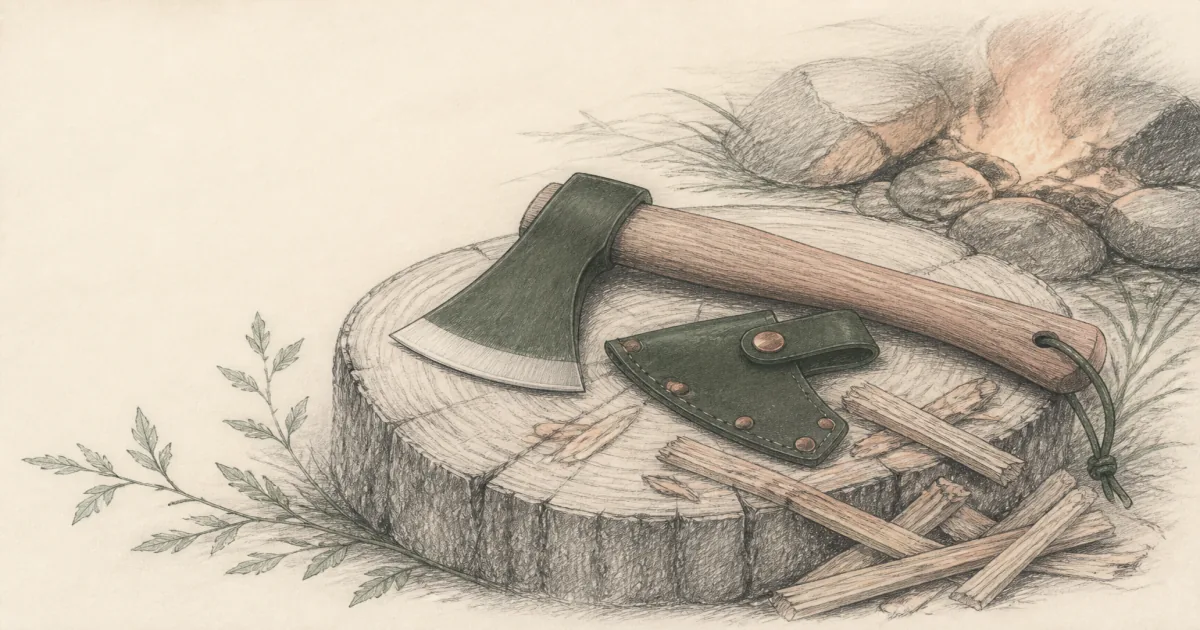
Best Camping Hatchet (2026): Kindling, Limbs, and Pack Weight
Stoves
The best camping hatchet is a 14-inch tool for kindling and small limbs, not a full felling axe. Match handle length and sheath to how you pack the car.
Our picks
A camping hatchet is a short chopping tool for kindling and small limbs, not a substitute for a trail saw or a full splitting axe. The shopping mistake is buying a heavy axe “just in case” and then leaving it in the garage because it never fits the car kit.
This page sits with fire-prep gear in the camping stove guides. Pair it with camping fire starter, camping bellows, and best campfire gloves. A camping fire poker moves coals once the fire is going. This is not a boil-water guide. For heating water, stay on how to boil water while camping.
Hatchet vs axe vs saw
If your campsite sells firewood in split rounds, you may only need a hatchet for feather sticks and kindling. If you process deadfall often, add a folding saw, and the best camping saw guide covers the picks for camp wood.
Comparison table
Top pick: Fiskars X7
The Fiskars X7 is the best camping hatchet for most people because it is light enough to use for twenty minutes of kindling without arm punishment, and sharp enough that you are not fighting the bit out of every stick. The 14-inch length is the sweet spot for car camping. Longer axes feel powerful once. They are awkward in a crowded trunk.
The low-friction coating helps on green or sticky wood. The sheath matters more than marketing copy. Pack the hatchet sheathed, edge away from soft goods, and never loose under seats.
Who it is for: Weekend fire rings, family camps that buy firewood, and anyone who wants a forgiving first hatchet.
Shop: Fiskars X7 on Amazon
Best forged classic: Estwing Sportsman’s Axe
The Estwing Sportsman’s Axe is the camping hatchet for people who want steel that does not rely on a molded handle joint. Head and handle are forged as one piece. The leather grip gets better after a few trips if you keep it dry when stored.
It weighs more than the Fiskars. That weight helps on stubborn knots and light stake work. It is still a hatchet-length tool, not a felling axe. Keep the sheath on in the vehicle. Leather grips hate long wet tote storage.
Who it is for: Campers who want one durable chopping tool for years of seasonal use.
Shop: Estwing Sportsman’s Axe on Amazon
Best packable: Gerber Pack Hatchet
The Gerber Pack Hatchet is for kits where a 14-inch tool is too long. At under 10 inches overall, it limbing small branches and does light camp chores without claiming to split thick rounds. Full tang and a rubber grip help when hands are wet.
Do not buy this as your only wood tool if your plan is processing arm-thick firewood. Buy it when the hatchet has to live in a day pack next to a saw, or as a secondary tool beside a car-camp Fiskars.
Who it is for: Pack-focused trips, canoe day kits, and ultralight-leaning car campers.
Shop: Gerber Pack Hatchet on Amazon
Safe use at the fire ring
Wear eye protection when chopping. Clear a stable footing and a solid chopping block. Keep bystanders out of the swing arc. Gloves help with splinters. They do not replace attention around a sharp bit. See best campfire gloves for heat work after the fire is lit.
Stop when wood is iced or the block is tippy. A folding saw is safer than fighting a bouncing round with a short hatchet.
How to pack the hatchet in the car kit
Keep the sheath on from garage to campsite. Nest the hatchet along the side of the cook bin, edge facing away from soft goods and kids’ gear. Do not leave it loose under a seat where a hard stop can throw it.
If you also carry a folding saw, put both tools in the same tote as the camping fire starter. That way the fuel-prep kit arrives together. A camping fire poker belongs in the same tote after the fire is lit, not in the hatchet sheath pocket.
Wipe the bit dry before you pack out. Sap and wet sheath leather dull edges and invite rust on forged steel. Composite-handled tools hate long soaks in a wet trunk too.
Common mistakes
Buying a full axe for “camping.” Most sites only need kindling tools.
Packing without a sheath. Soft bags and kids’ fingers lose that argument.
Skipping a fire starter. Sharp steel does not equal dry tinder.
Using the hatchet as a hammer on stakes all weekend. Occasional light taps are fine. Abuse dulls edges and loosens grips.
Bottom line
Buy a camping hatchet for kindling size, not ego. The Fiskars X7 is the best camping hatchet for most weekends. Take Estwing for forged longevity, or Gerber Pack when the tool must stay tiny. Then sheath it, pack a fire starter, and leave the boil-water job to the stove guide.
Frequently Asked Questions
What is the best camping hatchet overall?
The Fiskars X7 for most weekend car camps. Choose Estwing when you want forged steel longevity, or the Gerber Pack Hatchet when every ounce and inch matters.
Who makes the best camping hatchet?
Fiskars wins most “first hatchet” buys on weight and ease. Estwing wins traditional forged feel. Gerber wins compact pack kits.
What is the best size hatchet for camping?
About 14 inches overall for car camping kindling. Shorter pack hatchets (around 9–10 inches) are for light limbing, not splitting arm-thick rounds.
Which is better for camping, an axe or a hatchet?
A hatchet for kindling and small limbs. A full axe only if you regularly process larger wood and can store a longer tool safely in the vehicle.
Is it illegal to have a hatchet in your backpack?
Laws vary by city, park, and transport rules. Many campgrounds allow hatchets for firewood prep. Check local regs and keep a sheath on in transit.
Do I still need a fire starter if I have a hatchet?
Yes. A hatchet makes fuel size. It does not light damp wood. Keep a camping fire starter and camping bellows in the same tote.
Hatchet or folding saw for camp wood?
Many kits carry both. A saw is quieter and safer for larger limbs. A hatchet is faster for splitting kindling once pieces are short.