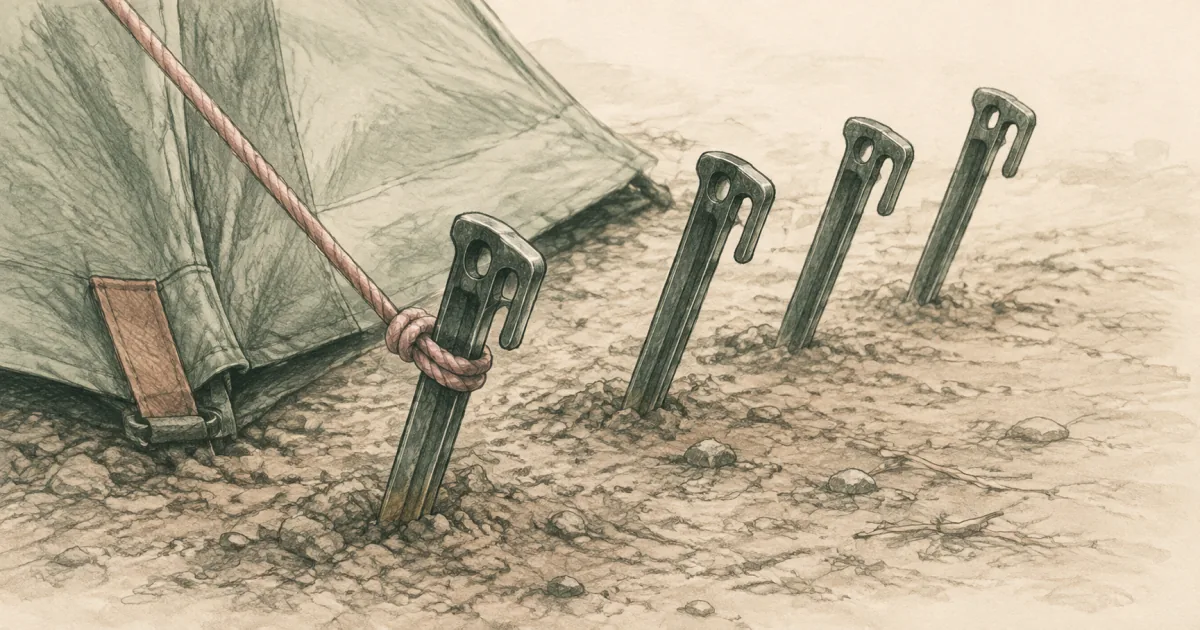
Best Camping Stakes: Steel Nails, Plastic, and Screw-In Anchors
Stoves
The best camping stake is the one that drives into the soil you actually camp on. Steel nails for hard ground, plastic for soft grass, and screw-in anchors for sand and loose dirt.
Our picks
A tent stake is the cheapest piece of gear in your kit and the first thing that fails in a real wind. Buy good ones, pack a couple of spares, and match the stake to the ground you actually camp on. Steel nails for hard or rocky sites. Plastic pegs for soft grass and campground loops. Screw-in anchors for sand, beach, and loose desert dirt. The stoves category collects the fire and setup guides that pair with good stakes, plus the best camping stove roundup.
This guide covers the three jobs a camping stake has to do. Hold a tent or tarp on hard ground without bending. Pull out clean when you break camp. Survive more than one season. The picks below are the ones that earn repeat trips. See best camping cookware and best portable fire pit for the rest of the camp kitchen kit. For a wood-fire cooking surface that sits on top of those stakes, jump to camping grill grate.
Match the stake to the soil
The fastest way to lose a tent is to bring the wrong stake. Hard ground laughs at plastic pegs. Sand pulls smooth nails out the first time the wind catches the fly. Look at the soil before you buy.
Hard, rocky, or root-bound dirt. You need steel. Galvanized 10-inch nails with a hook or eye at the top will drive through packed gravel and stay put. Bring a rubber mallet or a rock.
Soft campground grass and loam. Plastic pegs work and they pull out without a fight. Bright colors help you find them when you tear down in the dark. Skip the toy 6-inch stakes that come with most tents.
Sand, beach, or loose desert soil. Smooth nails pull right out. A screw-in anchor like the Orange Screw or a longer plastic spiral peg holds because the threads or coils resist pull-out.
Quick comparison
Top pick: Eurmax USA Galvanized 10-Pack
The Eurmax USA Galvanized Non-Rust Camping Family Tent Pop Up Tent Stakes Canopy Anchors Heavy Duty 10pc-Pack is the pick for most car campers on hard ground. Ten 10-inch galvanized nails cover a family-sized tent plus a tarp or screen room. The set ships with four pre-cut 10-foot guylines and a bright stopper, which is everything you need to lock down a rain fly in one trip.
Drive the nails with a rubber mallet. The plastic heads do not split under normal hammer blows. Pull them with a stake puller or by hand once the soil dries. Galvanized steel will bend if you pry sideways instead of pulling straight up. Treat them like screwdrivers, not pry bars, and they last many seasons.
Who it is for: Weekend car campers on hard or rocky ground who need a full stake set plus a couple of guylines and a tarp stopper.
Who should skip it: Ultralight backpackers who count ounces and campers on soft grass who do not need ten 10-inch nails.
Pros
- Ten 10-inch galvanized nails cover a family tent plus a tarp
- Includes pre-cut guylines and a high-visibility stopper
- Plastic heads survive repeated mallet blows
Cons
- Needs a mallet or a rock to drive into hard ground
- Heavier than plastic pegs for backpacking
Check the Eurmax 10-pack on Amazon
Best value: Eurmax USA Secure 10-Pack
The Eurmax USA 10-Pack Secure Protection Galvanized Tent Stakes is the same galvanized build with a slightly different head and the same set of pre-cut guylines and orange stopper. Pick this when the brand name you trust is the one with the high-contrast stopper, or when the standard Galvanized listing is out of stock.
Performance on the ground is identical to the Top pick. The difference is the head profile and the box. Treat it the same way you would treat the Top pick and the stakes will last the same number of trips.
Who it is for: Anyone who likes the Eurmax galvanized build and wants the higher-visibility head for evening teardown.
Pros
- Same galvanized 10-inch steel as the Top pick
- Pre-cut guylines and bright stopper included
- Easy to swap if the standard Galvanized set is sold out
Cons
- No real performance gain over the Top pick
- Still needs a mallet to drive
Check the Secure 10-pack on Amazon
Best compact: FEED GARDEN 7-Inch 10-Pack
The FEED GARDEN Heavy Duty Tent Stakes 7-Inch 10-Pack Galvanized Steel Ground Anchors is the pick for soft campground loops and grass sites. Ten 7-inch galvanized pegs fit a smaller carry bin and are easier to drive by hand or with the heel of a boot. The bright orange heads are visible at sundown, which helps when you break camp in low light.
Skip this set if you camp on hard or rocky ground. Seven inches will not reach past the dry crust in late-summer campground soil. Match the size to the soil.
Who it is for: Tent campers on grass and soft campground soil who want a lighter, brighter set than a 10-inch steel nail.
Pros
- Lighter and shorter than 10-inch steel nails
- Bright orange head for evening teardown
- Galvanized steel for rust resistance
Cons
- Too short for hard or rocky ground
- Still steel, so plastic pegs are lighter for backpacking
Check the FEED GARDEN set on Amazon
Other stakes worth naming
A best-of guide can only ship three picks. The following stakes are common, well-known, and worth knowing about even if they did not make the top three.
Coleman 10-Inch Steel Tent Stakes, 4-Pack. The classic steel nail that ships with a lot of family tents. Heavier than the Eurmax set and only four stakes in a pack. Buy a second pack if you camp with a family. Not enough pegs for a tarp plus a tent without extras.
MSR Groundhog Tent Stake Kit, 6-Pack. The Y-beam aluminum stake for backpackers. Light, holds well in firm soil, and bends before it breaks. Skip on rocky ground. The Groundhog is the stake you bring when every ounce matters and the soil is reasonable.
Coghlan's 9-Inch Polypropylene Tent Pegs, 6-Pack. Bright yellow plastic for soft soil and campground loops. Cheaper than the FEED GARDEN set and easier on a budget. Plastic will crack if you pry it sideways in frozen ground. Buy a replacement set every few seasons.
Orange Screw Ultimate Ground Anchor. The screw-in upgrade for sand and beach sites. Made in the USA from recycled plastic. Twists into the ground with the included T-grip tool. Worth the price for beach and desert trips where every smooth stake pulls out.
Coleman Rubber Mallet with Tent Peg Remover Hook. The mallet and puller you need to drive and remove steel stakes. Buy one before you buy a second set of stakes. Most tent loss in real wind is the result of a stake that was never fully driven.
How to drive a stake properly
A stake that pulls out is a stake that was not driven straight. Aim for vertical or a slight backward lean toward the tent. A stake driven at a 45-degree angle away from the tent pulls out the first time the wind loads the guyline.
For hard ground, stand on a rock or use a rubber mallet. Stop driving when the head is flush or one inch above the soil. Pounding the head below the soil packs dirt around the shaft and makes teardown miserable.
For soft soil, drive the stake most of the way but leave the head above the surface. Walk the tent to the stake with a taut guyline. Tension on the line pulls the stake the last half inch and locks it in.
Pulling stakes without breaking them
Carry a stake puller. The small hook on the bottom of most rubber mallets works in a pinch. Pull straight up, not sideways. A stake that comes out straight will drive in again next trip. A stake that comes out bent lands in the trash.
For plastic pegs in soft ground, grip the head and pull straight up. If the head breaks, dig the shaft out with a tent peg puller. Most soft-ground stakes come out without tools if you do not pry sideways.
For sand or loose soil, screw-in anchors twist out with the included tool. Keep the tool in the same bin as the anchors so you do not lose it in the dark.
How many stakes do you actually need
A solo tent wants four corner stakes plus two ridge stakes. A family tent wants six to eight. A tarp adds another four. A canopy or screen room adds another four or more. Pack ten if you only want to count once.
Buy spares. Stakes are the most common piece of gear you lose or break. Carry a couple of universal spares in a small bag so a single broken stake does not end the trip.
Mistakes that cost you a tent
Buying plastic for hard ground. Plastic pegs will not survive a packed campground loop in late summer. Bring steel.
Buying steel for sand. Steel nails pull out of loose sand the first time the wind catches. Bring screw-in anchors for sand and beach.
Driving stakes at an angle. Stakes driven away from the tent pull out under load. Vertical or slightly backward toward the tent.
Prying sideways to pull. Sideways force bends or cracks stakes. Pull straight up.
Packing the stakes wet. Wet steel rusts. Wet plastic cracks in cold storage. Dry every stake before it goes back in the bag.
Skipping the mallet. A stake that does not go in to its full depth is a stake that will pull out. Bring a real mallet for steel.
Bottom line
The best camping stake is the one that holds in the soil you actually camp on. The Eurmax USA Galvanized 10-Pack is the right answer for most hard or rocky sites. The Eurmax USA Secure 10-Pack is the same build with a different head profile. The FEED GARDEN 7-Inch 10-Pack is the lighter pick when you camp on grass. For sand and beach, look at screw-in anchors like the Orange Screw. Buy a rubber mallet before you buy a second set of stakes.
Plan the stake kit before the trip. Match stake type to soil type. Pack ten if you want to count once. Pull straight up, store dry, and replace the bent ones before the next trip. The wind does not care how new your tent is. It only cares how deep the stakes are.
Frequently Asked Questions
What is the best camping stake overall?
For hard or rocky ground, the Eurmax USA Galvanized 10-Pack. For soft grass and campground loops, the FEED GARDEN 7-Inch 10-Pack. For sand and beach, a screw-in anchor like the Orange Screw.
How long should a camping stake be?
7 inches for soft grass and small tents. 10 to 12 inches for hard or rocky ground, family tents, and tarps. Match the length to the soil.
Can I use plastic stakes in hard ground?
No. Plastic pegs will crack or fold before they reach full depth in packed campground dirt. Use steel on hard ground.
Do screw-in anchors actually hold in sand?
Yes. Smooth nails pull right out of loose sand and beach soil. Screw-in anchors grip because the threads resist pull-out under wind load.
Do I really need a mallet?
For steel stakes, yes. A stake that is not driven to full depth will pull out the first time the wind catches the guyline. A small rubber mallet fits in any car camping bin.
How many stakes should I pack?
A solo tent wants four corner stakes plus two ridge stakes. A family tent wants six to eight. Add four for a tarp and four for a screen room. Pack ten if you only want to count once.
Can I pry stakes out sideways?
No. Sideways force bends steel and cracks plastic. Pull straight up with a stake puller or the hook on the back of a rubber mallet.