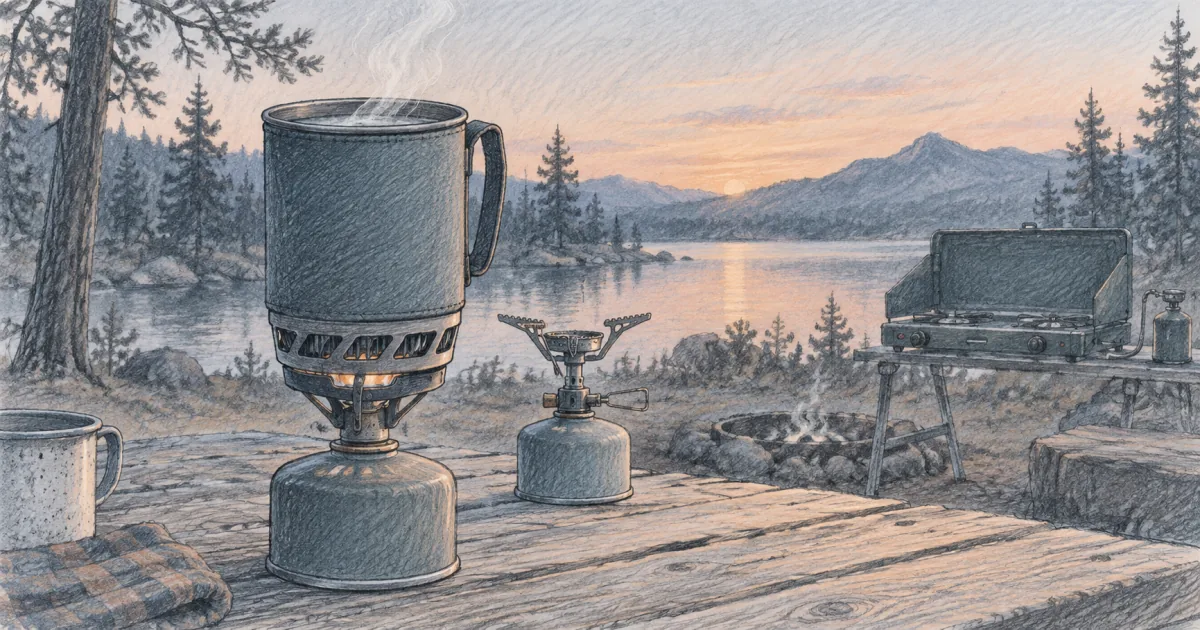
Best Camping Stove (2026): Trail, Car Camp, and Group Picks
Stoves
Match burner size to trip type. Canister stoves win on the trail; larger portable stoves win at the picnic table.
Our picks
The search for the best camping stove splits into two jobs. On trail, you want fast boils, low weight, and a setup that fits beside a rock. At a picnic table, you want a skillet and a pot at once, plus enough stability that dinner does not tip when someone walks by.
Wind steals heat on both. A canister head in a gust wastes fuel. A dual-burner with lid panels still wants to sit out of the breeze. Simmer matters if you cook real food. Peak BTUs on a box do not. Browse the full stoves category for setup, wind, and fuel guides.
If you also need pots, lock the burner first, then match it in best camping pot set. Cassette grocery-cartridge stoves live in best butane camping stove. Propane-only tabletop picks live in best propane camp stove. Powered RV and car-camp kitchens that plug in should see best camping induction cooktop.
Canister backpacking vs larger portable
Canister backpacking stoves screw onto isobutane-propane canisters. They excel for one-pot meals, coffee water, and two-person trail dinners. They pack into a mug or small pot. Wind and cold weather are the main weaknesses unless you pick a design with better heat transfer.
Larger portable stoves like the Coleman Classic win for car camping. They feel like a tiny kitchen range. You can fry eggs while pasta boils. They cost more space and weight, which rarely matters when the stove rides in a trunk.
A third table lane is a cassette butane camping stove that takes grocery 8 oz cartridges. That buying job lives in our best butane camping stove guide, not in the trail-canister or dual-burner propane stacks.
Comparison table
Top pick: Jetboil Flash 1.0L Fast Boil Stove
The Jetboil Flash is the cleanest best camping stove answer when you mostly boil water on trail. Integrated 1-liter cup, fast boils that hit the 100-second mark in real US weather, and a packed size that nests inside a small pack. The 1-step auto ignition works in cold weather better than older piezo units. Carry a lighter anyway.
It struggles in deep cold as the canister loses pressure. Wide skillets feel tippy. You are buying a boil system, not a tiny kitchen. Pair the cup with meals that rehydrate. If you already own a pot you like, the PocketRocket below is more flexible for the same fuel.
Who it is for: Solo and duo backpackers, paddlers with limited hatch space, anyone who mostly boils water and cooks one-pot meals.
Pros
- Very light and packable
- Fast to deploy
- Widely available canister fuel at outdoor shops
- Integrated system reduces parts to lose
Cons
- Can struggle in deep cold
- Wide skillets feel tippy
- Less flexible than a standalone burner plus your own pot
Shop: Jetboil Flash 1.0L on Amazon
Best value: MSR PocketRocket 2
The MSR PocketRocket 2 wins when you already own a pot set and just need a tiny screw-on burner. It packs smaller than most integrated systems and simmers better than many boil-only kits. Wind is the enemy. Add a screen that does not trap heat against the canister, or cook out of the gust line.
Wide skillets still feel tippy. There is no integrated cup. That is the point: one burner across multiple trips and cookware setups. Fuel is standard threaded isobutane-propane, not grocery cassette butane.
Who it is for: Backpackers who want a flexible burner, bike tourers, and anyone building a modular cook kit.
Pros
- Tiny packed size and low weight
- Works with standard canister fuel
- Strong simmer control for the category
- Pairs with pots you already own
Cons
- Wind sensitive without a screen
- Wide skillets feel tippy
- No integrated cup system
Shop: MSR PocketRocket 2 on Amazon
Best budget car-camp: Coleman Triton 2-Burner Propane Stove
The Coleman Triton 2-Burner Propane Stove is the car-camp default when dinner means sides plus a main. Dual burners change the meal. Coffee and breakfast can share the stove. Cast-iron or wider pans feel safer on a full grate. It is heavy, boxy, and wants a flat table. Wind still matters at exposed sites.
If you already own cookware, confirm grate size before buying a skillet that overhangs. Our cookware guide covers nesting sets that sit well on these burners. For high-output propane tables and BTU comparisons, see best propane camp stove.
Who it is for: Car camping, van weekends, and campground cooking where dinner means sides plus a main.
Pros
- Real two-pot workflow
- Better stability for larger cookware
- Familiar kitchen control for newer campers
- Long track record in US campgrounds
Cons
- Heavy and boxy
- Needs flat table space
- Wind still matters at exposed sites
Shop: Coleman Triton 2-Burner Propane Stove on Amazon
Matching stove to cookware and coffee
Stove choice and cookware choice should travel together. A tiny canister head under a huge stockpot wastes fuel. A dual-burner under a solo titanium cup is comedy. If your menu is boil-only, prioritize stove weight and boil speed. If your menu includes searing and simmering sauces, prioritize grate size and flame control.
Coffee habits matter more than people admit. Pour-over and instant need boiling water. A French press needs hot water and a minute of patience. For a clean single cup off the same boil water, pack an AeroPress Go kit. For controlled pours into mugs and presses, pair the stove with a GSI Glacier kettle. Lock the brew method in our French press guide, then confirm your stove can hold a gentle flame.
Mistakes that waste money
Buying BTU bragging rights. Peak output looks great on a box. Simmer control and wind performance decide dinner quality.
Using backpacking stoves as permanent car-camp kitchens. They work in a pinch. They frustrate when you cook for four every weekend.
Ignoring windscreens and site layout. Set up out of prevailing wind when you can. Keep flammable gear clear. Never run a stove inside a closed tent.
Forgetting cold-weather fuel behavior. Canisters lose pressure as they cool. In shoulder-season mountains, research remote-canister or liquid-fuel options before you trust a screw-on head alone.
Skipping a backup ignition source. Piezo fails. Batteries in electric igniters die. Pack redundancy.
Quick decision guide
Ask three questions:
- Will this stove ride in a pack for more than a short walk from the car?
- Do I regularly cook two things at once?
- Is my cooking mostly boiling water?
If you answered yes to (1) and (3), buy a Jetboil Flash or MSR PocketRocket 2. If you answered yes to (2) and no to (1), buy the Coleman Classic. That framing is how we define the best camping stove for a real trip.
Fuel and safety notes
Use the fuel the manufacturer specifies. Keep canisters and tanks upright as directed. Let hot stoves cool before packing. Store fuel away from living spaces in vehicles when possible. Teach kids that the stove is not a heater for tents.
If you camp where fuel sales are limited, map resupply before you go. Dual-fuel designs help some travelers, but only if you practice with the alternate fuel at home first. When dinner moves to an open fire ring, keep hands back with a long camping fire poker instead of improvising with a stick.
Bottom line
The best camping stove for you is the smallest setup that still matches how you cook outside. Buy the Jetboil Flash for trail boils, MSR PocketRocket 2 for a modular lightweight kit, or the Coleman Triton 2-Burner Propane Stove for car-camp dinners. Match the burner to your pots, then spend leftover budget on cookware and a light you will actually use at the table. For trail-only burner depth, see our best backpacking stove guide.
Frequently Asked Questions
What is the best camping stove?
For most US campers, the answer splits by trip type. The Jetboil Flash wins trail boils, the MSR PocketRocket 2 wins modular backpacking, and the Coleman Triton 2-Burner Propane Stove wins picnic-table dinners. No single stove covers every job, so pick by how you actually cook outside.
Which type of stove is best for camping?
Canister screw-on burners suit backpacking and quick weekend trips. Propane tabletop stoves suit car camping when you need two pots at once. Butane cassette tables suit mild-weather trunk trips with grocery fuel.
Which camping stove is better than a Jetboil?
Choose the MSR PocketRocket 2 if you already own pots and want more cooking flexibility. Choose a dual-burner propane stove if you never carry the stove in a pack. The Jetboil still wins boil-only trail meals.
What is the best camping stove for cold weather?
Remote-canister liquid-fuel stoves and integrated systems with pressure regulators handle cold weather best. A basic screw-on canister head loses pressure fast in freezing temps. Carry a spare canister inside your jacket on shoulder-season trips.
What is the best camping stove for car camping?
The Coleman Triton 2-Burner Propane Stove for two-pot dinners, or step up to a high-output propane tabletop for groups. Car camping is the one place bulk and weight stop mattering. Match the stove to trunk space and how often you cook sides and mains at once.
What is the best fast-boil camping stove?
Jetboil's integrated systems are the fastest boil-to-cup option in real US trips. The MSR Reactor line is faster still for true alpinists. Both cost more than a basic screw-on burner and limit you to boil-style cooking.
Canister or liquid fuel for most weekend trips?
Canister stoves like the Jetboil Flash and MSR PocketRocket 2 are the better default for US weekend camping. They light fast, pack small, and need less fiddling. Liquid fuel shines for cold weather, long expeditions, or international fuel access.
Is a dual-burner overkill for two people?
Often yes if you only boil water and scramble eggs. A dual-burner like the Coleman Classic earns space when you cook sides and mains at once, or when coffee and breakfast compete for heat.
Do windscreens matter?
Yes. Wind steals heat and fuel. Use a stove with a built-in windscreen design, or add a compatible screen that does not trap heat against a canister. See camping stove windscreen for safe setup notes.
Can I use any pot on a backpacking stove?
Most pots work, but wide, thin bases heat faster. Very large car-camp pots waste fuel on tiny burners and can feel tippy.
Are piezo igniters reliable?
They are convenient until they fail. Carry a lighter or matches anyway. Treat the igniter as a bonus, not your only spark.
What about regulations and fire bans?
Always check local rules. Many areas allow camp stoves when open fires are banned, but closures vary. Confirm before you leave.