Tent Canopy: Best Pop-Up Canopy Tents for Camp
Tents
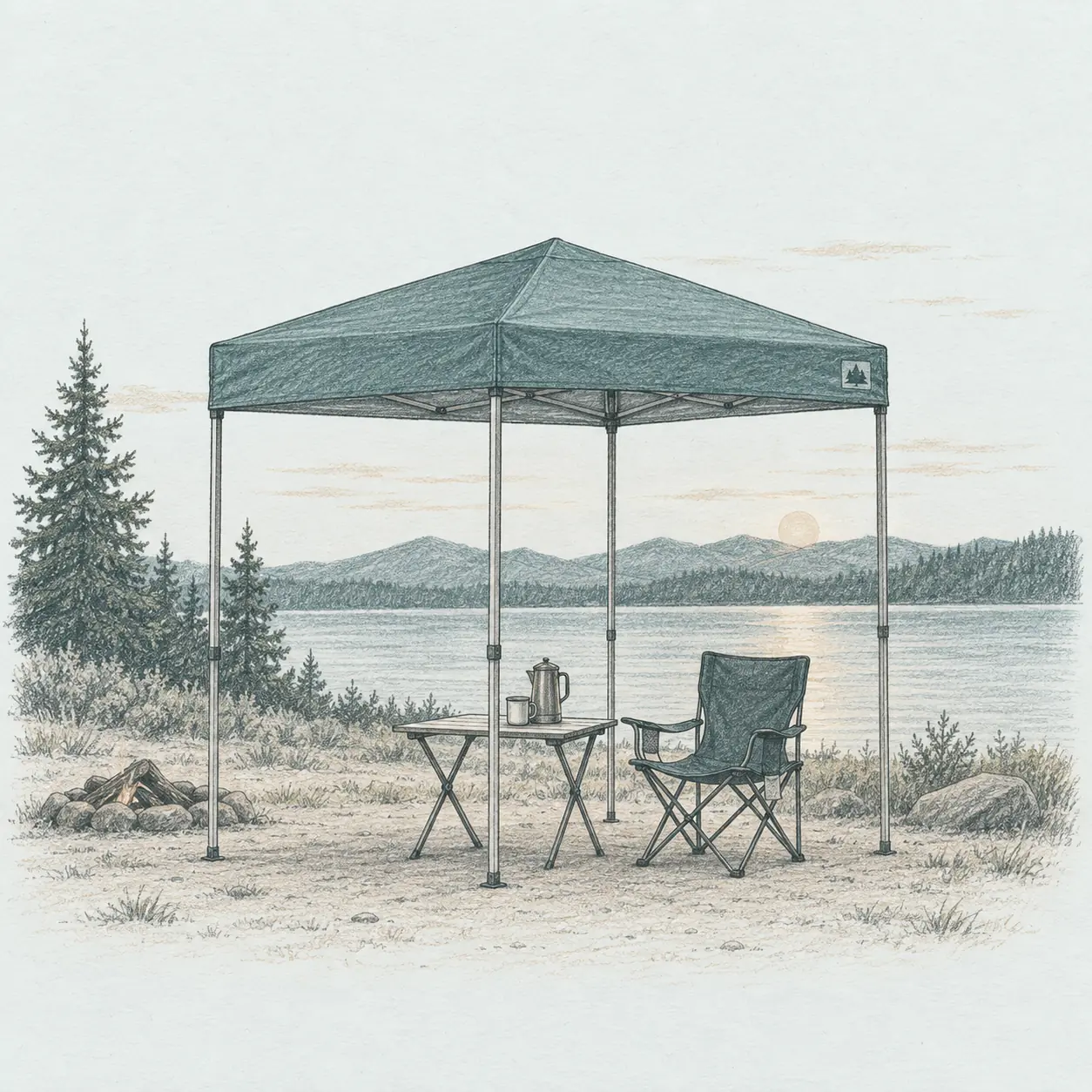
A tent canopy is the shade shelter you pop up over the picnic table, not a sleeping tent. Pick the leg style and size first, then buy enough ballast to keep it on the ground.
Our picks
The best tent canopy for camp is a straight-leg 10x10 with a one-push hub and enough ballast to stay put. It gives you 100 square feet of shade over the picnic table, keeps light rain off the stove, and packs into the trunk beside your chairs. This is a shade shelter, not a bedroom, so it sits next to the tents category rather than replacing the shelter you sleep in.
If you already own a backpacking shelter, keep the two jobs separate. The best lightweight backpacking tent covers sleep and weather. A canopy covers the table, the cooler, and the person doing the cooking.
What is a tent canopy and when do you want one?
A tent canopy is a folding steel frame with a fabric top that pops open into a freestanding roof. You want one when camp has a table, a stove, and a group, and the sun or a light shower would otherwise run the morning.
The vocabulary trips people up. Retailers call the same object a canopy tent, a pop-up canopy, an instant shelter, and a shade shelter. Campers just say canopy. The frame is the part that matters: steel legs, a hub in the center, and a top that clips or ties onto the frame.
A canopy earns its space on three jobs. It shades the cook and the food. It keeps a drizzle off the stove without a tarp and poles. And it gives everyone a dry place to stand when the ground is wet but the sky has not opened up.
It does not replace a camping tarp for a truly wet weekend, and it does not replace a tent for sleeping. Think of it as a roof on legs.
Straight leg or slant leg: which one covers what?
Straight legs stand vertical and cover the size on the label. Slant legs splay outward, so the base is wider than the roof, and you get less shade than the number suggests.
That gap is bigger than most shoppers expect. A 10x10 slant-leg canopy usually carries an 8x8 top, which is about 64 square feet of shade instead of 100. The extra footprint buys stability on uneven ground and sand. The straight-leg frame buys shade and a cleaner wall of rain protection.
Which size tent canopy fits your camp?
Match the canopy to the table, not to the guest list. A 10x10 covers one picnic table plus the people standing around it. Two tables, or a table plus a cooking station, want a 10x15 or 10x20.
Here is the simple version. A 10x10 straight-leg canopy gives 100 square feet, which fits about 8 to 10 people standing or a table with four chairs and room to walk behind them. A 10x15 gives 150 square feet and covers a long table plus a kitchen table end to end. A 10x20 gives 200 square feet and starts to behave like a pavilion, with the weight and setup time to match.
Height matters as much as footprint. You want at least 6 feet of clearance under the valance so nobody clocks their head on the frame, and the top of the canopy should clear the tallest person by a few inches when the stove is lit. The CROWN SHADES runs over 9 feet at the interior peak with 6 feet under the valance, which is why it feels roomier than a shorter 10x10.
Weight is the other number. A 22 lb canopy is a one-person carry from the truck to the table. A 36 to 38 lb canopy is a two-person lift, or a one-person drag with the roller bag. If you camp alone and set up before coffee, buy the lighter frame and accept the smaller roof.
How do you set it up without bending the frame?
Open the frame partway on both diagonal corners before you lock anything. A canopy frame only squares up once, and extending one corner all the way first puts the other three into a bind.
The sequence that works: pull the frame out halfway, walk one corner while a second person holds the opposite leg, then lock the legs in pairs. Clip or tie the top after the frame is square, then push the center hub last. If you are solo, lock two legs, then walk to the far corner and lock the other two.
Never straighten a bent leg with a pipe wrench. The tube cracks the powder coat and the frame never squares again. If a leg binds, back the frame down to halfway and start over.
Our picks for a camp canopy tent
These three cover the real split in the market: a heavy straight-leg frame for a base camp, a mid-weight frame with a wall for sun and wind, and a light slant-leg frame for one person. All three have live US listings and a solid review base.
CROWN SHADES 10x10 Pop Up Canopy Tent
The CROWN SHADES 10x10 Pop Up Canopy Tent is the best tent canopy for a base camp because it solves the two jobs at once. The patented center lock sets the whole frame with one push, and the 150D silver-coated top carries UPF 50+ protection and a CPAI-84 flame rating. That rating is what separates a camp canopy from a party canopy, since a camp stove lives underneath it.
The numbers back up the room. It measures 120 x 120 x 108 inches, gives 100 square feet of shade, and holds over 9 feet at the interior peak with 6 feet under the valance. The frame is rated to carry 120 lb of distributed weight. Packed, it is 45 x 8.5 x 8.5 inches, so it slides into a trunk beside a cooler.
Setup is the reason to pay for it. One person sets it in under a minute, where a corner-slider frame takes 5 to 10 minutes and usually wants help. It packs with the fabric still clipped on, and the Sto'N Go pocket holds 4 sandbags, 8 stakes, and 4 guy lines, so the anchoring kit travels with the frame instead of in a separate tote.
Best for base camp, tailgates, and anyone who sets up alone before the rest of the group is awake. Skip it if you carry your gear to the site, because 36 lb is a real load.
WEIZE 10x10 Pop Up Canopy with a Sidewall
The WEIZE 10x10 Pop Up Canopy Tent is the pick when the sun is low or the wind is up. The one-button center lock sets the frame in under a minute, and the included sidewall covers one full 10 x 6.6 ft face, which is the part a roof cannot reach.
The frame adjusts to three heights at 8.9, 9.3, and 9.6 feet. That is not a comfort feature so much as a weather feature: raise it to let rain run off, drop it to lower the profile when the wind builds. The 150D silver-coated top gives UPF 50+ protection and about 87% shade, and the roof vents shed trapped heat and reduce lift.
It ships with 4 weight bags, 4 guy ropes, and 8 stakes, plus a roller bag that makes the 37.7 lb kit manageable from the car to the site. The vents and the heavier bolt-through legs are what let it sit through a breezy afternoon, as long as you weight the legs.
Best for camp kitchens that face a low sun, and for anyone who wants the anchoring kit in the box. Skip it if every ounce counts, because it is the heaviest of the three.
Oneofics 10x10 Slant Leg Pop Up Canopy
The Oneofics 10x10FT Slant Leg Pop Up Canopy Tent is the best tent canopy for one person carrying it alone. At 22 lb it is about 14 lb lighter than the CROWN SHADES, and the slant legs handle uneven ground and soft sand better than a vertical leg.
The trade is coverage. The top is 8x8 feet, so the real shade is about 64 square feet, roughly 36 square feet less than a straight-leg 10x10. The top is 190T Oxford with a silver lining, which handles sun well and light rain poorly, and the maker says to put it away in heavy rain and wind.
It comes with ground stakes and a carry bag, and the push-button legs adjust the height in steps. That is a thin kit next to the WEIZE, but it costs about $68 less than the CROWN SHADES and weighs 14 lb less, which is the trade most solo campers should take.
Best for solo and couple camps, beach days, and uneven ground. Skip it if you are shading a full table or cooking under it in a storm.
How do you keep a canopy tent from blowing away?
Stake the four corners at a 45 degree angle away from each leg, then add diagonal guy lines from the top corners and weight every leg. A canopy is a sail, so wind over 10 mph is the point where the extra lines stop being optional.
Staking straight down is the common mistake. A stake driven at 45 degrees away from the leg has up to 40% more holding power in wind, because the load pulls against the shaft instead of levering it out. If the ground is soft, the numbers get worse fast: a standard 8-inch stake in dry sand holds only about 15 lb of pull, while a gust can put 100 lb or more on a single leg.
On any hard surface, stakes are useless and mass is the only answer. Weight plates, sandbags, or a five-gallon bucket of water on each leg will hold a recreational canopy in ordinary weather. In sand, the manual calls for burying each leg about 12 inches or using weight bags, since stakes alone will not hold.
Take the top off in a real storm. A canopy that is staked and weighted can still lift in a gust, and the frame bends where the legs meet the hub. Dropping the height one notch buys you margin before that happens.
Can you sleep under a tent canopy?
No, not comfortably. A canopy has no floor, no bug screen, and no closable walls, so insects, wind, and ground moisture come straight through. It is a kitchen and shade shelter, not a sleeping shelter.
You can use one as a dry standing area beside your tent, or to cover a cot on a bug-free night. If you want airflow in the heat, a camping fan for the tent does that job inside a real shelter. If you want an actual bed off the ground, the best camping cot pairs with a tent, not a canopy.
What do the fabric numbers mean?
The number on the fabric is the yarn denier, so a higher number means a thicker, heavier weave. 150D is the recreational standard, 190T is a lighter taffeta weave, and 420D is the vendor-grade step up for daily use.
Denier and thread count are not the same scale, which is why a 190T top and a 150D top can feel similar in the hand. What matters more for camp is the coating and the rating. A silver-coated interior blocks radiant heat and usually comes with a UPF 50+ claim, and a CPAI-84 flame rating tells you the fabric will resist catching if a spark or a stove flare touches it.
150D, 190T, and CPAI-84
150D with a silver coating is the sweet spot for a camp canopy: thick enough to shed light rain, coated enough to cut heat, and rated for flame resistance on the better frames. 190T is lighter and packs smaller, but it dents under heavy rain and often skips the flame rating. 420D is worth it only if the canopy is up every weekend or doubles as a market booth.
Look for three things on the listing: the denier, the UPF number, and the CPAI-84 line. If a canopy lists none of them, assume it is a party canopy and keep the stove out from under it.
Common mistakes
Buying a slant-leg 10x10 for a full table. The base is 10x10 but the roof is 8x8, so you get about 64 square feet. Measure the table, not the label.
Skipping the weights because the stakes are in the bag. Stakes do nothing on a driveway, a pad, or a wooden deck. Four 20 lb weights are the difference between a canopy and a kite.
Staking straight down. Angle each stake 45 degrees away from the leg for up to 40% more holding power.
Leaving the full height up in wind. Drop a notch. The lower profile sheds wind and drains rain better than a tall frame.
Setting up one corner first. A frame squares once. Extend halfway, then lock in pairs, or you will bind the legs and bend a tube.
Sleeping under it. No floor, no screen, no walls. Keep the canopy for the table and the tent for the night.
Bottom line
A tent canopy is the cheapest way to turn a picnic table into a real camp kitchen, as long as you buy for the leg style you actually need and anchor it properly.
The CROWN SHADES 10x10 Pop Up Canopy Tent is the best all-round pick because one person sets the frame with a single push and the flame-rated 150D top is safe over a stove. Take the WEIZE 10x10 with a sidewall when the sun sits low or the wind is up, and the Oneofics slant-leg when you are carrying it alone and 22 lb beats 100 square feet.
Frequently Asked Questions
What is a tent canopy called?
It goes by canopy tent, pop-up canopy, instant shelter, and shade shelter. Campers usually say canopy. The frame pops open, the top clips on, and the legs adjust for height.
What is the best canopy to use over a tent?
Use a 10x10 straight-leg canopy with at least 6 feet of clearance under the valance, staked at the corners and weighted on each leg. Do not put a canopy over a sleeping tent that vents upward.
Which 10x10 canopy is the strongest?
Straight-leg frames with a one-push hub and a flame-rated top hold up best. The CROWN SHADES 10x10 carries a 120 lb distributed load rating and a CPAI-84 flame rating, which most budget canopies skip.
What is the cheapest canopy available?
Basic slant-leg 10x10 canopies start around $70. The Oneofics slant-leg runs about $72 and weighs 22 lb, but the top is only 8x8, so you get roughly 64 square feet of shade.
Can you sleep under a tent canopy?
Not comfortably. A canopy has no floor, no bug screen, and no walls, so wind and insects come straight through. Treat it as a kitchen and shade shelter and keep a real tent for sleeping.
How much weight do you need to hold a canopy down?
Plan on four 20 lb sandbags, so 80 lb total, for any hard surface like a driveway or a concrete pad. On grass, stakes at each corner plus diagonal guy lines will hold in light wind.
Do you need to stake a canopy on a beach?
Yes, and stakes alone will not do it. In sand the manual calls for burying each leg about 12 inches or using weight bags, because an 8-inch stake in dry sand holds only about 15 lb of pull.
How long does a pop-up canopy take to set up?
A one-push center-lock frame goes up in under a minute with one person. Older corner-slider frames take 5 to 10 minutes and usually want two people so the frame does not bind.