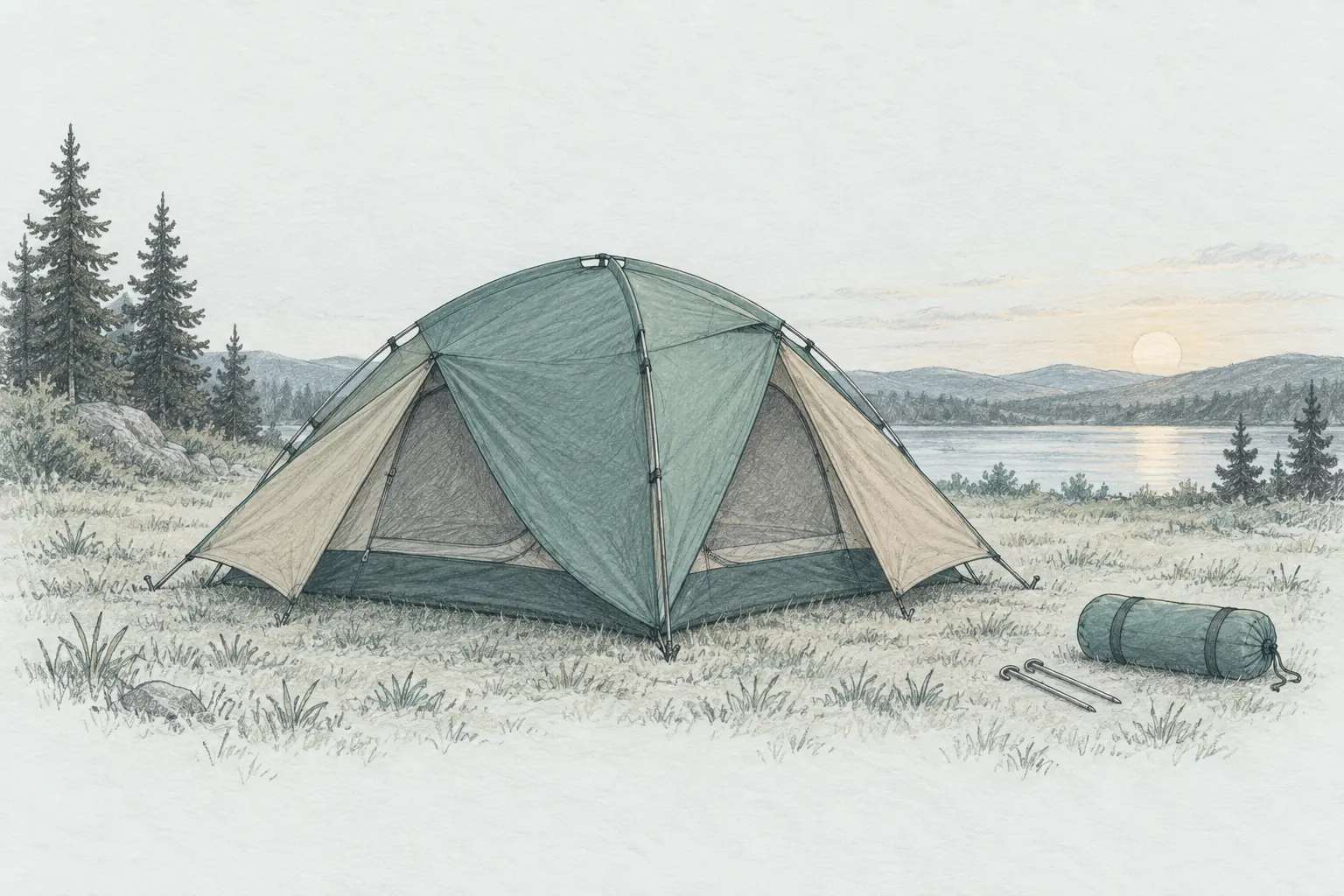
Best Lightweight Backpacking Tent (2026): 4 Picks That Carry Easy
Tents
The best lightweight backpacking tent trades a little space for a pack you can carry all day. Here are the two-person Night Cat, the rain-ready iClimb, the solo Clostnature, and the value BISINNA, plus how to pick the weight your trip can live with.
Our picks
The best lightweight backpacking tent for two people is the Night Cat 2-Person when you want a real two-door shelter that still fits in a pack. It clips together with aluminum poles, keeps rain out with a taped full rainfly, and gives each sleeper a vestibule for boots and a pack.
Weight is the whole game here. A tent that feels reasonable on a short walk gets heavy by mile eight. The trick is not chasing the absolute lightest shelter but buying the lightest one your trips and your budget can actually use. Start with the tents category if you are still deciding between a backpacking shelter, an inflatable camping tent, or a roomier car-camping model.
Then think about the rest of your sleep system. A light tent with a thin pad still makes for a cold, sore night, so pair it with a good sleeping pad for camping and check our camping mattress guide if you are camping as a couple.
How much tent weight you can actually carry
Two pounds is a luxury. Four pounds is realistic. Six pounds is a car-camping tent you happen to carry.
For a weekend trip, most backpackers are happy between three and five pounds packed. Every pound over that is felt on climbs and steep descents, especially on the second day. The good news is that budget tents have closed much of the gap. Aluminum poles, mesh inners, and taped seams now show up well under a hundred dollars.
Space matters as much as weight. A "two-person" tent that is 55 inches wide fits two standard sleeping pads with a little room, and a "one-person" tent is really one adult plus gear. Be honest about how you sleep and who is coming with you before you buy the lightest option on the page.
Top pick: Night Cat 2-Person Backpacking Tent
The Night Cat 2-Person is the best lightweight backpacking tent for two people who want space and weather protection without a heavy pack. The interior runs about 6.8 by 4.6 by 3.6 feet, which is comfortable for two adults and roomy for one plus gear.
The aluminum poles are the upgrade that matters at this price. They flex in wind instead of splintering, and the clip-on design beats feeding poles through sleeves in the rain. The full-coverage rainfly and welded, sealed floor handle steady rain, and the two D-shaped doors mean each person gets in and out without waking the other.
Who it is for: Couples and friends who split the load, and solo campers who want extra room.
Who should skip it: Anyone chasing a sub-three-pound shelter, or two adults hauling oversized packs.
Best in the rain: iClimb Ultralight 2-Person Tent
The iClimb Ultralight 2-Person Tent is the best lightweight backpacking tent when rain is in the forecast. It runs about 5 pounds packed, uses 7001 aluminum poles, and goes up in roughly five minutes once you know the pitch.
The trick is the external frame. The poles sit outside the inner, so you can stake the rainfly first and hang the inner underneath it, which means a sudden shower during setup does not soak your bag. The 20D nylon fly and the 40D bathtub floor carry a 3000mm PU coating with taped seams, so steady rain beads off instead of soaking through. Two D-shaped doors and two vestibules give each sleeper a way in and a dry spot for a pack.
Who it is for: Couples and friends who camp in wet conditions, tall sleepers (it fits up to 6'10"), and anyone who wants a roomy two-person tent that still carries on a weekend pack.
Who should skip it: Ultralight purists counting every ounce, and anyone who wants the lightest two-person tent for the money.
Best solo: Clostnature 1 Person Lightweight Tent
The Clostnature 1 Person Tent is the best lightweight backpacking tent for solo hikers who want an easy setup and a pack that stays light. It runs around 4 pounds packed, with a minimum trail weight under 3 pounds once you drop the extras.
The freestanding two-pole design goes up without help, and the full mesh interior vents condensation well when you are the only body in the tent. The side vestibule is large enough for a pack, boots, and a stove, and the D-shaped door gives you one clean entry point.
Who it is for: Solo backpackers, bikepackers, and anyone who wants a simple one-person shelter.
Who should skip it: Couples, and campers who want to sit up and spread out.
Best value: BISINNA 2/4 Person Tent
The BISINNA 2/4 Person Tent is the best lightweight backpacking tent when you want the features of a pricier tent without the price. It uses 7001 aluminum poles, carries two doors and two vestibules, and weighs about 4.7 pounds packed.
The two side doors are the reason to pick it over cheaper single-door tents. Nobody has to climb over a sleeping partner, and each person gets their own gear space under a vestibule. The aluminum poles hold up better than the fiberglass you usually see at this price, and the packed size still fits a backpack.
Who it is for: First-time backpackers, scouts, and budget-minded campers who still want two doors.
Who should skip it: Anyone expecting dry performance in an all-night storm, or a two-person pair with big packs.
Lightweight tent comparison
All four use aluminum poles and pack small enough to carry. The decision comes down to how many people sleep inside and how tight your budget is.
What to look for before you buy
Poles. Aluminum over fiberglass for any real backpacking. Aluminum flexes and holds in wind, while fiberglass splinters and snaps. This is the single most important spec on a budget tent.
Doors and vestibules. Two doors beat one every time for two people. One vestibule per person keeps wet gear out of the sleep area and stops the middle-of-the-night climb-over.
Rainfly coverage. You want a full-coverage fly with taped seams, not a tiny cap that leaves the walls exposed. A fly that reaches low and stakes out tight is what keeps a budget tent dry.
Ventilation. Mesh inner walls plus a roof vent move moist air out. Single-wall tents are lighter but collect condensation on cool, still nights, which is the complaint you see most in forums.
Interior size. Measure your sleeping pad. Two 20-inch pads need a little over 40 inches of width, and you still want room for a pack at the foot on a wet night.
Mistakes that cost ounces and sleep
Buying the lightest tent you can find. A one-pound shelter that needs trekking poles and careful staking is not a good first backpacking tent. Pick the weight you can pitch quickly and sleep in comfortably.
Ignoring the packed size. A tent can weigh little and still be bulky. Check the packed dimensions so it fits inside your pack rather than swinging off the back.
Forgetting stakes and guylines. The stake kit in a budget tent is often the weak link. Add a set of light, sharp stakes and one extra guyline per side for wind.
Pitching on a slope. Even a great tent slides you toward the low corner all night. Find level ground, or at least sleep with your head uphill.
Skipping the seam seal. A quick seam seal at home on a budget tent adds real rain confidence for almost no weight.
Bottom line
The best lightweight backpacking tent is the lightest one that still fits your trip and your budget. Buy the Night Cat 2-Person for a two-door shelter that splits well between two people.
Buy the iClimb 2-Person if rain is likely and you would rather stay dry than save a pound. Buy the Clostnature 1 Person if you hike alone and want a lighter pack. Buy the BISINNA 2/4 Person if you want two doors at the lowest price. Whichever you choose, test the pitch in the yard once so the first real camp is not the practice run.
Frequently Asked Questions
What is the lightest backpacking tent?
True ultralight shelters run under two pounds, but they cost far more and often need trekking poles. In the budget range, the lightest pick here is the
Clostnature 1 Person Tent
at around 4 pounds packed. For two people, the
Night Cat 2-Person
is the lightest of the two-person options at about 4.4 pounds.
How much should a lightweight backpacking tent weigh?
For a one-person shelter, aim under 5 pounds packed. For two people, staying near 4 to 6 pounds is a good target. Above about 6 pounds you start to feel it on a long climb, and you are usually carrying a car-camping tent.
Is a two-person tent too heavy to backpack with?
Not if it comes in near 4 to 5 pounds and you split it. One person carries the body and the other carries the poles, stakes, and fly. That split turns a 4.4-pound tent into a little over two pounds each.
Are aluminum poles better than fiberglass?
Yes for backpacking. Aluminum flexes instead of splintering and holds up better in wind. Fiberglass keeps the price down but snaps more easily, and the raw ends can splinter. The Night Cat, iClimb, and BISINNA picks all use aluminum.
Do lightweight tents leak in the rain?
A taped seam and a full rainfly keep most rain out. Budget flies can wet through in a long, heavy storm, which is the trade for the low price. Seal the seams once at home and pitch the fly tight so water cannot pool on it.
Should I choose a freestanding or a trekking-pole tent?
Freestanding tents like these stand up on their own, which makes pitching on rock or a platform easier. Trekking-pole tents are lighter but need poles and good staking. If you already hike with poles and want the least weight, a trekking-pole shelter is worth a look.
How do I stop condensation in a backpacking tent?
Vent early and often. Leave a door cracked, open the ceiling vents, and pitch with the low end into the wind. A breathable inner mesh helps, which is why the full mesh walls on the Night Cat stay drier than a single-wall tent.
Do I need a footprint under a lightweight tent?
It helps. A thin ground sheet protects the floor from rocks and pine needles and adds a season of life. If you would rather not carry the extra ounces, at least clear the site and lay the tent on bare, level ground.