Best Camping Tarp (2026): Ground Sheets and Rain Fly Picks
Tents
The best camping tarp does three jobs: a ground sheet under the tent, a rain fly over the kitchen, and an emergency shelter when the weather turns. Here are three picks for different budgets, with the sizes and knots you need.
Our picks
The best camping tarp earns its place by doing three jobs with one sheet. It goes under the tent as a ground sheet, over the picnic table as a rain shelter, and across the site as an emergency roof when the forecast turns.
It is the cheapest insurance in camp, which is why it is the gear people forget and then miss most. A tarp also extends the life of a tent floor, keeps firewood dry, and gives you somewhere to stand out of the rain without sitting in your shelter.
The tarp sits in the tents category alongside the shelter guides. If you are choosing the tent itself, start with best lightweight backpacking tent or best inflatable tent for camping, then add a tarp for the space around it.
What to look for in a camping tarp
Material. Polyethylene tarps are heavy, cheap, and tough. Coated nylon and polyester tarps are lighter and pack smaller for backpacking.
Weight and thickness. A 8 to 10 mil poly tarp is fine for ground cover. If you want to carry it, look at the listed weight, not just the size.
Tie-out points. More grommets and guy points mean more ways to pitch. A ridgeline, a lean-to, and an A-frame all need different anchors.
Reinforcement. Reinforced corners and a reinforced ridgeline seam are where cheap tarps fail first. Look for heat-sealed or taped edges.
Size for the job. Match the size to the job. A 7.5 by 9.5 foot tarp footprints a two-person tent. A 10 by 10 foot tarp shelters a table. Go bigger for a group kitchen.
Top pick: Amazon Basics Waterproof Camping Tarp
The Amazon Basics Waterproof Camping Tarp is the best camping tarp for most people. The 7.5 by 9.5 foot size weighs about 1.5 pounds and packs into a stuff sack, so it can ride in a pack or a trunk without a second thought.
Rip-stop polyethylene is laminated on both sides for waterproofing, and the corners and edges are reinforced with grommet tie-outs. It works as a tent footprint, a ground cover, a sunshade, or a gear cover, and it is the one size most two-person tents want.
Who it is for: Car campers, tent campers protecting a floor, and anyone who wants cheap weather insurance.
Who should skip it: Backpackers who need to shave ounces, and anyone camping in sustained high wind.
Best shelter: FREE SOLDIER Waterproof Camping Tarp
The FREE SOLDIER Waterproof Camping Tarp is the best camping tarp when you want a real overhead shelter. It measures 118 by 126 inches and uses 210T ripstop polyester with a PU 2500 coating.
The pitch flexibility is the point. Nineteen guy points plus five strengthened grommets let you set it up as a rectangle awning, a hammock rain fly, or a ground sheet for two people. Four nylon guy lines with tensioners and a stuff sack come in the bag.
Who it is for: Base campers, hammock campers, and anyone who wants a covered kitchen or sitting area.
Who should skip it: Ultralight backpackers counting every ounce.
Best budget big tarp: CARTMAN 8x10 Ft Poly Tarp
The CARTMAN 8x10 Ft Multipurpose Waterproof Poly Tarp is the best camping tarp when you want a lot of cover for very little money. The edges are heat-sealed and folded with nylon rope inside for reinforcement, so there are no stitch holes to leak.
Metal grommets sit every 36 inches along the edges, and the corners have plastic reinforcements. It is heavy enough to use as a ground sheet, a firewood cover, or a gear cover over a picnic table.
Who it is for: Car campers, group sites, and anyone who needs a big cover for gear or wood.
Who should skip it: Backpackers, and anyone who wants a light tarp to fold small.
Camping tarp comparison
Pick the Amazon Basics for the best all-round tarp, the FREE SOLDIER when you are building a shelter, and the CARTMAN when size and price matter more than weight.
How to pitch a tarp that stays up
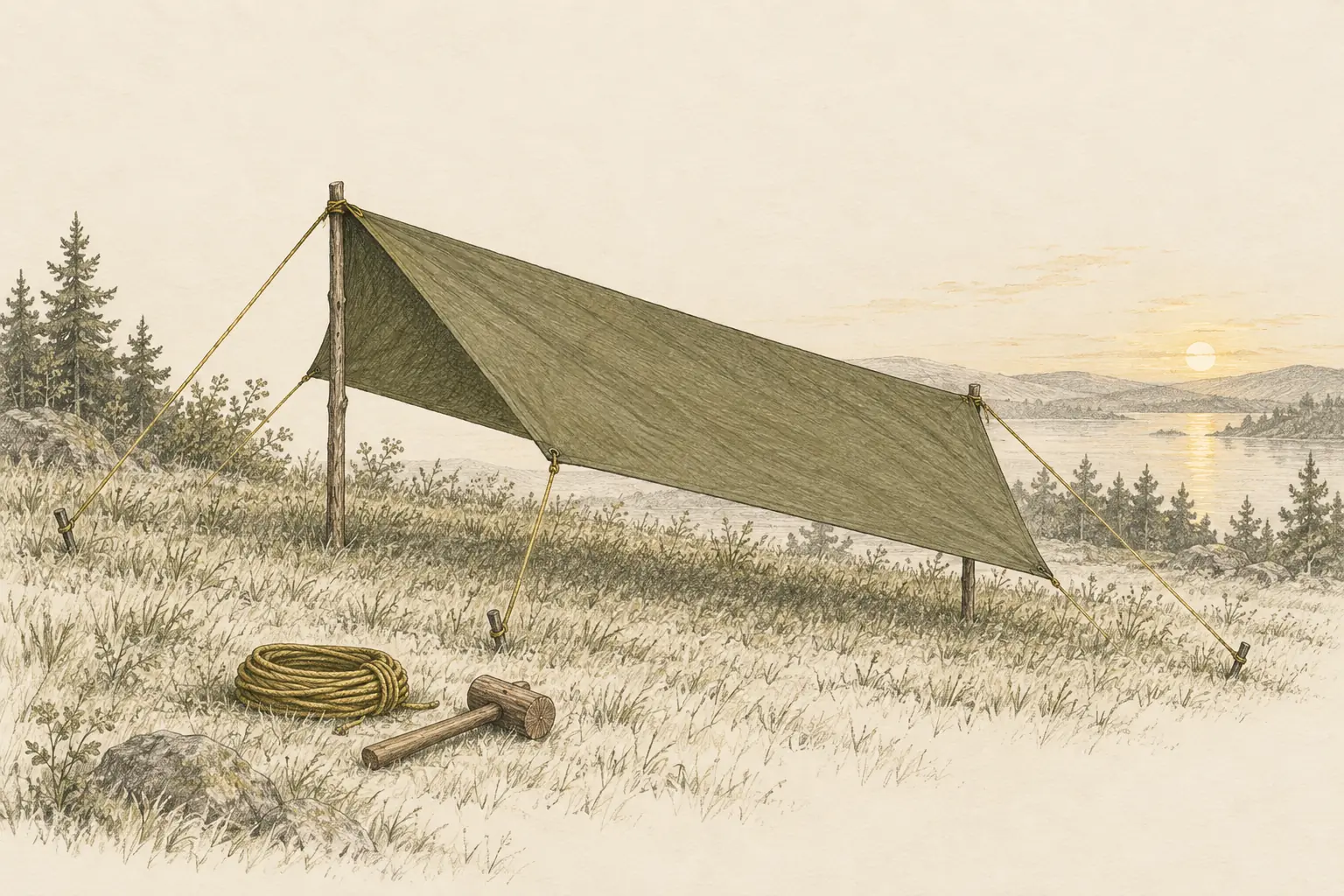
Start with level ground and a wind read. Face the low side of the pitch into the wind so rain runs off the back. Clear rocks and sticks from anywhere fabric will touch.
Rig a ridgeline first. Two trees, two poles, or a pole and a tree. Run a taut line, then drape the tarp and tension the corners. Everything else is adjustment.
Angle it for runoff. A steep pitch sheds water. A flat pitch holds it, and a puddle will find the weakest seam. Thirty degrees is a good starting point.
Tension the mid points. Guy lines at the middle of each edge stop the fabric flapping. Flapping is what wears a tarp out and keeps you awake.
Stake the corners well. Use long pegs at the corners and drive them at an angle. A heavy-duty stake set is the cheapest upgrade to any tarp.
Use a drip line. Tie a short cord under the edge so water runs down and falls instead of following the fabric to your sleeping area.
Mistakes that waste a tarp
Buying too small. A tarp that cannot overhang the tent does not keep the rain off the walls. Size up before you size down.
Pitching it flat. Flat tarps pool water and sag in the middle. Angle every pitch so water cannot sit.
Forgetting the stakes. Most tarps ship with line but few pegs. Carry enough stakes for the corners plus the mid points.
Skipping tension. A loose tarp cracks and flaps, which is loud, annoying, and hard on the material. Tension is what makes a tarp quiet.
Letting poly rub on rocks. The thin poly tarps in this guide are tough but not armor. Clear the ground and put a mat under sharp corners.
Bottom line
The best camping tarp is the one you throw in the car every trip, because the day you need it is the day it rains. Buy the Amazon Basics Waterproof Camping Tarp for a light, cheap all-rounder that footprints a two-person tent.
Buy the FREE SOLDIER Tarp Shelter when you want an awning, a hammock fly, and a covered kitchen. Buy the CARTMAN Poly Tarp when you need a big cheap cover for gear and firewood. Add stakes, learn one adjustable knot, and a tarp becomes the most useful sheet of fabric you own.
Frequently Asked Questions
What size camping tarp do I need?
For a ground sheet, go about one to two feet larger than your tent floor on each side. For an overhead shelter, a 10 by 10 foot tarp covers a picnic table and two chairs. A 7.5 by 9.5 foot tarp fits a two-person tent footprint.
What is the difference between a camping tarp and a tent footprint?
A footprint is cut to one tent. A camping tarp is a general sheet you can use under a tent, over a kitchen, or as a shelter. A tarp is often cheaper and does more jobs, though it is not shaped to your tent.
Can you use a poly tarp as a rain fly?
Yes for car camping and base camp. Poly tarps are waterproof and cheap but heavier than silnylon. For backpacking, a coated nylon or silnylon tarp saves a lot of weight.
How do you pitch a tarp without trees?
Use two adjustable poles or hiking poles for the high points and stake the corners out. Add guy lines to the mid points for tension. A ridgeline between two poles is the simplest shelter.
Which knots should you know for a tarp?
A taut-line hitch adjusts tension when the tarp sags in the rain, and a bowline makes a loop that will not jam. Two knots cover most camp setups.
Will a tarp keep you dry in heavy rain?
A waterproof tarp will, if you pitch it steep enough for water to run off and keep the fabric tight. A flat or sagging pitch pools water, and a puddle will find the seam.
Do you need stakes and guy lines with a tarp?
Most tarps include some line but few stakes. A set of heavy-duty camping stakes is worth adding, since a tarp is only as good as its anchors.