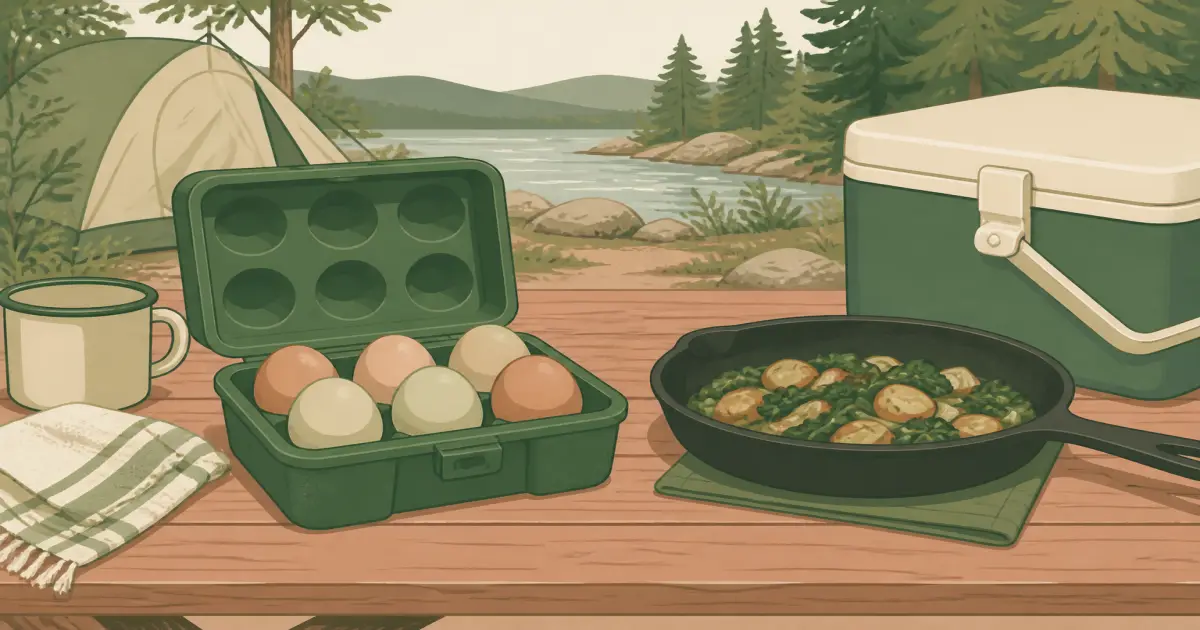
Camping Egg Holder: Carry Eggs Without the Cracks
Cookware
A hard camping egg holder protects breakfast from cooler water and shifting food. Pack clean, uncracked eggs and keep them properly chilled.
Our picks
Eggs are easy to cook at camp and surprisingly awkward to transport. Cardboard cartons soften when they touch melted ice, while loose drink cans and food containers shift every time someone opens the cooler. One cracked egg can make the whole bottom shelf unpleasant. Small kitchen helpers live in the camp cookware category beside the bigger sets, including the best camping cookware picks for full kits.
A rigid camping egg holder solves the crushing and moisture problems. It does not replace careful packing or cold storage. Think of it as a protective case, then treat the eggs inside with the same food-safety care you use at home.
What a camping egg holder should do
The case needs individual molded cups that keep eggs from knocking together. A lid should close firmly without pressing down on the shells, and the latch should stay shut when the cooler moves in the car.
Capacity matters less than fit. Six-egg holders suit two people and short trips. A 12-egg carrier works for a family breakfast or two mornings, but it takes more cooler room. Measure the flat space in your cooler before buying.
Most plastic carriers are designed around USDA large eggs. Extra-large and jumbo eggs can press against the lid or sit too high in the cups. Small eggs may move more. Test your usual carton size before the trip rather than discovering the mismatch at camp.
Our pick for a dozen eggs
The Stansport Egg Container for Camping and Travel is a simple rigid carrier with space for 12 large eggs, a molded handle, and a locking cover. Thin generic boxes crack. This one is meant to ride in a cooler without turning breakfast into scrambled eggs on the lid.
Owners like the protection it provides in coolers and travel trailers. The common warning is egg size. Large eggs generally fit as intended, while bigger shells can be squeezed by the molded plastic.
This is a subtle recommendation rather than a reason to rebuild your whole camp kitchen. If your existing carton stays dry in a separate cooler basket, keep using it. Buy a hard carrier when wet cardboard or shifting food has already caused trouble.
How to pack eggs in a cooler
Start with clean, uncracked eggs that are already cold. Put each one into a molded cup with the pointed end down when the case shape allows it. Close the lid gently. If you need pressure to latch it, the eggs are too large for that holder.
Place the case level near the top of the food cooler. Surround it with cold items, but do not balance a bag of ice, canned drinks, or a heavy water bottle on the lid. A cooler basket or shallow upper shelf is ideal.
Keep raw eggs away from ready-to-eat food. The shell and holder exterior can carry residue even when they look clean. Pack the carrier in a washable bag or dedicated section, and wash your hands after handling raw egg.
In the US, commercial shell eggs need refrigeration. Keep the cooler at 40°F or below and use a thermometer instead of guessing. Open the lid briefly, return the holder promptly, and replenish ice before the cooler warms.
Whole eggs or pre-cracked eggs?
Whole eggs stay protected by their shells and let you cook only what you need. They are the better default when you have a reliable carrier and enough cooler space.
Pre-cracking can make sense for scrambled eggs on a short car-camping trip. Crack them in a clean kitchen, mix only if your recipe requires it, and seal them in a food-safe leakproof container. Label the container and keep it thoroughly chilled.
Do not use a reused drink bottle that is difficult to sanitize or easy to mistake for a beverage. A wide-mouth food container is easier to clean and pour. Follow current USDA guidance for storage time and discard eggs that were held above a safe temperature.
Powdered whole eggs are another option for trips where refrigeration is difficult. They do not cook exactly like fresh eggs, but they pack easily and remove the shell problem. They are more useful for remote travel than an ordinary weekend at a developed campground.
Plan breakfast around the holder
A dozen eggs sounds like a lot until four people order two each. Count servings before packing and decide whether eggs are the main meal or part of breakfast. This keeps you from carrying a bulky half-empty case home.
For a straightforward meal, pair eggs with toast and fruit. Our camping skillet guide covers pan size and stable stove use. Keep raw-egg utensils separate from plates and cooked food.
Crack each egg into a small cup before adding it to the skillet. If one has an off smell or broken shell, it does not contaminate the whole pan. This step also makes shell fragments easier to remove.
Cook eggs until they reach the doneness recommended by food-safety authorities. At camp, use the same standards you would in your kitchen. Outdoor cooking does not make undercooked food safer.
Clean and store the carrier
If an egg cracks inside, remove the other eggs carefully and keep raw liquid away from ready-to-eat food. Wash the holder with hot soapy water as soon as practical, rinse it, and let it dry completely.
At home, inspect the latch and molded cups. Plastic edges can crack after being squeezed under heavy cooler contents. Replace a carrier that no longer closes securely or has rough damage that is difficult to clean.
Store it open until fully dry. A closed case with moisture inside develops odors quickly. Keep it with your camping food storage containers so it is easy to find before the next trip.
Common mistakes
Buying for jumbo eggs. A case labeled for 12 eggs may still be sized for standard large shells. Test the exact eggs you plan to bring.
Packing the carrier at the bottom. Heavy food and drinks shift downward. Keep eggs supported near the top.
Letting the cooler warm. A hard shell protects against impact, not temperature. Use enough ice and monitor the cooler.
Assuming the case is leakproof. Most egg holders are not sealed food containers. A cracked egg can still leak through seams.
Skipping cleanup after a crack. Raw egg residue needs proper washing, not a quick wipe with a camp towel.
Bottom line
A camping egg holder earns its space when eggs are a regular part of breakfast and your cooler gets crowded. The Stansport Egg Container for Camping and Travel offers a rigid shell, a locking lid, and a long history of buyer feedback. Use standard large eggs, pack the case level near the top, and keep the cooler at a safe temperature.
Frequently Asked Questions
Do camping egg holders really work?
A rigid holder reduces crushing and keeps a cardboard carton from getting soggy. It cannot prevent every crack, especially if eggs are too large or the cooler is packed carelessly.
Do eggs need to stay cold while camping?
In the US, store-bought shell eggs should remain refrigerated at 40°F or below. Keep them in a cold cooler and follow USDA food-safety guidance.
Can extra-large eggs fit in a camping egg holder?
Not reliably. Many carriers are molded around standard large eggs. Check fit at home and use large eggs unless the maker says otherwise.
Should you crack eggs into a bottle before camping?
It can save space, but cracked raw eggs need strict cold storage and a clean, leakproof food container. Use them promptly and follow food-safety guidance.
Where should an egg holder go in the cooler?
Keep it level near the top, surrounded by cold food rather than loose ice. Do not place heavy cans or drink bottles above it.
How do you clean a camping egg holder?
Wash it with hot soapy water as soon as practical after a crack, rinse it, and let it dry completely. Store it open so moisture inside the case does not develop odors.