Camping Cooking Tripod: When It Works and How to Use One
Cookware
Learn when a camping cooking tripod makes sense, how to hang a Dutch oven safely, and why a stove is still the simpler option.
Our picks
A better camp kitchen usually comes from fixing one annoying job, not buying a giant pile of gear. This guide explains how to use a camping cooking tripod with ordinary car-camp equipment. Stake it on level ground, hang a pot over coals not flames, and keep kids clear of the hot chain. Fire cooking tools share a home in the camp cookware category, and the best camping cookware guide covers the pots that hang or sit on them.
For the rest of your setup, see dutch oven camping, best camping dutch oven, two burner camping stove.
Start with the job you need it to do
Before buying anything, picture the moment this setup helps. Are you cooking for four people, cleaning up after a skillet dinner, or trying to stop a small mess from spreading across the picnic table? That answer tells you how much space, water, and storage you need.
Car campers can afford a little more structure because the vehicle carries the weight. Backpackers should keep the idea, not the full station. A simple bag and a small towel often make more sense when every ounce matters.
A practical camping cooking tripod setup
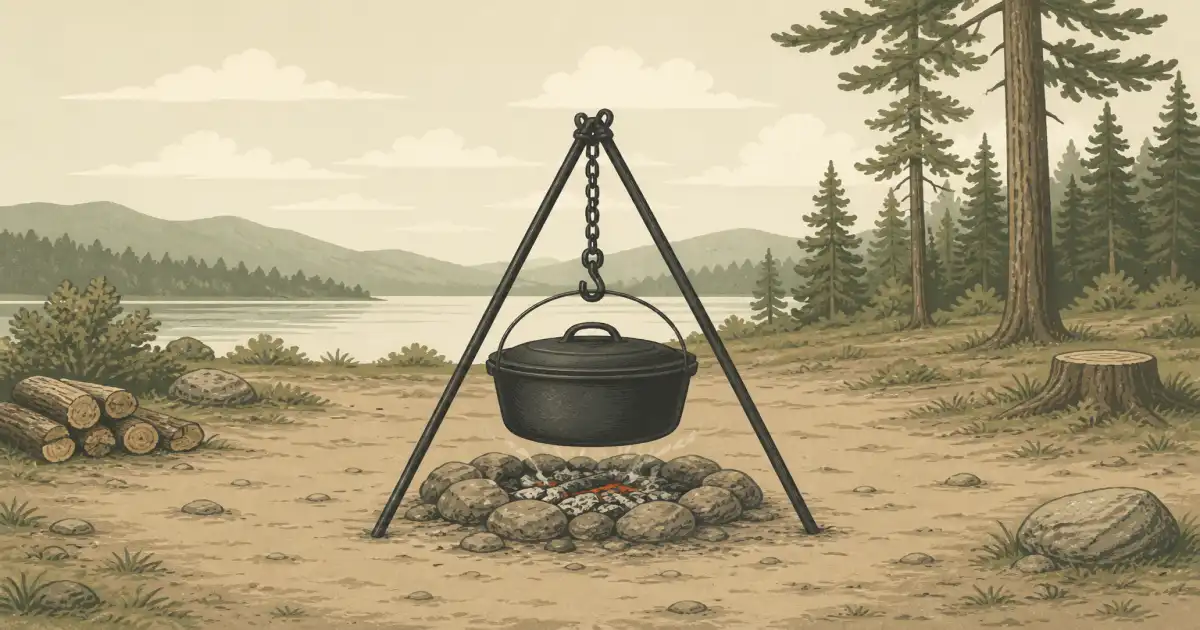
- Use a tripod only on a stable, established fire ring with level ground. Set each leg firmly and keep children and loose dogs out of the cooking area.
- Hang a Dutch oven with a rated chain and lift it slowly. Hot cast iron is heavy, and a loose hook is not a small problem.
- Cook over a bed of coals instead of tall flames. Adjust heat by moving coals and changing pot height, then use gloves every time you touch the lid or bail.
- Choose a two-burner stove for most meals. It boils, simmers, and cooks breakfast with less soot and far less attention than an open fire.
Do a quick test before the first meal. Put the items where they will live, open the cooler, and make sure people can walk past without bumping a hot stove or a full water container. Moving one thing before dinner is easier than cleaning up a spill after dark.
What to buy, and what to skip
The Coleman Triton 2-Burner Propane Stove is a useful piece for this kind of camp-kitchen job because it is made for outdoor use and packs more cleanly than improvised home gear. It is not a magic fix. Match it with the simple habits above and skip accessories that solve a problem you do not actually have.
Pick the size that matches your table and pack it so it does not rattle loose. Keep it dry between trips so metal stays usable next weekend.
What to look for: stable footing, an easy-to-clean surface, sensible packed size, and a design that does not add a fragile part to your routine. If the setup takes ten minutes to assemble and you only camp twice a year, a simpler option may be better.
Small habits that keep camp cleaner
Set up before food comes out. A clean table or a designated cleanup spot prevents the usual search for towels, soap, and trash bags when everyone is hungry. Keep raw-food cleanup separate from clean dishes, and do not let wet gear sit sealed overnight.
At night, clear food residue and follow the campground's storage rules. A tidy kitchen is safer around wildlife and easier to pack in the morning. It also means your next trip starts with dry, usable gear instead of a mystery bag.
Common mistakes
Using unstable furniture. A heavy pot, water container, or wash basin needs a level surface. Test for wobble before you fill it.
Putting everything next to the stove. Heat, sharp tools, water, and paper products need separate zones. Give yourself a little space.
Buying for an imaginary trip. Start with the meals and group size you really have. Add more equipment only after a repeated annoyance proves it is needed.
Packing wet gear. Let towels, basins, and containers air-dry. Mildew and stale odors are harder to solve at home than a two-minute wipe at camp.
Bottom line
A camping cooking tripod should make one recurring camp task calmer and cleaner. Keep the setup stable, put it where it will actually get used, and choose gear that matches your real trips. The Coleman Triton 2-Burner Propane Stove is a solid starting point when it fits your kit, but good placement and cleanup habits matter just as much.
Before you pack up
Give the setup a quick reset before you leave the site. Put clean items back in their usual bag, throw away food residue, and wipe anything that touched grease or soap. If a container held water, empty it and leave the cap loose until it is dry at home. That small routine keeps a camp kitchen from turning into a collection of damp, sticky surprises.
It also helps to make one note after the trip. If you kept looking for soap, needed more drying space, or found that an item never came out of the bin, adjust next time. Good camp setups get better by removing friction, not by adding equipment at random.
Frequently Asked Questions
Do I need a camping cooking tripod?
Only if it solves a job that keeps coming up on your trips.
Can I use gear I already own?
Often, yes. Start there and upgrade when a repeated problem shows you what is missing.
What matters most when setting it up?
Stable ground, a clear work area, and cleanup supplies within reach.
How do you hang a Dutch oven from a tripod?
Use a rated chain and lift it slowly over a bed of coals. Hot cast iron is heavy, so keep the hook secure and use gloves every time you touch the lid or bail.
What heat should you cook over with a tripod?
Cook over a bed of coals instead of tall flames. Adjust the heat by moving coals and changing the pot height, which gives you more control than an open fire.
Is a campfire tripod better than a camp stove?
A two-burner stove boils, simmers, and cooks breakfast with less soot and far less attention. A tripod makes sense only when hanging a Dutch oven over a controlled fire is part of the meal.