Camping Colander: A Drain Station for Pasta, Veg, and Cook Kit Cleanup
Cookware
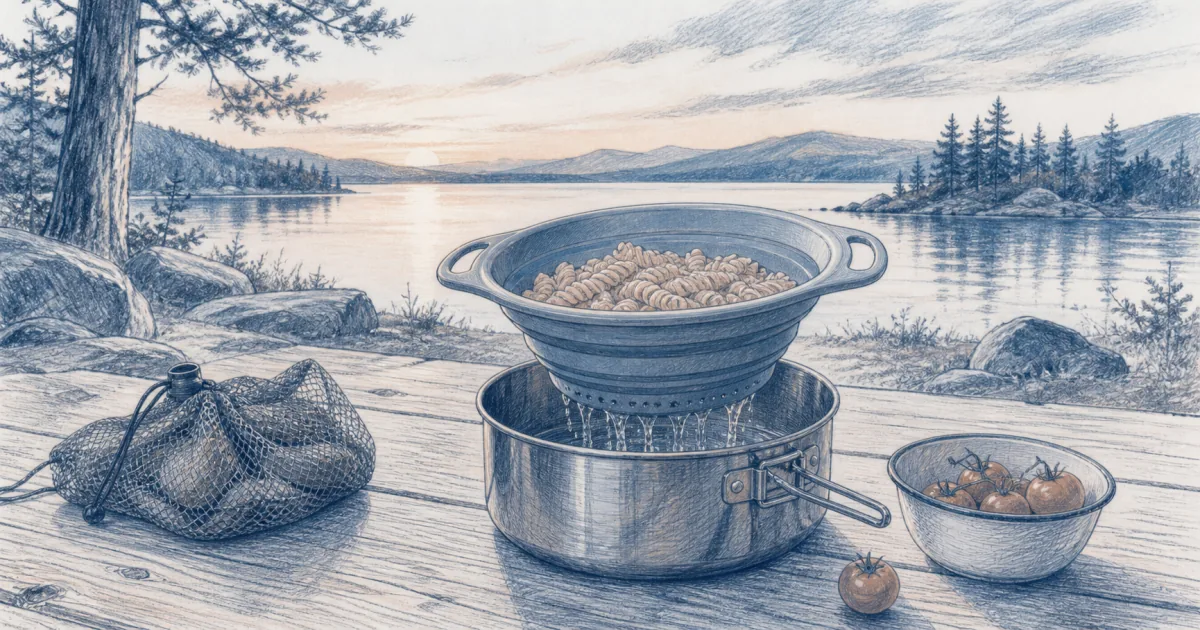
A camping colander is the missing piece between cook kit and trash. Pick a collapsible bowl that fits your pot, set it next to the wash basin, and let the pasta drain while you scrape plates.
Our picks
Pasta night on a picnic table is a test of patience and lid control. Without a real colander, you end up pouring boiling water through a tilted lid while rice slides into the grass. A dedicated camp colander fixes that in one motion. The same tool rinses berries, strains gray water before a dump, and holds veggies while the cook pot heats back up. Drain and wash gear lives in the camp cookware category alongside the pots it serves, and the best camping cookware roundup covers those pots.
This guide covers when a colander earns space, the difference between collapsible mesh and rigid plastic, and how to add it to your cook kit without crowding the bin. For wash station layout, see collapsible camping sink. For which pot to drain into, see best camping pot set. For the broader cook kit, see best camping cookware.
Why a camping colander earns space
Dinner goes wrong at the drain step more often than at the boil step. People lean a lid across a hot pot, lose half the pasta to the dirt, and wonder why camp cooking felt rushed. A colander removes the rush. You lift, drain, return to the burner, and plate.
The same colander handles the prep work before the heat is on. Rinse berries and lettuce away from a stream so the water you cook with stays separate from the water you wash in. Strain bacon fat into a tin before you dump. Small jobs, but they add up at a real campsite.
A colander also pulls weight during cleanup. After dinner, dump dish water through a mesh strainer so food solids never reach the wash sink or a utility drain. That step alone saves campsite gray-water headaches and keeps drain screens from clogging the next morning.
Collapsible mesh versus rigid plastic
Camp colanders split into two camps: collapsible mesh or silicone that folds flat, and rigid plastic or steel that holds its shape. Each has a job.
Collapsible mesh and silicone win on pack size. The Sea to Summit X-Strainer snaps into a bowl shape for draining and folds back to a flat disc that slides into a tote pocket. Good for car camp where trunk space is tight. The trade-off is rigidity. Big pots of pasta can weigh the rim down, so set the colander in a bowl or plate before pouring.
Rigid plastic and steel win on speed. A 3-quart plastic colander with a handle sets on the table edge and drains fast. It also doubles as a serving bowl for fruit or bread. You pay in pack size: a rigid bowl takes the same trunk space as a small pot.
For most weekend car camping, a collapsible colander covers the job. Add a rigid one only if you cook big pasta meals for four or more on every trip.
How to use a camping colander without burning yourself
Drain in two stages. Lift the pot off the burner with a handle gripper. Set the colander in a bowl or in the sink basin, not on the table edge where it can tip. Pour slowly. Steam will rise fast.
Resist the urge to shake. Most collapsible colanders flex when loaded, and pasta or rice will slide off the rim and onto the table. Set the colander on a stable base first. A bowl or the wash basin works.
For small pasta, rice, and quinoa, use a mesh colander. The Coghlan's Mesh Strainer Bag catches orzo, orecchiette, and rice that would slip through the holes of a plastic colander. The mesh also rinses fruit in one pass without bruising it.
Where the colander sits in the cook kit
A camp colander belongs near the wash zone, not next to the stove. Keep it with the collapsible camping sink, the soap, and the sponge. That way you drain into a familiar place and never reach across the burner with a hot pot.
If you strain gray water through a mesh colander before dumping, keep the colander in the same pouch as the soap. Rinse, shake, dry. Pack dry. A wet mesh strainer turns into a mildew problem by the second trip.
Pair the colander with a camping dish rack so drained pasta goes straight to a serving plate and washed dishes go straight to the drying slot. Two simple tools, one less-stress meal.
When to skip the camping colander
Skip a dedicated colander on solo backpacking trips. A pot lid held at an angle gets you home. The weight and bulk of even a collapsible strainer is hard to justify when dinner is a dehydrated meal.
Skip a rigid plastic colander when trunk space is the bottleneck. A collapsible mesh covers the same job for a fraction of the size. Pay for the rigid version only if your meals always include big pasta or rice for a group.
Skip a mesh colander if you do not cook small grains. A simple plastic strainer handles spaghetti, rotini, and penne. Save the mesh for rice, orzo, and berry rinses.
Cleanup routine
Rinse the colander right after use. Food dries fast in camp heat and becomes harder to remove the next morning. A quick splash with hot wash water is usually enough.
Shake out the water and let the colander air-dry before packing. Mesh strainers especially need to dry fully. Fold a wet mesh strainer into a closed tote and it arrives home smelling like a swamp.
For collapsible silicone, check the rim for cracks at the end of each season. A cracked rim flexes under load and spills pasta. Replace the strainer when the rim no longer locks open.
Colander picks for camp kitchens
The Sea to Summit X-Strainer Collapsible Kitchen Strainer is the pack-flat camp colander that earns space in a car camp kitchen tote. It snaps into a bowl shape, holds heat for a quick pasta drain, and folds back to a flat disc when dinner is over. Pair it with the Coghlan's Mesh Strainer Bag as a pocket-size backup for rinsing rice, berries, and small pasta shapes.
Set the colander in a bowl before you pour. Rinse, shake, and dry after every use. Skip it for solo backpacking. Add it when pasta or rice is part of the regular rotation and the cook kit feels slower than it should.
Frequently Asked Questions
Do I really need a camping colander?
A lid-off pour into the bush works once or twice. A colander is faster, cleaner, and stops pasta and rice from sliding into the dirt when dinner is on a tight schedule.
Can I just use my pot lid as a colander?
Most pot lids hold back pasta but leak small shapes like orzo and rice. A real colander or strainer catches what lids miss.
Collapsible mesh or rigid plastic?
Collapsible mesh wins on pack size and is fine for most car camp. Rigid plastic is faster to drain and easier to set on a table edge for big pots.
How do I clean a camp colander at the site?
Rinse, shake, and dry after each use. Pack dry. Mesh holds mildew if you fold it wet.
Can I cook in a camping colander?
No. A strainer is not a pot. Heat water in your pot, then pour through the colander set in a plate or bowl.
Is a mesh colander safe for hot pasta?
Most mesh and silicone versions handle boiling water. Thin plastic versions warp. Check the temperature rating before draining a full pot of boiling pasta.
What size should a camping colander be?
Big enough to hold your largest pot of pasta plus a finger-width gap. A 3- to 4-quart colander covers most two-person camp meals.