Campfire Popcorn Popper: How to Choose and Use One
Cookware
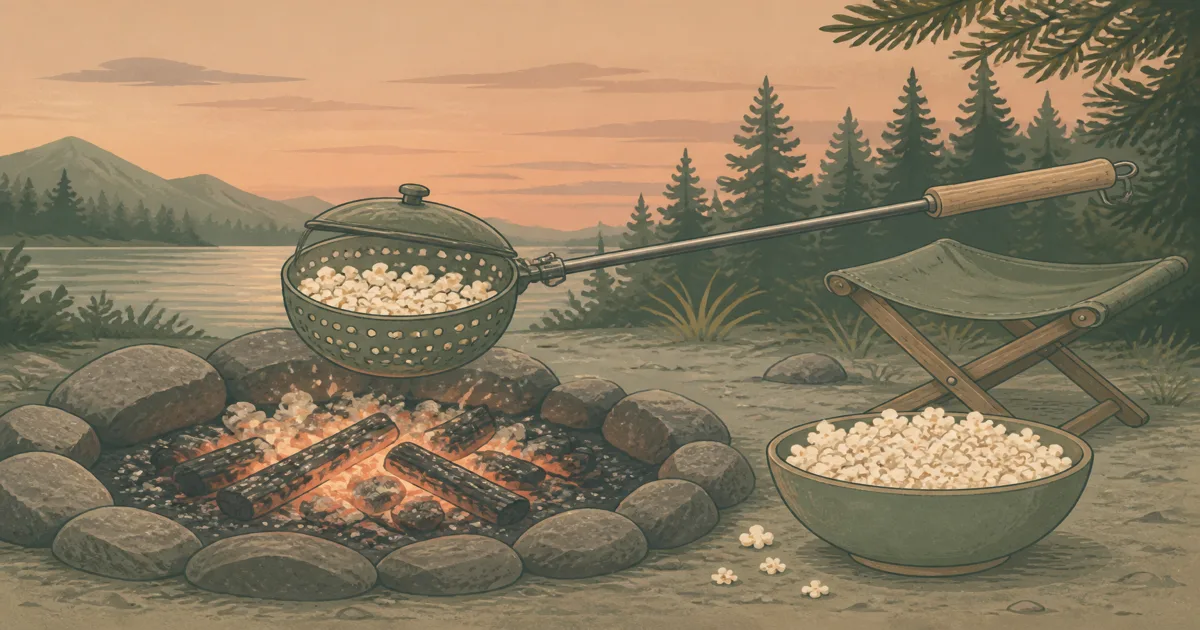
A long-handled campfire popcorn popper makes a fun snack without putting your hands close to the heat. The best results come from steady coals and constant movement.
Our picks
Popcorn is one of the easiest campfire snacks to share, but it is also easy to scorch. Open flames heat one part of a pan much faster than another. A purpose-built popper helps by enclosing the kernels and giving you a safe way to keep them moving. The camp cookware category has the rest of the fire-friendly cooking tools, with the best camping cookware guide as a starting point.
This guide covers the pan, the fire, and the timing. If you are planning the rest of the cooking area, our camping kitchen checklist will help you keep hot tools and food supplies organized.
Choose the right kind of campfire popcorn popper
The most useful design has a lidded pan, a long handle, and a way to stir the kernels without opening the lid. The handle should feel rigid when the pan is full. A loose joint is annoying at home and risky beside a fire.
Aluminum heats quickly and keeps the total weight manageable. Steel is usually tougher but can develop stronger hot spots. Either material can work if you move the pan continuously. The shape and handle matter more than a small difference in weight.
Check how the lid attaches. A clipped or hinged lid keeps popcorn inside while you shake or turn the crank. It should still open easily after cooking, once the pan is away from the fire and has cooled enough to handle safely.
Capacity can be misleading. A large pan does not mean you should fill the bottom with kernels. Popcorn needs room to expand, and smaller batches cook more evenly over an unpredictable heat source. Two controlled batches are better than one burned batch.
Our pick for an open fire
The Great Northern Campfire Popcorn Popper combines a 3.5-quart nonstick pan with a hinged lid and a 16-inch handle. Keep it over coals, shake so kernels do not scorch, and do not rest the pan in the dirt while it is still sticky with oil.
The long handle is the main reason to choose it over a plain pot. Gently shaking the pan moves kernels across the heated base, which reduces the chance that one group sits over a hot spot. The hinged lid also makes cleanup simpler after the pan cools.
This is a single-hero recommendation because the cooking method matters more than comparing several nearly identical pans. Choose it if campfire snacks are a regular part of family trips. Skip it if you camp alone, avoid open fires, or already own a sturdy lidded pot that you can handle safely.
Build the right cooking fire
Start with dry firewood and let the fire settle before cooking. You want a wide patch of red coals with only small flames. Tall flames lick around the sides, soot the pan, and make temperature control difficult.
Use an established fire ring and follow current campground restrictions. Some sites ban open fires during dry weather. A popcorn snack is never a reason to ignore a burn ban or move a fire outside the approved area.
Arrange the coals so you have a hotter center and a cooler edge. That gives you somewhere to move the popper when the oil heats too quickly. Keep children and loose clothing outside the working area, and decide where the hot pan will rest before you begin.
Do not hold a heavy popper unsupported for the whole cooking time. Use the fire ring grate when the product instructions allow it, or brace the handle in a stable position while maintaining control. Never leave the handle where someone can trip over it.
How to make campfire popcorn
Read the product instructions first because pan sizes and recommended amounts differ. Add the stated amount of oil and a few test kernels. Close the lid, hold the pan over the coals, and begin moving or stirring it.
When the test kernels pop, move the pan briefly to the cooler edge. Add the measured kernels, secure the lid, and return it to moderate heat. Start shaking it gently without lifting the lid.
Popping should build gradually. If smoke appears before the first kernels pop, the pan is too hot. Move it away from the center and keep stirring. If nothing happens after several minutes, move slightly closer to the coals rather than dropping the pan into open flames.
Listen closely once the popping becomes rapid. Remove the pan when there are about two seconds between pops. Residual heat will finish a few kernels. Waiting for complete silence usually burns the first popcorn that opened.
Set the hot popper on bare ground, a fire grate, or another heat-safe surface. Open the lid away from your face because steam can escape. Pour the popcorn into a bowl before adding salt or melted butter.
Seasoning without making a mess
Fine salt sticks better than coarse salt. Add a small amount, toss, and taste before adding more. Butter tastes good but can make the bottom of the bowl soggy, so drizzle it in stages while someone tosses the popcorn.
Dry seasonings travel well in small sealed containers. Smoked paprika, cinnamon sugar, nutritional yeast, or a mild cheese powder can work. Label containers at home so you are not guessing beside the fire in low light.
Keep seasoning away from the popper mechanism. Sugar and melted butter can bake onto the pan or gum up a crank. Season in a separate bowl and cleaning will be much easier.
Common mistakes to avoid
The biggest mistake is cooking over tall flames. The pan looks active, but the heat is harsh and uneven. Wait for coals. The second mistake is adding too many kernels. Crowding makes stirring harder and leaves more unpopped corn.
Do not stop moving the pan while you talk or prepare toppings. A hot spot can burn kernels in seconds. Have the bowl and seasonings ready before the oil goes over the fire.
Avoid pouring water into a hot popper. Sudden cooling can warp metal and create steam. Let the pan cool naturally, wipe out loose residue, and wash it according to the maker's directions.
Finally, do not store the popper dirty or damp. Oil residue turns sticky, and moisture can damage metal parts. Clean it after the meal, dry it fully, and keep the long handle from bending under other gear.
Is a campfire popcorn popper worth packing?
It is worth the space for family car camping, group sites, and backyard fires where popcorn is part of the evening. The long handle and enclosed pan make the job easier than balancing a kitchen saucepan near coals.
For occasional solo trips, a separate popper is probably unnecessary. A lidded camping pot can do the job if the manufacturer permits it and you can move it safely. Backpackers should usually leave the specialty pan at home.
The Great Northern Campfire Popcorn Popper makes the most sense when you will use it several times each season. Keep batches small, cook over coals, and keep the pan moving. Those three choices matter more than any seasoning.
Frequently Asked Questions
Can you make popcorn over a campfire?
Yes. Use a lidded pan or purpose-built popper over steady coals rather than tall flames, and keep the kernels moving.
How much oil should you use?
Follow the popper instructions. A thin coating across the bottom is usually enough to help heat transfer without making the popcorn greasy.
Why does campfire popcorn burn?
The usual causes are direct flames, too much heat, or leaving the pan still. Move the popper continuously and pull it away when popping slows.
Can you use a campfire popcorn popper on a stove?
Only if the maker says it is compatible. Long-handled open-fire models may be awkward or unstable on a compact burner.
How many kernels should you add at once?
Keep batches small. Popcorn needs room to expand, and a crowded pan is harder to keep moving. Two controlled batches cook more evenly than one large batch over an unpredictable fire.
How do you clean a campfire popcorn popper?
Let the pan cool, wipe out loose residue, then wash it according to the maker's directions. Dry it fully before storing so oil residue does not turn sticky and moisture does not damage the metal.