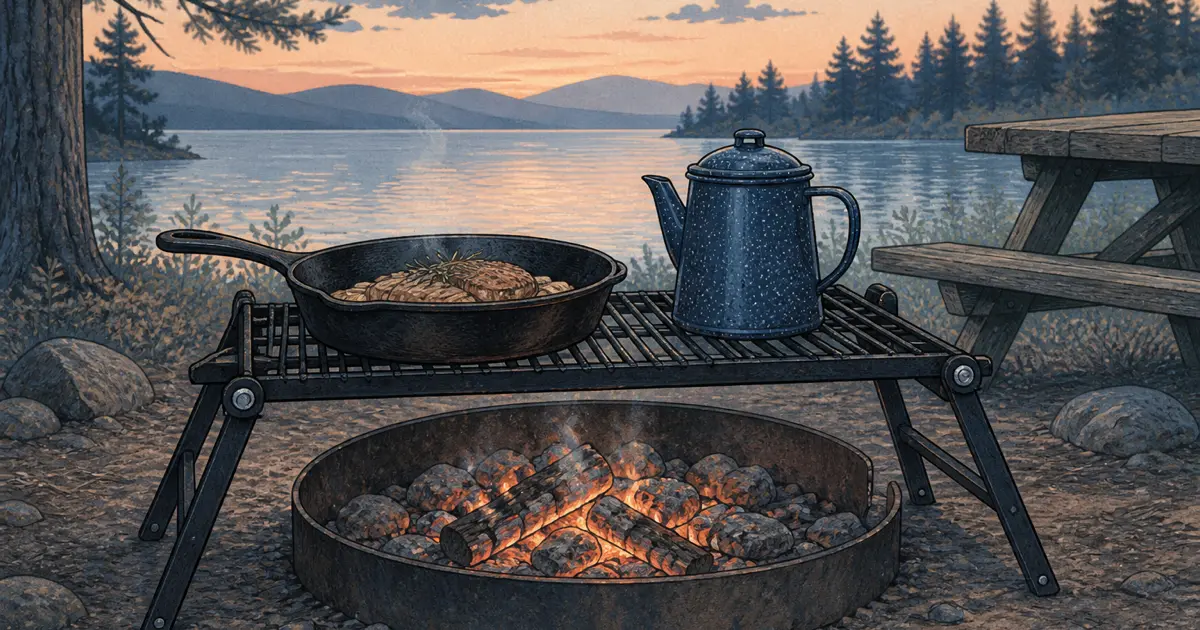
Camping Grill Grate: How to Cook Safely Over a Fire
Cookware
A camping grill grate is worth packing when it solves a repeated campsite problem without adding clutter.
Our picks
A useful camp accessory should make a real task easier. It should not create another loose item in the kitchen bin. Measure the part of your setup that matters before you buy. Test the item at home with a cool, empty setup before you rely on it around hot cookware or a dark campsite. If you want controlled propane heat instead of a fire-ring grate, switch to a best portable camping grill.
Grates and fire cooking gear gather in the camp cookware category, along with the best camping cookware picks for stove-side cooking.
Start with the job
Think through a normal campsite moment. Where will the camping grill grate sit or attach? Who will use it? What happens when the table is wet, the ground is uneven, or someone walks past with a cooler? Those questions matter more than a long feature list.
Measure the part of your setup that matters before ordering. Product descriptions can sound universal while the actual dimensions make a poor fit. Test the item at home with a cool, empty setup before you rely on it around hot cookware, glass, or a dark campsite.
A practical pick
The Amazon Basics Heavy-Duty Portable Camping Grill Grate is a sensible starting point for this job. Check packed size against your bin, and confirm it sits stable on the table or fire ring you actually use. Wipe it dry before it goes back in the tote.
Do not treat any accessory as universal. Confirm the current listing, materials, and intended use before buying. A simple option that fits safely is better than a larger product that stays in the car.
Set up with room to spare
Set up before food comes out or daylight fades. Put larger gear in place first, then add the smaller item once you can see where people will walk. Keep fuel, hot cookware, sharp tools, and fabric in separate zones.
Give the finished setup a gentle test. Check that clamps engage, legs sit flat, straps do not slide, and there is no awkward reach across heat. If you would not trust the setup with a full mug or hot pan, move it before dinner.
Keep the rest simple
Use this as part of a repeatable camp setup, not a separate system. Related guides such as best camping dutch oven, camping cooking tripod, and marshmallow roasting sticks can help you plan the surrounding gear. Leave clear space for food and cleanup.
A small packing list helps. Add an accessory only if it earns space on real trips. If it never comes out of the tote, simplify the kit instead of buying more organizers.
Care and storage
Let every hot part cool before packing. Remove food residue, dirt, and moisture while they are easy to handle. Follow the maker washing instructions and dry the item fully at home. Closed bins trap moisture and shorten the life of simple gear.
Check moving parts and attachment points before each trip. Replace damaged hardware rather than using tape around heat or weight. Store the item where it cannot scrape cookware or puncture soft gear.
Common mistakes
Skipping the fit check. A quick home test catches most bad measurements.
Putting it in the hot zone. Convenience is never worth reaching across a flame.
Overloading it. Use it only for its intended job and weight.
Packing it wet. Damp gear becomes rusty, smelly, or sticky.
Buying for an imaginary trip. Choose for the meals and group size you actually have.
Bottom line
A camping grill grate earns space when it keeps a recurring task safer and easier. The Amazon Basics Heavy-Duty Portable Camping Grill Grate is worth considering if it fits your exact setup. Test it before leaving, keep it clear of heat, and put it away dry after the trip. If you want propane sear without a wood fire, see our portable camping grill guide.
Plan the setup before you leave. Campgrounds change, but careful measurements, a clear work area, and a simple routine make every small accessory more useful. Pack only what you will use, follow local fire rules, and give yourself enough room to work without rushing.
Frequently Asked Questions
What should I look for?
Choose a model that fits your actual campsite setup and storage space.
How do I check fit?
Measure the relevant surface, rail, or storage pocket at home first.
Is it safe near a fire?
Keep it outside the heat zone and follow the maker instructions.
Is it useful for backpacking?
Bring it only when the job it solves is worth the weight.
How do I clean it?
Let it cool, wash it as directed, and dry it fully before storage.
What should I do before packing?
Check for damage, loose parts, and trapped moisture.