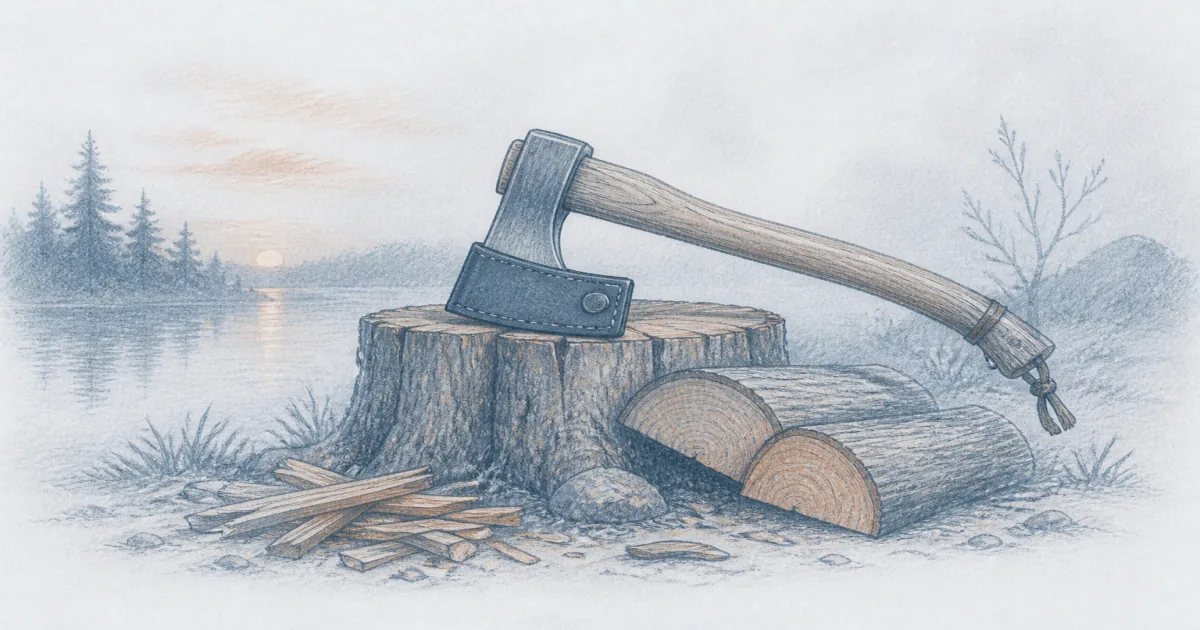
Best Camping Axe (2026): Full-Size Tools for Firewood and Limbing
Stoves
The best camping axe is a mid-length chopping tool for larger firewood and limbing, not a pocket hatchet. Match handle length to how you haul gear.
Our picks
A camping axe is a mid-length chopping tool for larger firewood, limbing, and stubborn rounds. It is not the same job as a camping hatchet. The shopping mistake is buying a 36-inch yard splitter “for camping,” then leaving it home because it never fits the car kit.
This guide sits with fire-prep gear in the campfire and stove guides. Start from the best camping stove pillar if you are still building the cook kit, then add wood tools only if your sites actually need them. Pair this page with camping fire starter, camping bellows, and best campfire gloves.
Axe vs hatchet vs saw
If the campground sells split firewood, a hatchet may be enough. If you process deadfall or unsplit rounds, a camping axe earns its trunk space. For quiet limb cuts, the best camping saw covers the folding saws that handle the jobs an axe should not.
Comparison table
Top pick: Fiskars X15
The Fiskars X15 is the best camping axe for most people because the 23.5-inch length gives real chopping power without the awkward reach of a full felling axe. The FiberComp handle stays light enough for a long limbing session, and the insert-molded head design removes the classic “loose head” worry that shows up on cheap wooden axes.
It shines on car-camp rounds and green limbs where a hatchet runs out of leverage. The sheath matters for trunk safety. Pack it sheathed, edge away from soft goods, and never loose under seats.
Who it is for: Weekend car camps, cabin drive-ups, and anyone who needs more than a hatchet but less than a 36-inch splitter.
Shop: Fiskars X15 on Amazon
Best forged steel: Estwing Camper’s Axe 26"
The Estwing Camper’s Axe is for campers who want forged steel that takes abuse. The 26-inch length supports two-handed chops on stubborn wood, and the shock-reduction grip is kinder on longer sessions than bare steel.
It weighs more than the Fiskars. That weight helps when you are splitting denser rounds at a fire ring. Keep the ballistic sheath on in the vehicle. This is still a camping-length axe, not a backyard maul.
Who it is for: Seasonal campers who want one forged axe that lasts years of firewood duty.
Shop: Estwing Camper’s Axe on Amazon
Best traditional: Gränsfors Small Forest Axe
The Gränsfors Bruks Small Forest Axe is the premium pick when you want a hand-forged Swedish head on a 19-inch hickory handle. It sits between hatchet and longer camp axe: small enough for many car kits, long enough for limbing and small splits.
You pay more for the forge work and leather sheath. That is the trade. If your budget is under $60, stay on the Fiskars or Estwing. If you want a tool you will still care about in ten seasons, this is the lane.
Who it is for: Campers who value traditional feel and are willing to pay for it.
Shop: Gränsfors Small Forest Axe on Amazon
Safe use at the fire ring
Wear eye protection. Use a stable chopping block. Keep bystanders out of the swing arc. Gloves help with splinters. They do not replace attention around a sharp bit. See best campfire gloves for heat work after the fire is lit, and a camping fire poker for moving coals.
Stop when wood is iced or the block is tippy. A folding saw is safer than fighting a bouncing round with any axe.
How to pack a camping axe
Keep the sheath on from garage to campsite. Nest the axe along the side of the cook bin or fire tote, edge facing away from soft goods. Do not leave it loose under a seat.
If you also carry a camping hatchet, put both tools in the same tote as the camping fire starter. Wipe the bit dry before you pack out. Sap and wet sheath leather dull edges and invite rust on forged steel.
Common mistakes
Buying a hatchet when you need an axe. Kindling tools fail on thick rounds. Match the tool to the wood you actually process.
Buying a 36-inch splitter for “camping.” Most car kits cannot store it safely, so it stays home.
Packing without a sheath. Soft bags and kids’ fingers lose that argument.
Skipping fire starters. Sharp steel does not equal dry tinder. Keep starters and bellows with the wood tools.
Bottom line
Buy a camping axe when your sites need more than kindling work. The Fiskars X15 is the best camping axe for most weekends. Take Estwing Camper’s 26" for forged longevity, or Gränsfors Small Forest for traditional Swedish forge work. Cross-check the hatchet guide if you only need small splits, then sheath the tool and pack a fire starter.
Frequently Asked Questions
What is the best camping axe overall?
The Fiskars X15 for most car camps. Choose the Estwing Camper’s 26" when you want forged steel longevity, or the Gränsfors Small Forest Axe when you want a traditional Swedish camp axe.
Camping axe vs camping hatchet: which do I need?
A camping hatchet (about 14 inches) for kindling and small limbs. A camping axe (roughly 19–26 inches) when you regularly process larger rounds or limb thicker deadfall. Many kits carry a hatchet only.
What size camping axe should I buy?
About 19–24 inches for most car camping. Longer 26-inch tools help on stubborn wood. Skip 36-inch yard splitters unless you process big rounds at a cabin.
Is a camping axe legal at campgrounds?
Rules vary by park and transport. Many US campgrounds allow axes for firewood prep. Keep a sheath on in the vehicle and check local regs before you pack.
Do I still need a fire starter if I have an axe?
Yes. An axe sizes fuel. It does not light damp wood. Keep a camping fire starter and camping bellows in the same tote.
Axe or folding saw for camp wood?
Many kits carry both. A saw is quieter and safer for larger limbs. An axe is faster for splitting once pieces are short enough for the block.
Can I backpack with a full camping axe?
Usually no. Mid-length axes belong in car kits. For pack trips, use a short hatchet or skip chopping tools and buy firewood.