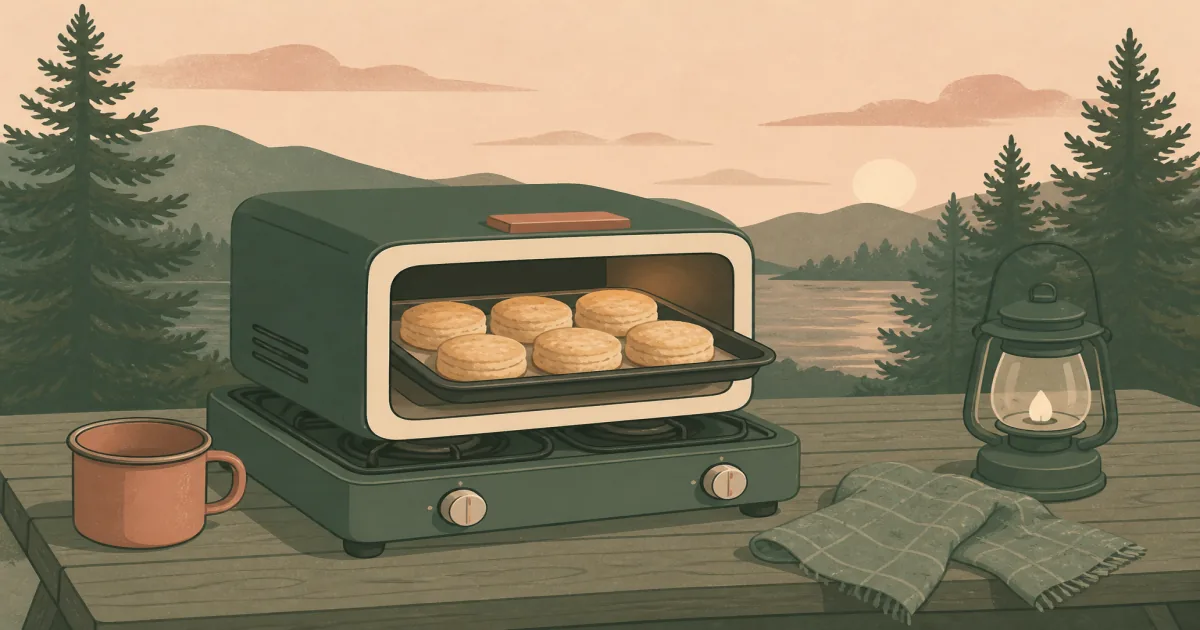
Portable Camping Oven: Bake Biscuits, Pizza, and Rolls
Cookware
A portable camping oven turns a camp stove into a small bakery. Pick enclosed heat that matches your burner, not a dutch oven you only use for stews.
Our picks
Cabin kitchens spoil people. At camp, bread means toast on a grate or biscuits from a tube if you are lucky. A portable camping oven closes that gap. It traps heat above a burner so cinnamon rolls, pizza, and leftovers get real bake time instead of a sad skillet steam. Baking gear sits with the wider camp cookware category, near the best camping cookware picks for stove-top cooking.
This is a different tool from a dutch oven. A dutch oven is a pot that can bake with coals and also simmer chili. A portable camping oven is usually a stove-top box, ring, or foldable shell built around burner heat. If your main goal is fire-ring stews, stay with dutch oven camping. If your main goal is baking on propane, keep reading.
Is a portable camping oven a real thing?
Yes. A portable camping oven is an enclosed box or ring that sits on a camp stove and traps heat for baking. Coleman and REDCAMP make box styles, and the Omnia is a stove-top ring. All three bake biscuits, rolls, and pizza over a burner instead of coals.
The top questions people ask are whether a camping oven exists at all and what fits inside one. Both answers come down to size and heat source: the box has to sit over a burner wide enough to heat its base, and the pans have to leave room for hot air to move. The rest of this guide covers the specifics.
Which portable camping oven is right for your stove?
Match the oven to the burner first. The Coleman box wants a stove that spans about 7 inches, the Omnia wants any single burner with real low settings, and the REDCAMP wants a stable wide base. Then pick by packed size and how many people you feed.
The base footprint is the deal-breaker. A backpacking canister stove is too small for any of these: the flame has to heat a wide base plate, not a pot. A two burner camping stove with real low settings is the easiest partner, and a wide single burner with the Coleman box is the classic setup.
How much fuel does a camp-oven bake use?
A 29-minute cinnamon roll session burned about 2.3 oz of butane, so a standard 7.8 oz canister covers roughly 98 minutes of baking. Baking holds a burner longer than boiling a kettle, so plan for more fuel than a skillet weekend.
Butane wins both columns in the test data: it bakes about 24% longer per ounce and costs about 43% less per ounce. The catch is cold. Butane pressure drops as the canister chills, so a shoulder-season bake is the one time propane is worth it.
Classic box: Coleman Portable Camping Oven
The Coleman Portable Camping Oven is the familiar metal box that sits over a camp stove. If you already think in home-oven terms, this is the portable camping oven that feels closest. Slide a tray in, manage the flame, and bake. It heats quickly, reaching near 300°F in about five minutes on high, and it passed 400°F when the flame stayed open.
It takes tote space. That is the trade. You get an enclosed chamber that reheats pizza and finishes biscuits without inventing a coal bed. Pair it with a stable two-burner and a level table. See camping stove setup before the first weekend so the oven is not fighting a wobbly stove.
Who it is for: Car campers who bake often and do not mind a dedicated oven box in the kitchen bin.
What the door gauge never tells you
The dial on the door is measuring the door, not the air around your food. In one test the gauge read 300°F while an internal thermometer read 350°F, and a laser aimed at the door case measured 155°F, which is why the case feels mild while the interior is baking. A cheap oven thermometer on the rack removes the guesswork. The second calibration trick is to bake about 100°F below the recipe, so a 350°F box cake goes in at 250°F and takes the same time.
Stove-top baker: Omnia Oven
The Omnia Oven is the portable camping oven people pack when a rigid box feels like too much hardware. It sits on a burner and uses a stacked ring design to trap heat for breads and rolls. Boats and RVs made it famous. Camp kitchens use the same trick.
Flame height matters more than brand loyalty. Too high and the bottom scorches while the top stays pale. Start lower than your instinct, preheat, and rotate if your burner has a hot spot. Silicone molds and liners (sold separately) make cleanup less annoying, but they hold heat, so pull baked goods a little early and let them finish off the flame.
Who it is for: Campers who want baking without a full oven crate, and anyone already comfortable managing a simmer on a propane stove.
Why the top stays pale
Heat rises from the burner and the center chimney, but the lid is thin aluminum losing warmth to the outside air, so it never radiates much infrared down onto the top of your food. That is physics, not a defect. Bread gets a golden bottom and sides and a pale top. Casseroles and rolls barely notice. For a proper all-round crust, the community fix is a few charcoal briquettes on the lid for the last few minutes of the bake.
Foldable kit: REDCAMP Foldable Camping Oven
The REDCAMP 14"H Foldable Camping Oven with 2 Tier Grill is for trunks that are already full. Panels fold. Two tiers give you tray options. Stainless shrugs off damp mornings better than thin painted steel, and the 304 stainless body wipes clean with warm soapy water.
Setup discipline matters. If the shell sits crooked, heat leaks and bake times stretch. Practice once at home on a cold burner so camp is not the first assembly. Dry the folds before packing, and peel the protective shipping film before the first bake, because it is easy to miss and it will smoke.
Who it is for: Weekenders who bake sometimes, cook for a group, and care about packed flat size.
Assembly and the hot handle
Lock the panels, check the buckles, then preheat. The stainless shell gets hot on every face, and the door handle is no exception, so set the oven where nobody will brush it and keep a glove nearby. It wants a heat source with real output, around 3,500 W in one review, if you expect 400°F for crusty bread.
Why does my camp oven burn the bottom and leave the top pale?
Because all the heat comes from underneath. The burner heats the base, hot air circulates through the middle, and the thin lid loses heat to the sky, so the bottom browns first and the top never catches. Bake lower, raise the food on a rack, and rotate the pan.
Preheat longer than you think. Camp ovens lose heat every time you peek, so plan one check mid-bake instead of constant lid lifting. If the bottom runs dark while the top stays pale, lower the flame and extend the time. A small oven thermometer pays for itself on the second trip, because it is the only way to know what the air around the food is actually doing.
The preheat rule
Get the metal hot before the batter goes in. The Coleman box climbs roughly 100°F a minute on a warm day, the Omnia base wants three minutes on high and one minute with the pan on top, and the REDCAMP needs its panels fully warm before the first tray. Cold metal pulls heat out of the batter, which is how you get a pale top and a raw center on the same tray. Preheat, then load, then stop opening the door.
What size pan fits a portable camping oven?
An 8-inch round or square pan is the safe default. It leaves a ring of air around the food so heat circulates, and it fits the rack in the Coleman and REDCAMP boxes as well as the Omnia's ring.
A bigger pan is not better. An oversized tray blocks the airflow that carries heat around the food, and it also catches the door when you slide it in. If you need more food than one 8-inch tray holds, bake in two batches or buy the oven with the second rack.
Can you bake on a butane stove?
Yes, and it works well. The Coleman oven reached 350°F in about 16 minutes on a butane burner, and the same fuel delivered 12.6 minutes of baking heat per ounce, which beats propane's 10.2.
Butane's limit is temperature outside the oven. Once the cartridge chills below about 31°F the pressure drops, so a cold-weather bake belongs on propane or on a dual-fuel stove with the propane adapter fitted. Baking also holds a burner far longer than boiling water, which is why the best butane camping stove picks with a propane path are the easier partner for a shoulder-season bake.
Common mistakes
Trusting the door thermometer. It reads the door. Use an oven thermometer on the rack.
Cranking the flame. Scorched bottoms teach the same lesson every time.
Skipping a home test. Bake one tray of biscuits in the driveway before a hungry campsite watches.
Packing it greasy. Crumbs and oil in folds get nasty fast, and a foldable shell wants to dry before it folds.
Baking in the wind. A box oven with a cold wind on one side stalls no matter how big the flame is. Screen it.
Buying an electric lunch heater by mistake. Car food warmers are not camp ovens. Stick to stove-top or propane camping designs.
Bottom line
A portable camping oven is worth it when you actually bake. Choose the Coleman Portable Camping Oven for a classic box, the Omnia Oven for stove-top baking with less bulk, or the REDCAMP foldable oven when packed size and two tiers win. Bring an oven thermometer, bake lower than the recipe says, budget about 2.3 oz of butane per tray, and keep dutch oven guides for coal and stew work.
Frequently Asked Questions
What is a portable camping oven?
It is an enclosed baking setup that sits on or over a camp stove so you can bake without a cabin kitchen. It is not the same as a dutch oven used mainly for stews and coals.
How much fuel does one bake use?
About 2.3 oz of butane for a 29-minute cinnamon roll session, so a standard 7.8 oz canister covers roughly 98 minutes of baking.
Why does my camp oven burn the bottom and leave the top pale?
Heat rises from the burner and the lid is thin metal losing heat to the air, so the top never sees radiant heat. Bake lower, use a rack, and add a few coals on the lid for the last few minutes if you want a brown top.
Can I trust the thermometer on the oven door?
No. A door gauge can read 300°F while an oven thermometer inside reads 350°F. Use a cheap oven thermometer and ignore the door dial.
What size pan fits a portable camping oven?
An 8-inch round or square pan leaves room for air to circulate. The Coleman base needs a stove that spans about 7 inches, and its manual recommends 8-inch pans.
Can I bake on a butane stove?
Yes. The Coleman oven reached 350°F in about 16 minutes on a butane burner, and butane delivered 12.6 minutes of baking heat per ounce versus propane's 10.2.
Is a portable camping oven the same as a dutch oven?
No. A dutch oven is a heavy pot that can bake with coals. A portable camping oven is usually a stove-top box or ring system built for burner heat.
Do I need to change recipe temperatures?
Yes, usually. A camp oven runs hotter than it reads, so many cooks bake about 100°F below the recipe, at 250°F where the box says 350°F.