Camping Utensil Holder: Keep Your Camp Kitchen Organized
Cookware
A camping utensil holder keeps tongs, spatulas, and serving tools off a dirty table and in one predictable place. A hanging organizer works best when your kitchen uses a table or awning.
Our picks
A camp kitchen gets messy fast when the spatula is under a cutting board, the tongs are on a wet table, and everyone is asking where the bottle opener went. You do not need a complicated storage system. You need one dependable spot for the tools that move between the stove, grill, and serving area. Utensil storage sits with the rest of the kitchen in the camp cookware category, and the best camping cookware roundup covers the tools it holds.
This guide is for car campers and group sites. If you are building the rest of your cooking setup, start with our camp kitchen organization guide and use a camping kitchen checklist before the trip.
Pick the holder style that fits your campsite
A tabletop caddy is the easiest option. Set it beside the stove, carry it to the picnic table, and put it back in the kitchen bin after dinner. It makes sense for a short trip with a small set of utensils. The downside is that it takes up table space and can collect rain, ash, or splatter.
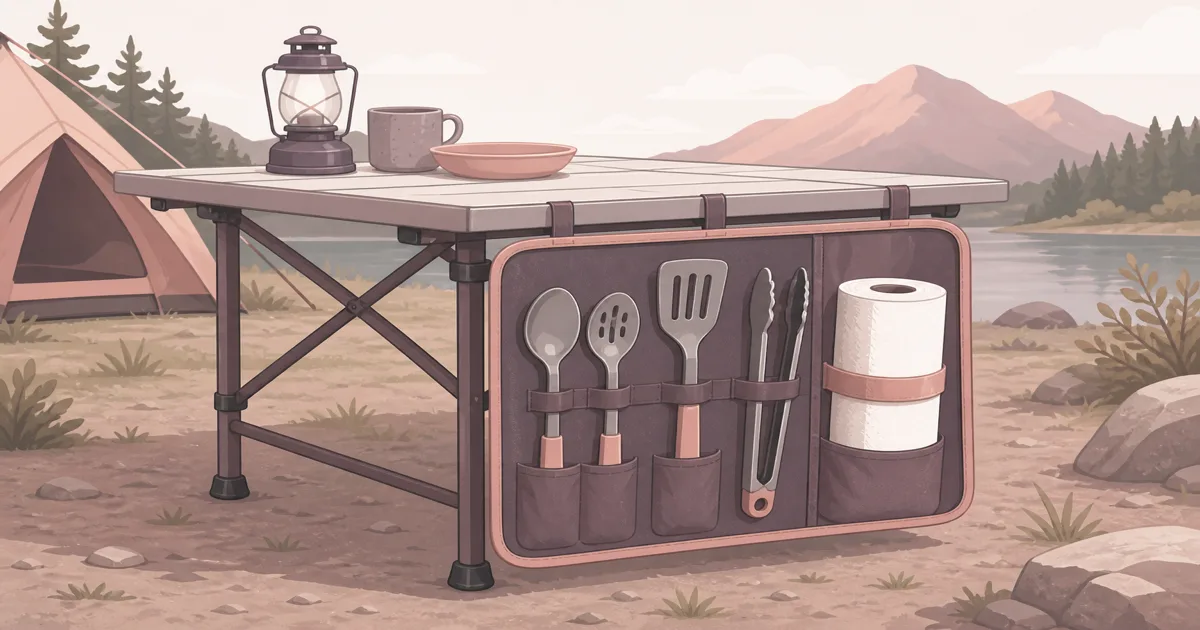
A hanging organizer uses vertical space instead. You can hang it from a camp table, RV awning, or a stable hook, then open it while you cook. This is useful for families because each tool has a visible place. It also keeps clean utensils away from damp tabletop surfaces.
Roll-up utensil sleeves pack smaller than either option. They are a good choice for simple meals, but they can be awkward while cooking because you need to lay the whole sleeve down to find one item. Choose a sleeve when packed size matters more than easy access.
Before buying, check how you actually cook. A camper who boils water and eats from one pot may only need a spoon and a pot gripper. A group cooking breakfast, burgers, and pasta will benefit from a larger organizer with room for serving tools, cleanup supplies, and a paper towel roll.
A practical hanging organizer
The HODRANT Hanging Camp Utensil Organizer is a useful option for a car-camp kitchen. The layout includes tool slots, pockets, and a paper-towel holder, which makes it a better fit for a complete meal setup than a loose bin.
Its strongest feature is access. Open the organizer before you light the stove, then put the tongs, spatula, spoon, and can opener in their usual spots. You avoid handling clean tools with greasy hands or searching through a tote while something is burning.
The tradeoff is that it needs a secure hanging point. Do not hang a loaded bag from a weak tent pole, a hot grill, or a branch that could move in the wind. If your campsite has only a low picnic table, a basic handled caddy may be more practical.
This recommendation is based on the listed features and buyer feedback, not personal field testing. Check the current listing, dimensions, and mounting options before you buy. A holder only helps if it fits your own camp table and kitchen bin.
Decide what belongs in the holder
Start with tools that get used at nearly every meal. Most camp kitchens need tongs, a spatula, a large spoon, a ladle, a can opener, a lighter, and a bottle opener. Add a small paring knife only if you have a protective sheath or a dedicated closed pocket.
Keep a few cleanup items nearby, but do not turn the holder into a junk drawer. A small dish brush, a scraper, and a clean dish towel are useful. A full soap bottle, wet sponge, and trash bag usually belong in the wash station, where a leak will not soak your clean utensils.
Separate raw-food tools from serving tools whenever possible. If the tongs touched raw chicken, they should not go back into the same pocket as the spoon you use for cooked food. Bring a second pair of tongs or wash the first pair before it returns to the holder.
Labeling is optional, but a simple routine helps. Put hot-tool items on one side, serving tools in the middle, and cleanup items on the other. Everyone in the group can then return an item without asking where it goes.
Set it up without crowding the cooking area
Choose a location near the stove but outside the heat zone. You should be able to reach a spatula without stretching across a burner or stepping around a cooler. Keep the organizer away from the edge of the table, where a person or dog could pull it down.
If you hang it, test the straps with the bag loaded before food comes out. Make sure the zipper can open fully and that long tools do not drag on the ground. A bag that hangs too low will collect dust and make it harder to see what is inside.
Keep paper products away from flame. A built-in paper-towel holder is convenient, but the roll should be on the dry side of the kitchen, not beside a stove or fire ring. Our guide to a camping paper towel holder explains the same placement principle.
At night, put the organizer inside a vehicle or in the secure storage required by the campground. Clean tools can still carry food residue, and no fabric bag protects them from animals or weather.
Clean and pack it after each trip
Empty crumbs and loose debris from the organizer before packing. Wipe the interior with a damp cloth if a utensil dripped sauce or grease. Leave every pocket open until it is dry, especially if the bag has a waterproof coating that slows evaporation.
Wash utensils at home even if they looked clean at camp. Food residue can hide under handles and inside tongs. Let everything dry completely before it goes back into the bag, otherwise the next trip starts with a mildew smell.
Check straps, zippers, and stitching at the same time. A weak buckle is easy to replace at home and frustrating to discover when you are setting up dinner in the rain. Store the organizer flat or loosely folded so the pockets keep their shape.
Common mistakes to avoid
Do not use the holder as permanent storage for a heavy cast-iron tool set. Hanging bags are designed for ordinary camp utensils, not a stack of skillets. Put heavy cookware in its own bin and keep the organizer focused on the tools you need while cooking.
Avoid packing dirty or wet utensils because the mess spreads to every pocket. A quick wash and dry at camp makes the trip home easier. It also prevents you from confusing a clean spoon with one that touched raw food.
Finally, do not overfill it just because there is an empty pocket. If you never use a melon baller, a specialty whisk, or three extra serving spoons at home, they will not earn space in the camp kitchen. A smaller, familiar kit is easier to set up and clean.
Is a camping utensil holder worth it?
It is a small upgrade with a noticeable payoff for campers who cook real meals outside. You spend less time searching for tools, keep clean items out of the dirt, and make it easier for everyone to help with dinner.
The HODRANT Hanging Camp Utensil Organizer is a solid choice when you have a secure place to hang it and want utensils, towels, and small tools together. For a minimal trip, a simple caddy or roll-up sleeve is enough. The best choice is the one you will repack in the same order after every meal.
Frequently Asked Questions
What should go in a camping utensil holder?
Put the tools you use at every meal inside: tongs, a spatula, a serving spoon, a can opener, and a lighter if it has a protected pocket. Keep sharp knives in a sheath or separate case.
Is a hanging organizer better than a tabletop caddy?
A hanging organizer saves table space and protects tools from spills. A caddy is simpler when you have no safe place to hang a bag.
How do you keep camp utensils clean?
Store clean tools in a closed bag, keep raw-food tools separate, and wash everything before it goes back into the holder.
Can you leave utensils outside overnight?
No. Clean up food residue and store cooking items according to campground wildlife rules before you turn in.
How do you hang a camping utensil holder?
Hang it from a camp table, RV awning, or another stable hook, and test the straps with the bag loaded before food comes out. Do not hang it from a weak tent pole, a hot grill, or a branch that could move in the wind.
How do you clean a camping utensil holder?
Empty crumbs and loose debris before packing, wipe the interior with a damp cloth, and leave every pocket open until it is dry. Wash the utensils at home and dry them fully before they go back in the bag.