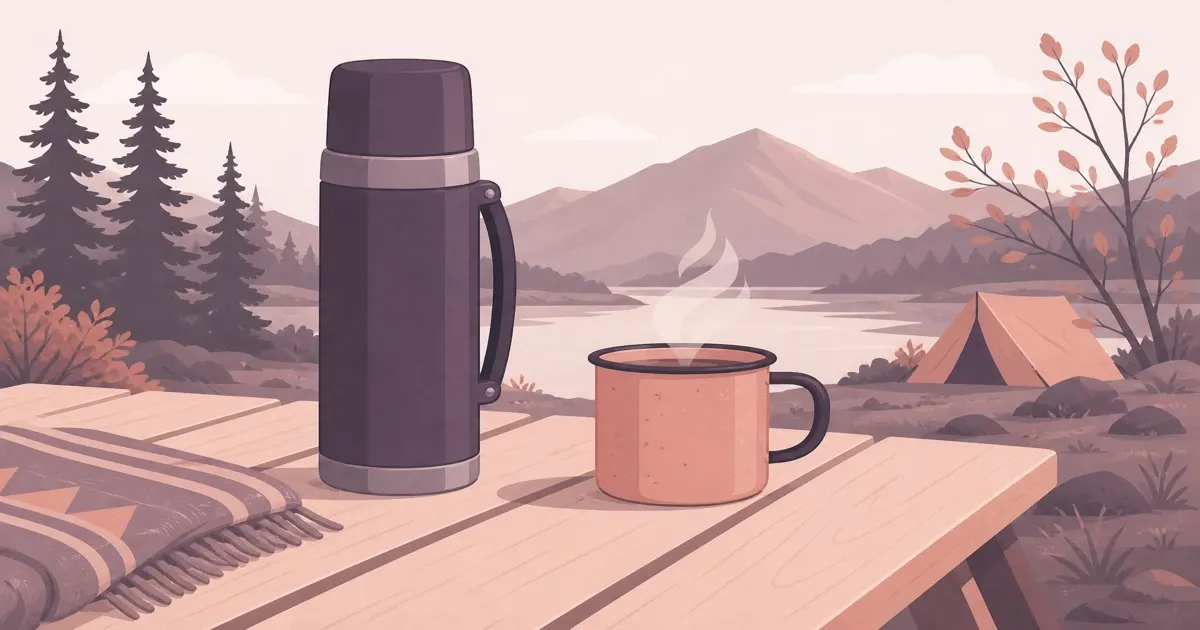
Camping Thermos: Keep Coffee Hot From First Pour to Trailhead
Coffee
A camping thermos holds hot coffee so you are not racing the cool-down while you pack. Preheat the bottle, match size to your brew batch, and keep lids free of stale oils.
Our picks
Coffee cools while eggs finish and tents come down. A camping thermos buys you time. Preheat the bottle, fill it soon after brewing, and treat the lid like cookware that needs a real wash. An insulated mug is for sipping. The thermos holds the rest. Heat-holding gear lives in the coffee category.
Skip a dedicated bottle if you only brew in a press mug and finish it immediately. Skip gallon jugs if you camp solo and will never fill them. Pair with camping coffee mug, camping percolator, and best camping coffee maker.
When a camping thermos earns space
Use a camping thermos when you brew more than one mug at a time. Percolators and big presses make a pot. You drink one cup and want the rest hot for the drive or a second sitting.
Skip a dedicated thermos if you only brew in a press mug and finish it immediately. Skip giant gallon jugs if you camp solo and will never fill them. Dead air space does not keep coffee magical.
Car camping and road-to-trail mornings see the biggest win. Backpackers sometimes carry small vacuum bottles for evening tea. Weight only pays when hot drinks matter more than grams.
Thermos vs insulated mug vs kettle
A camping thermos holds volume with a narrow mouth and a strong seal. An insulated camping coffee mug is shaped for drinking, often with a sip lid. A camping kettle heats water; it does not keep coffee hot for hours after you pour.
Some people try to drink from the thermos spout all day. That works in a pinch. Most still prefer pouring into a mug so the thermos stays closed and hot.
Do not confuse a plastic picnic jug with a vacuum thermos. Thin walls lose heat fast. If heat retention is the job, buy a real vacuum bottle.
Size, mouth, and pour control
Measure your brew. A camping percolator that yields 20 oz wants a bottle that can take it without overflow. Overfilling makes a mess and weakens the seal.
Wide-mouth bottles are easier to clean and easier to fill from a press. Narrow mouths sometimes pour cleaner into a mug and can retain heat a bit better depending on the lid design. Pick the mouth you will actually scrub.
Cups-on-lid designs are handy when you forgot a mug. They also collect grounds and oils. Wash them.
Preheat and fill habits
Preheat the camping thermos with hot water for a minute. Dump it. Then pour coffee. A cold stainless wall eats the first heat budget.
Fill soon after brewing. Coffee sitting in an open percolator cools and over-extracts if you leave heat under it. Move it when the brew is ready. Method notes for percolators live in how to use a camping percolator.
Leave a little headspace if the maker warns against absolute brim fills. Tighten the lid firmly without cross-threading.
If you brew a French press, decant into the thermos instead of leaving coffee on the grounds. Sitting on spent grounds keeps extracting and turns the later cups harsh. The thermos protects flavor as much as temperature.
For pour-over batches, brew into a clean carafe or kettle first only if you must. Direct into the preheated thermos is fine when the mouth is wide enough. Wipe drips off the threads before you seal so the lid does not glue itself shut with sugar residue.
Cleaning and smell control
Coffee oils collect in threads and gaskets. Rinse after each trip day. Use a bottle brush on the interior. Pull the gasket if the design allows and wash it.
Air-dry with the lid off. Sealed damp bottles smell like a locker. That smell transfers into the next brew.
Avoid storing milk drinks sealed for days. Dairy leftovers go wrong faster than black coffee. If you add milk at camp, clean the same day.
Dishwasher rules vary. Many vacuum bottles prefer hand wash so seals last. Follow the maker label.
Thermos pick, plus a press that stays hot
The Stanley Classic Legendary Vacuum Bottle 20 oz Vacuum Bottle 20 oz 20 oz is the hot-coffee bottle for trailheads and mid-morning pours. Preheat with hot water, dump it, then fill after the first brew so you are not waiting on the stove again. The lid doubles as a cup in a pinch. Wash the threads. Oils in the gasket make the next trip taste stale.
If your “thermos” job is really “keep a pressed pot hot on the table,” the STANLEY Classic Stay-Hot French Press 48 oz may fit better than a narrow bottle. Brew once, pour over time, break camp without reheating sludge. It is bulkier than a solo press mug. Leave it in the trunk kit.
Common mistakes
Skipping preheat on a cold morning. Your “8-hour” bottle feels lukewarm by the trailhead because the walls stole heat.
Using the camping thermos as a cook pot on a burner. Vacuum bottles are not designed for direct flame. You can damage seals and voids.
Packing a full thermos on its side under a cooler that leaks. Check the seal and keep the bottle upright when you can.
Buying a bottle you cannot clean. Fancy lids with six plastic parts are annoying at a picnic table. Simple lids you will wash beat clever lids you will ignore.
Road mornings and safety
A camping thermos shines on the drive between a site and a trailhead. Keep it upright in a cup holder or a bin so the lid is not under a shifting cooler. Open it away from your face. Hot coffee under pressure can burp when you crack a tight seal.
Do not leave a sealed thermos of dairy coffee in a hot car all afternoon. Black coffee is more forgiving. Milk drinks want a cooler plan or a same-morning finish.
Label the bottle if your group also packs soup or tea in similar stainless. Nobody wants onion broth when they expected coffee.
How it fits the coffee kit
Brew with a percolator, press, or drip. Hold with a camping thermos. Drink from a mug. That three-piece habit covers most car-camp mornings without rushing.
If you want maker shortlists across coffee systems, start at best camping coffee maker. Brew method comparisons sit in how to brew coffee camping.
Bottom line
A camping thermos is the holding tank for hot coffee, not a substitute for a mug or a kettle. Preheat, fill promptly, and clean the lid like it matters. Hot second cups beat lukewarm compromise every drive out of camp.
Frequently Asked Questions
Do I need a camping thermos if I already have an insulated mug?
A mug is for drinking. A thermos is for holding a batch while you break camp or drive. Many people want both when mornings are rushed.
What size camping thermos should I buy?
Match ounces to what you brew. A 16–24 oz bottle covers many solo or couple pours. Bigger bottles help group trips and long drives.
Should I preheat a camping thermos?
Yes. Swirl hot water for a minute, dump it, then add coffee. A cold bottle steals heat from the first pour.
Can I put a camping thermos on a stove?
No. Vacuum bottles are not cook pots. Heat water in a kettle or percolator, then transfer.
Why does my thermos coffee taste off?
Old oils in the lid and gasket. Wash threads and seals. Air-dry open. Do not store yesterday’s coffee sealed for days.
Glass liner or stainless?
Stainless vacuum bottles survive camp totes better. Glass liners can break when knocked. Most campers prefer stainless for car camp.