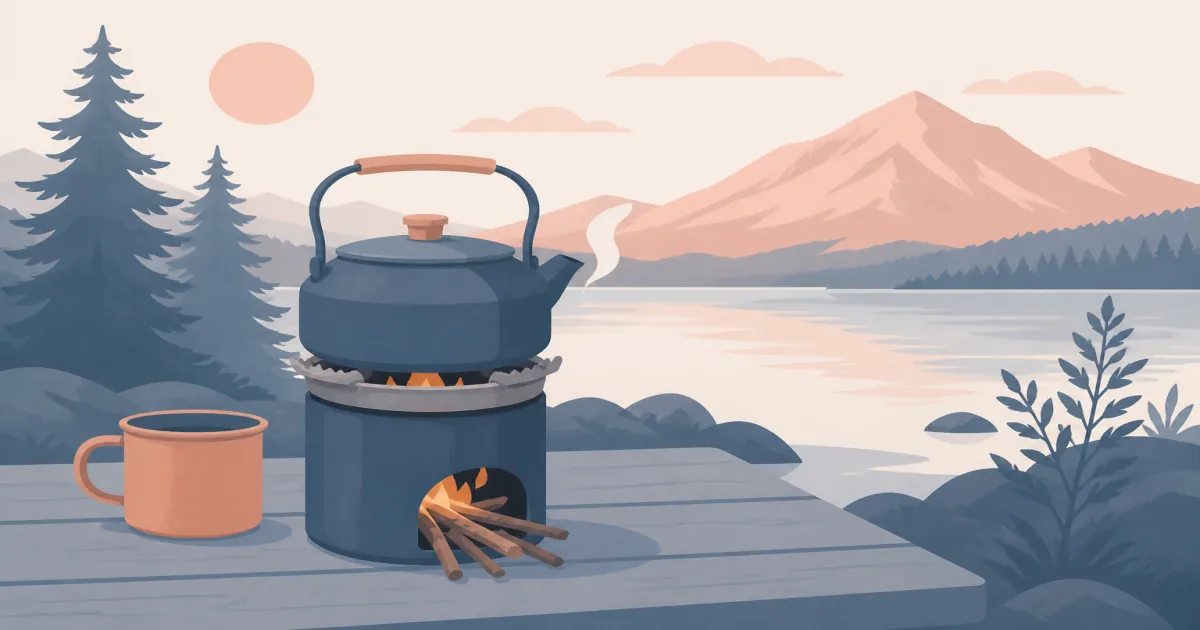
Camping Rocket Stove: Stick-Fed Heat Without a Propane Cylinder
Stoves
A camping rocket stove burns twigs and scrap wood in a tall chamber so you cook without packing propane. Pick a light trail model or a heavier car-camp box by trip style.
Our picks
Propane is convenient. It is also another cylinder in the tote. A camping rocket stove is the opposite bet: gather dry sticks, feed a tall chamber, and cook over a hot, directed flame. Done well, you get useful heat with less smoke than a lazy open fire. Done poorly, you babysit green wood and wonder why dinner smells like a campfire you did not want. The stoves category covers the rest of the burner styles.
This guide is for accessory-minded campers who already know propane and canister burners, and want a wood path that still feels like a stove. For cylinder systems, stay with best camping stove and camp stove fuel types. For trail canister kits, see backpacking stove.
What “rocket” means in plain English
A rocket stove uses a vertical combustion chamber and careful airflow so sticks burn from the tip inward. Hot gases rise under the pot. Many designs add a second wall so leftover gases burn again, which is why dry fuel can look cleaner than a smoky ring of logs.
You still manage fuel size. Finger-thick sticks beat arm-thick branches. You still respect fire rules. A metal box does not magically make wood legal during a ban.
Trail rocket vs car-camp rocket
Use the table as a trip filter, not a brand loyalty test. The wrong size chamber turns every meal into a feeding job.
Trail-weight pick: Solo Stove Lite
The Solo Stove Lite is the camping rocket stove people pack when they want wood heat without fourteen pounds of steel. The double-wall design aims for cleaner secondary burn once the chamber is hot. Companion pots can nest in many setups, which keeps the kit tidy.
Expect to feed it often during a long simmer. The chamber is small on purpose. That is fine for water and one-pot trail food. It is annoying if you want a forty-minute stew without touching the stove.
Dry fuel is non-negotiable. Wet bark turns the Lite into a smoke machine and wastes your patience. Carry a camping fire starter so the first flame is not a twenty-minute argument with damp twigs.
Car-camp pick: EcoZoom Versa
The GODSAX Rocket Stove Portable Wood-Burning Camping Stove is for trunk camping, backyard drills, and emergency kits where weight is secondary to durability. The insulated body holds heat. The cast-iron style top supports cookware that would feel sketchy on a tiny trail rim. Wood and charcoal both show up in how people actually use it.
At about fourteen pounds it is not a backpacking tool. Treat it like a compact outdoor range that runs on sticks. Set it on stable ground, keep kids clear of the feed door, and use the cool-touch handles as designed instead of grabbing the hot shell.
If your weekends are dual-burner propane dinners, you may not need a Versa. If you camp where cylinders are annoying to resupply and scrap wood is legal, the Versa earns the floor space.
Fuel, ash, and cook rhythm
Split sticks small. Feed from the side so the pot stays centered. Let the chamber warm before you judge smoke. A cold start always looks dirtier than a stove that has been running ten minutes.
Keep a small water kettle or pot that matches the rim. Oversized pans spill heat around the sides. Undersized mugs can tip. Practice once at home with scrap wood so the first campsite meal is not a learning lab.
When you finish, let everything cool. Ash stays hot longer than people expect. Pack out ash where required. Do not kick glowing bits into pine duff.
Safety and rule checks
Rocket stoves still throw sparks and radiant heat. Clear a mineral-soil pad. Keep a water bottle or extinguisher plan nearby. Never run one in a tent or enclosed vestibule.
Read the campground or forest order. Some sites allow gas stoves only. Others allow wood devices in fire rings only. A rocket stove is not a loophole; it is a wood fire with better manners.
When propane still wins
If your site bans wood devices, if rain soaked every stick within walking distance, or if you need eggs and coffee at the same time, light a propane or canister burner instead. A camping rocket stove is a strong option, not a mandatory personality. Keep one cylinder system in the kit if your trips mix sunny wood days with wet Saturday mornings.
The same honesty applies to boil speed. For a single liter of coffee water, a good canister stove is often faster than feeding twigs. Use the rocket when the fuel story and the cook style match, not because the internet called it more authentic.
Bottom line
A camping rocket stove makes sense when free wood fuel and a focused cook chamber beat packing another propane cylinder. Pack the Solo Stove Lite for trail boils and short cooks. Park the GODSAX Rocket Stove Portable Wood-Burning Camping Stove in the trunk for wider pans and longer car-camp meals. Keep ignition simple, feed dry sticks, and confirm wood rules before you light.
Frequently Asked Questions
What is a camping rocket stove?
A tall, insulated burn chamber that pulls air upward so small sticks burn hot with less smoke than an open fire. You feed fuel from the side or top while a pot sits on the rim.
Do I still need charcoal or propane?
Not for the stove itself if dry wood is allowed and available. Many people keep a small ignition kit anyway. Charcoal is optional on dual-fuel designs like the EcoZoom Versa.
Is a rocket stove legal everywhere?
No. Fire bans, forest rules, and campground policies still apply. A rocket stove is a wood fire in a metal box. Check the local board before you pack sticks.
How smoky is it?
Dry, small-diameter fuel and a fully warmed chamber produce less smoke. Green wood and a cold start smoke more. Feed steadily instead of dumping a wet pile.
Can I cook with a skillet?
Trail models favor pots and kettles that fit the rim. Larger car-camp rocket stoves with cast tops handle skillets better. Match pan size to the cook surface.
Is a camping rocket stove faster than propane?
Not usually for a simple kettle boil with a good canister or propane burner. Rocket stoves win when you want free fuel and do not want to carry cylinders, not when you want push-button speed.
What about ash and leave-no-trace?
Let ash cool fully, then pack it out or dispose where the site allows. Do not dump hot coals into brush. Scrape the chamber when cold so the next trip starts clean.