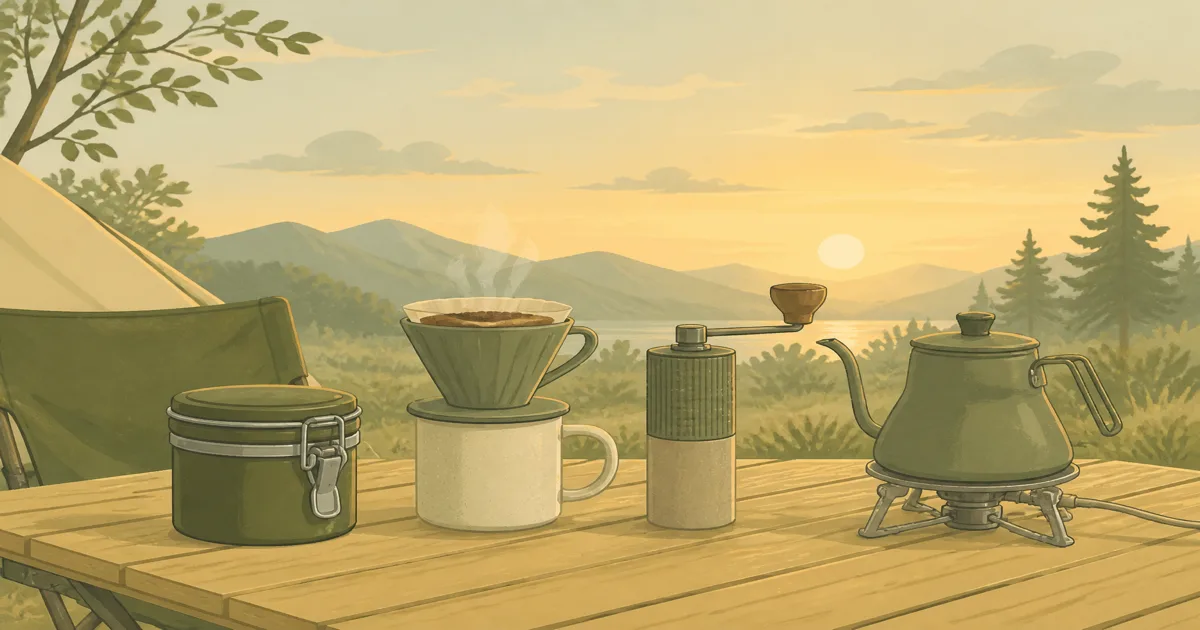
Camping Coffee Storage: Keep Beans and Grounds Fresh
Coffee
Good camping coffee starts with dry, well-packed beans or grounds. A small airtight container is easier to pour, protects coffee from moisture, and keeps your kitchen bin tidy.
Our picks
Coffee can make a campsite morning feel much more civilized, but the original bag is rarely the best way to carry it. It can leak grounds into the kitchen bin, pick up moisture, or get crushed under cookware. A small storage container keeps the coffee measured, dry, and easy to find before anyone is fully awake. Freshness gear lives in the coffee category, with the best camping coffee maker guide for the brew side.
You do not need a special container for every trip. The right choice depends on whether you bring whole beans or grounds, how many cups you plan to make, and how much space you have. For brewing methods, read our guide to making coffee while camping.
Choose between beans and grounds
Whole beans are the better choice for freshness. Coffee loses aroma after grinding because more surface area is exposed to air. If you own a compact hand grinder and enjoy the routine, whole beans can make a noticeably better cup on a weekend trip.
Ground coffee is simpler. You can measure it at home, skip the grinder, and make coffee faster on a cold morning. It is a sensible choice for groups, short car-camping trips, and anyone who wants less equipment. Just use it sooner rather than packing a large amount for weeks.
Think about your cleanup, too. A grinder adds one more item that can hold grounds and moisture. If you make pour-over coffee, the filters and used grounds already create a small cleanup job. Pre-ground coffee may be the better tradeoff when you are trying to keep breakfast simple.
Pick a container that matches your trip
A hard-sided container is easier to pack than a loose bag. It protects coffee from being crushed, stands upright in a food bin, and lets you pour or scoop without grounds spreading across the table. A secure lid matters more than a complicated valve for most weekend campers.
Choose capacity based on servings, not the size of a standard grocery bag. Measure your usual dose at home. For example, if two people each have one cup for two mornings, pack four measured servings plus a little extra. A smaller container leaves room for other dry food and is easier to keep organized.
An airtight container also helps keep humidity out. It will not turn old coffee into fresh coffee, and it does not make coffee safe around water, but it gives you a better chance of opening a dry, usable supply on the second morning.
Avoid glass for a packed camp kitchen unless it is well protected. It is heavy and can break when a cooler or pot shifts in the car. Food-safe plastic or lightweight metal is usually more practical for camping.
A compact coffee-storage option
The OXO Outdoor Coffee Storage Container is a practical option for campers who want a dedicated container for beans or grounds. It holds up to eight ounces of whole beans and uses an airtight seal to protect coffee from moisture and air.
Its narrow shape is useful for a camp-kitchen bin, and the lid is designed for pouring. That can be more convenient than digging a scoop into a floppy coffee bag before sunrise. The size is best for a couple or a short trip, not for a large group drinking several pots each day.
Eight ounces of beans covers a couple for a short weekend. Bigger groups need a second container or a larger jar. Keep it dry and sealed so trunk heat does not stale the grind.
Pack coffee without spills
Start with a clean, completely dry container. Moisture trapped in the lid or on a scoop can make grounds clump. Fill the container at home, wipe the rim, and close it before it goes into the bin. If you use a labeled container for coffee only, you will not accidentally bring salt or pancake mix instead.
Put coffee in the dry-food area of your kitchen box. Keep it away from the wash basin, water jug, stove fuel, and anything with a strong scent. Coffee absorbs odors easily, so storing it next to onions, garlic, or scented trash bags can affect the next morning's cup.
For a cooler or wet-weather trip, place the sealed coffee container inside a larger zipper bag. This is a backup layer, not a replacement for a good lid. It protects the rest of your food bin if the container opens or a water bottle leaks.
Do not leave the container open while you set up the stove. Wind can blow grounds around, and a nearby splash can ruin a serving. Pour what you need, close the lid, and return the container to the dry-food bin.
Match storage to your brewing method
Pour-over campers can pre-portion coffee into small paper packets or reusable containers. This makes mornings faster and avoids guessing the dose. Keep filters in a separate dry bag, since damp filters can tear or stick together.
French press users usually need more coffee per batch. Measure enough for the number of people at camp, then bring a little more in case a guest wants a cup. A larger rigid container is easier than trying to reseal a half-open bag with a clip.
For instant coffee, skip the bulky container entirely. Individual packets or a small waterproof pouch are enough. The point is not to buy more gear. It is to keep the coffee you chose clean, dry, and easy to measure.
If you grind beans, keep the grinder dry and brush out old grounds before packing. Grounds trapped in the burrs can absorb moisture and make the first grind on the next trip less pleasant. Our guide to a camping coffee grinder can help you choose a compact style.
Common storage mistakes
Do not bring an entire bag for a two-night trip. It takes up space, risks going stale after opening, and creates more to pack out. Measure the coffee you expect to use and add a small buffer for a second cup or a sleepy neighbor.
Avoid leaving coffee near the stove or fire. Heat is not good for flavor, and a hot cooking area is a poor place to handle a plastic container. Set up a separate drink station on the cool side of the table.
Do not use a container that is hard to clean. Coffee oils can build up in narrow lids and around seals. Wash the container at home, dry it with the lid off, and check that no old grounds are stuck in the threads.
Finally, remember that fresh water matters as much as storage. Great beans will not fix water that tastes strongly of a plastic jug or minerals. Use the cleanest practical water source and keep your coffee equipment separate from dishwashing water.
Is a coffee container worth bringing camping?
For car camping and RV trips, yes. It keeps coffee compact, dry, and easier to use than an open bag. For backpacking, a sealed pouch or pre-portioned packets may be lighter and perfectly adequate.
The OXO Outdoor Coffee Storage Container is a good fit for a couple or a short trip where you want beans or grounds ready to pour. Pack only what you will drink, keep it in the dry-food bin, and enjoy a better first cup without turning breakfast into a gear project.
Frequently Asked Questions
Should I bring whole beans or ground coffee camping?
Whole beans stay fresh longer, but ground coffee is simpler. Bring whole beans if you already carry a grinder and care about the freshest cup.
How much coffee should I pack for a camping trip?
Measure the servings you expect, then add a small buffer. Packing only what you will use keeps the container smaller and reduces waste.
Can I leave coffee in its original bag?
Yes for a short, dry trip, but close the bag tightly and put it inside a waterproof container. A rigid container is easier to pour from and less likely to spill.
Where should coffee go in a camp kitchen?
Store it with dry food, away from the wash basin, fuel, and strong-smelling items such as onions or bug spray.
What kind of container is best for camping coffee?
A hard-sided airtight container protects coffee from being crushed and keeps out moisture. Avoid glass unless it is well protected, since it is heavy and can break when a cooler shifts in the car.
How do you keep coffee from spilling in a camp kitchen?
Fill a clean, dry container at home, wipe the rim, and close the lid before it goes into the bin. Pour what you need, close the lid, and return the container to the dry-food area.