Camping Coffee Filters: Paper, Metal, and Easy Cleanup
Coffee
Paper camping coffee filters make cleanup simple, while metal filters save supplies but need more rinsing. Match the filter to your brewer first.
Our picks
The filter is a small part of camp coffee until you bring the wrong size or run out on the second morning. Paper cones, flat-bottom baskets, and reusable mesh all handle water differently. They are not interchangeable just because they hold grounds. Filter and brew gear gathers in the coffee category, and the best camping coffee maker guide covers the brewers they fit.
Start with the brewer you already own. Check its filter number and shape, then pack more than the exact trip count. A few dry spares weigh almost nothing and can rescue a filter that tears, blows away, or gets wet in the kitchen bin.
Paper versus reusable camping coffee filters
Paper filters trap fine sediment and many coffee oils, producing a cleaner cup. Cleanup is simple: lift the paper and grounds together, let excess water drain, then put the cooled bundle in your trash bag.
Reusable metal filters allow more oils and fine particles through. The cup tastes fuller and sometimes muddier. You do not need to pack replacement papers, but you do need enough water to rinse grounds from the mesh.
Cloth filters sit between the two. They can make a clear, rich cup and pack small, but they need immediate rinsing and careful drying. A damp cloth filter sealed in a bag quickly develops odors.
For developed campgrounds and road trips, any style can work. For dry camps or places where wash water is precious, paper usually creates the least trouble.
Match the filter to your brewer
Read the brewer instructions rather than guessing. Cone filters commonly use numbered sizes, while basket brewers need a different shape. A number 2 cone is usually too small for a brewer designed around number 4 paper.
Fit affects flow. Paper that folds over itself can slow the brew and encourage overflow. A filter that sits too low may collapse when you add water. The top edge should remain above the coffee bed with room for a controlled pour.
Pack filters flat in a zip bag or rigid pocket. Keep them away from fuel, soap, and damp dish towels. Coffee paper absorbs odors and moisture easily.
If you use a reusable mesh insert, test it at home with your grind setting. Fine grounds can choke some filters, while coarse grounds may drain so quickly that the coffee tastes thin.
A collapsible dripper for number 4 filters
The GSI Outdoors Collapsible Java Drip is a silicone pour-over cone with a broad clear base and a snap-on cover. It uses standard number 4 paper filters and collapses to about one inch tall for storage.
The wide base and packable shape help on a picnic table. The tradeoff is weight and diameter: ultralight travelers can find smaller drippers, while car campers may appreciate the stability.
For a full buyer guide on cones themselves, see camping coffee dripper. This page stays focused on filter media and cleanup. Pair the dripper with number 4 paper filters, a stable camping coffee mug, and a kettle with a controlled pour.
How to make pour-over coffee at camp
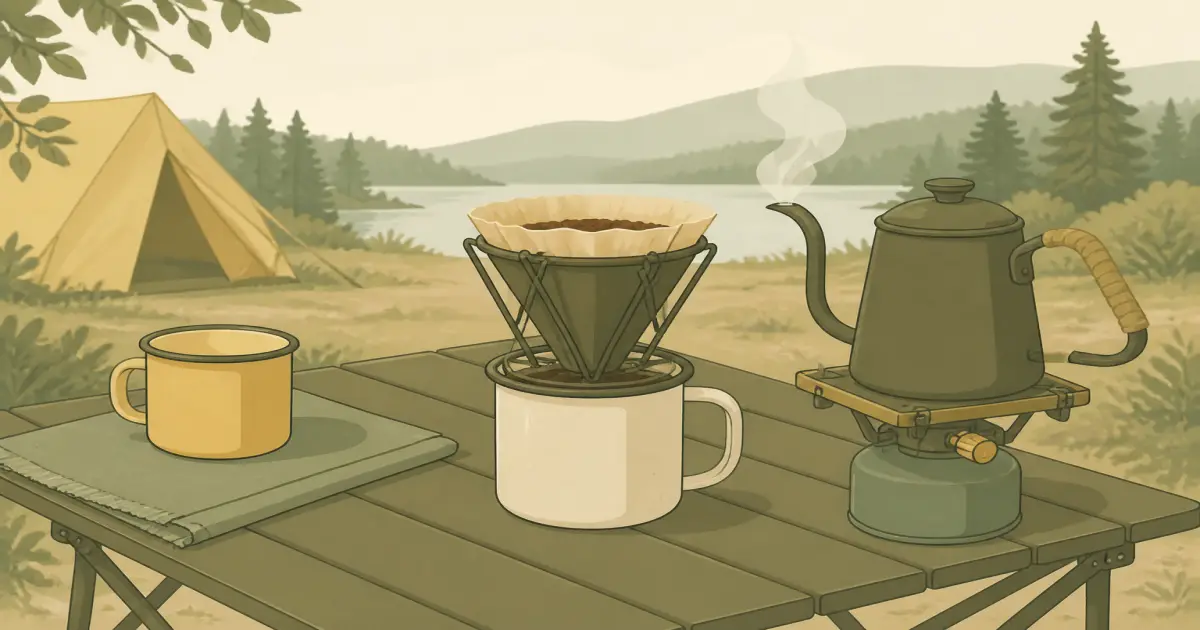
Heat clean water in a camping kettle. Set the dripper on a level mug and confirm the base overlaps the rim securely. Open one paper filter and press it into the cone.
Rinse the paper with a small amount of hot water if you have enough to spare. This warms the mug and reduces papery flavor. Discard that rinse water in the approved gray-water location.
Add medium-ground coffee. A useful starting point is about 1 gram of coffee for every 15 to 17 grams of water, but camp measuring does not need to become a chemistry project. Two level tablespoons for a typical mug gets you close.
Pour just enough water to wet all the grounds and wait about 30 seconds. Then add the remaining water slowly in circles, keeping the level below the filter edge. If the dripper threatens to overflow, pause and let it drain.
Remove the filter once dripping slows. Do not squeeze it, which can push bitter sediment into the mug. Set the hot filter in a bowl or trash staging area until it is cool enough to handle.
Grind size and flow
Medium grind is the best starting point for most paper pour-over filters. Coffee that resembles coarse sand should drain steadily without emptying immediately.
If water sits for several minutes, the grind may be too fine or the filter may be folded against the outlet. If it races through and tastes weak, use a slightly finer grind or pour more slowly.
Pre-grinding at home keeps the camp setup simple. Store grounds in an airtight container and portion by day if you want fast mornings. A camping coffee grinder adds fresher flavor, but it also adds another tool and a few minutes of work.
Wind cools water and makes a controlled pour harder. Brew behind a safe screen away from the active stove flame. Keep the mug on a stable table instead of holding the dripper in one hand.
Cleanup and Leave No Trace
Coffee grounds are food waste. They can attract animals and do not belong scattered around a campsite, fire ring, or trail. Follow campground rules and pack them out unless an approved waste system says otherwise.
With paper, let the filter drain and cool, then seal it in your trash bag. A small lidded container prevents wet grounds from leaking during the drive home.
With metal mesh, scrape as many grounds as possible into trash before rinsing. Strain the wash water so remaining particles do not spread around camp. Dispose of gray water according to local rules and well away from natural water sources.
Wash the dripper with food-safe soap, rinse it, and let it dry before closing the cover. Silicone can hold coffee oils and odors when packed damp.
Pack a small coffee filter kit
Count one paper filter per planned brew, then add at least two extras. Put them in a sealed bag with a coffee scoop. Keep this bag inside the brewer cover or coffee container so the pieces stay together.
Bring a second zip bag for used filters if your trash setup is not close to the table. Include a small microfiber cloth for spills, but do not use the same cloth for raw-food cleanup.
At home, note how many filters returned unused. That gives you a better number for the next trip and stops the coffee bin from filling with crushed old papers.
Common mistakes
Packing the wrong size. Check the brewer model and filter number before leaving.
Letting paper get damp. Store filters in a sealed bag away from the dishwashing kit.
Grinding too fine. Slow drainage and overflow often begin with powdery grounds.
Rinsing grounds onto the ground. Strain and pack out food waste according to local rules.
Balancing the dripper on a narrow mug. Test the base at home and use a stable cup.
Bottom line
Camping coffee filters should make the morning easier, not create a cleanup problem. Paper is the practical default when water is limited, while reusable metal works for campers who prefer a fuller cup and can rinse it properly. The GSI Outdoors Collapsible Java Drip pairs a stable base with common number 4 papers and folds flat enough for a car-camp coffee kit.
Frequently Asked Questions
What coffee filters are best for camping?
Paper filters are easiest when water is limited because grounds lift out cleanly. Reusable metal filters reduce supplies but need thorough rinsing.
Can you use regular coffee filters while camping?
Yes, if the size and shape match your brewer. Pack a few extras in a sealed bag so they stay dry.
What size filter does the GSI Collapsible Java Drip use?
The listed model uses number 4 paper filters. Confirm the current product instructions before your trip.
How do you dispose of coffee grounds at camp?
Let them cool, strain them from liquid, and pack them out with trash unless local rules provide another method. Do not scatter grounds around camp.
Can you make pour-over coffee without a filter?
You can use another brewing method, such as cowboy coffee or a press, but pouring loose grounds through an improvised cloth often makes weak coffee and messy cleanup.
How many coffee filters should you pack for a camping trip?
Count one paper filter per planned brew, then add at least two extras. Pack them flat in a sealed bag so they stay dry and away from fuel, soap, and damp towels.