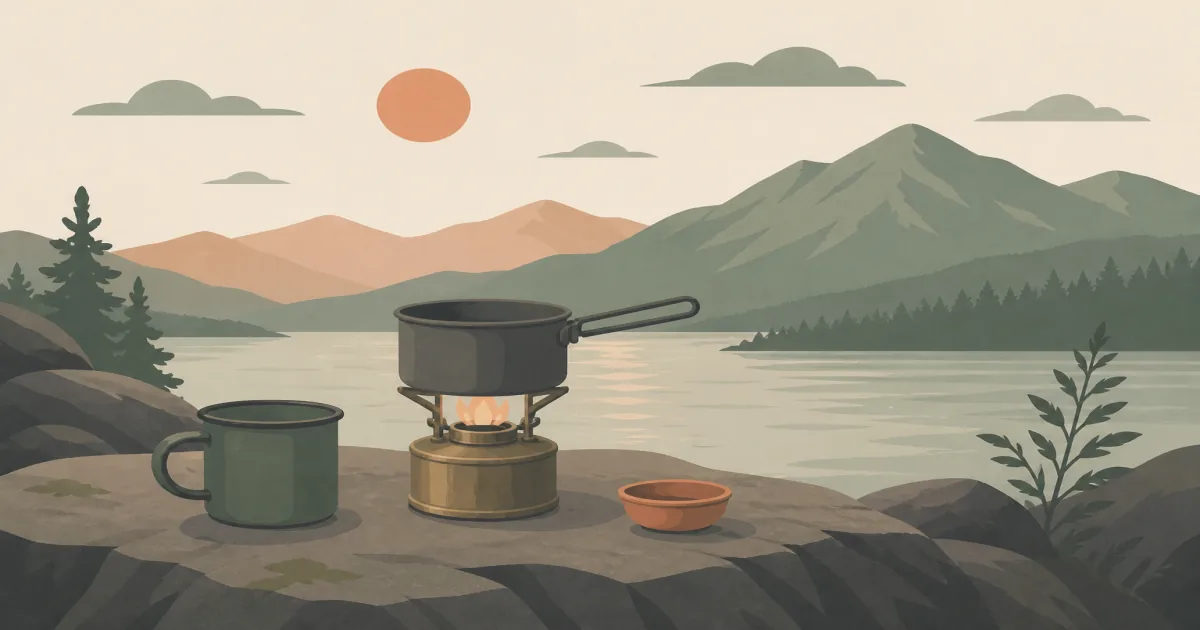
Camping Alcohol Stove: Quiet Heat When Canisters Feel Like Overkill
Stoves
A camping alcohol stove is a quiet, repairable burner for denatured alcohol or similar spirit fuels. It suits calm weekends and ultralight kits more than freezing mornings.
Our picks
A camping alcohol stove is not trying to replace a propane picnic stove. It is a small brass or titanium cup that burns denatured alcohol or similar spirit fuel under a pot. There is no piezo click, no threaded canister valve, and almost nothing to break on trail. That simplicity is the point. The stoves category compares this quiet option with canister burners.
If your usual trips are car-camp chili on a two-burner, stay in the propane lane. If you want a quiet solo boil for coffee and freeze-dried food, alcohol earns a look. For broader fuel context, read camp stove fuel types. For canister trail burners, see backpacking stove.
Who a camping alcohol stove is for
Alcohol suits campers who value quiet flame, cheap fuel in many US hardware aisles, and gear that still works after a decade of dents. It also suits ultralight hikers who already accept slower boils in exchange for tiny packed size.
It is a poorer fit for windy ridgelines without a screen, for winter mornings, and for groups that want eggs and coffee at the same time. Alcohol heat is modest. Menus that need a hard sear or a wide skillet fight the format.
Think of alcohol as a boil-and-simmer tool for one pot, not a full camp kitchen.
How alcohol burners actually feel at camp
You pour a measured amount of spirit into the burner, light it, and wait for the flame to settle. Brass Trangia-style burners often include a simmer ring that slides over the jets to cut heat or smother the flame. A screw cap with a gasket lets you leave leftover fuel inside instead of dumping it every night.
Titanium siphon burners are lighter and need a separate pot stand. They can feel finicky the first time you prime them, then become routine. Either style rewards patience more than max BTU bragging.
The sound is soft. Neighbors in a quiet site will not hear a roar. That is pleasant until wind arrives. Then the same soft flame needs a windscreen or a natural windbreak. Pair habits with camping stove windscreen and the boil checklist in how to boil water while camping.
Hero pick: Trangia brass burner
The Trangia Spirit burner for storm cooker is the camping alcohol stove most people should start with if they want control and longevity. Brass takes heat and knocks. The simmer ring is the feature that turns a binary flame into something you can live with for oatmeal and gentle stews. The sealing cap matters on multi-day trips because unused spirit stays put.
You still need a stable way to hold the pot. Many campers use a Trangia stand, a triangle, or a DIY rock ring that keeps the pot centered and tipped-proof. Do not perch a full pot on an unstable rock stack above an open alcohol pool.
Fuel choice is not a chemistry hobby. Stick to alcohol fuels the manufacturer allows. Hardware-store denatured alcohol is common in the US; read the label and keep the bottle away from the cook zone while you pour.
Ultralight alternative: TOAKS siphon
The Kuvik Titanium Alcohol Stove is for pack lists where every ounce is a negotiation. It is tiny, light, and capable of mug-scale boils when you feed it the right fill. It is not a complete system out of the box. Budget a pot stand, a windscreen, and a bottle that will not leak in your food bag.
If you already carry a TOAKS or similar titanium pot, this burner can nest in the same kit story. If you are new to alcohol and want fewer variables, buy the Trangia brass path first and graduate later.
Fuel, pour, and extinguish habits
Measure fuel into the burner before you light. Overfilling invites spills. Keep a pour spout or a small funnel if your bottle is messy. Wipe the rim so you are not lighting a wet ring of spirit on the table.
Light with a match or lighter from the side, not by dropping a match into a full cup of fuel. Once the flame is steady, set the pot. Use the simmer ring when you only need a soft bubble.
To extinguish a Trangia-style burner, close the simmer ring and wait. Cap only when the metal is cool enough that you are not warping the gasket. Pack the stove empty or sealed, never dripping into a nylon bag.
Mistakes that make alcohol feel useless
Cooking without a windscreen on a breezy picnic table. Expecting steak-house heat from a spirit cup. Using the wrong fuel. Skipping a pot lid so every boil takes forever. Leaving the stove where a kicked foot tips hot metal into dry grass.
Another common miss: treating alcohol as a winter primary. Cold mornings slow vaporization and stretch boil times until people abandon the stove. Keep alcohol for shoulder seasons and mild nights, then switch systems when frost shows up.
How this fits the rest of your stove shelf
A camping alcohol stove can live beside a propane two-burner without conflict. Use propane for group dinners and alcohol for quiet solo breakfasts or emergency backup when canisters run out at a remote site. Do not mix fuels in one burner.
If you mainly want fast trail water and already like integrated systems, a Jetboil-style kit may frustrate you less than alcohol. If you want maximum simplicity and are willing to manage wind, alcohol stays in the conversation.
Bottom line
Buy a camping alcohol stove when you want quiet spirit heat and a repairable burner more than instant high output. Start with the Trangia Spirit burner for storm cooker for simmer control and sealed leftover fuel. Choose the Kuvik Titanium Alcohol Stove when packed weight wins and you already own a stand and screen. Match the stove to mild-weather boils, then keep a different system for freezing mornings and family dual-burner nights.
Frequently Asked Questions
What fuel does a camping alcohol stove use?
Use alcohol-based fuels the maker lists, often denatured alcohol or high-percentage ethanol. Never pour gasoline, white gas, or mixed petroleum fuels into an alcohol burner.
Is a camping alcohol stove good in cold weather?
Alcohol burns cooler than canister or liquid-fuel stoves. Near freezing, boils slow and may stall. Choose propane or white gas for winter car camps.
Do I need a windscreen?
Yes for most open sites. Alcohol flames are quiet and easy for wind to push aside. Use a screen that leaves airflow and does not trap heat against a sealed fuel bottle.
How do I put the flame out?
On a Trangia-style burner, close the simmer ring fully to smother the flame, then cap when cool enough. Do not blow hard into a full burner.
Can I simmer on alcohol?
A simmer ring helps on brass Trangia burners. Ultralight siphon stoves are mostly boil tools. Plan menus around boiling water and simple one-pot food.
Is alcohol safer than canister fuel?
Different risks. Alcohol spills can be hard to see when burning. Canisters can overheat if fully enclosed. Follow the stove instructions and keep a clear cook zone either way.
Who should skip a camping alcohol stove?
Families cooking big dual-burner meals, winter campers, and anyone who wants push-button ignition every morning. Start with a best camping stove propane or canister pick instead.