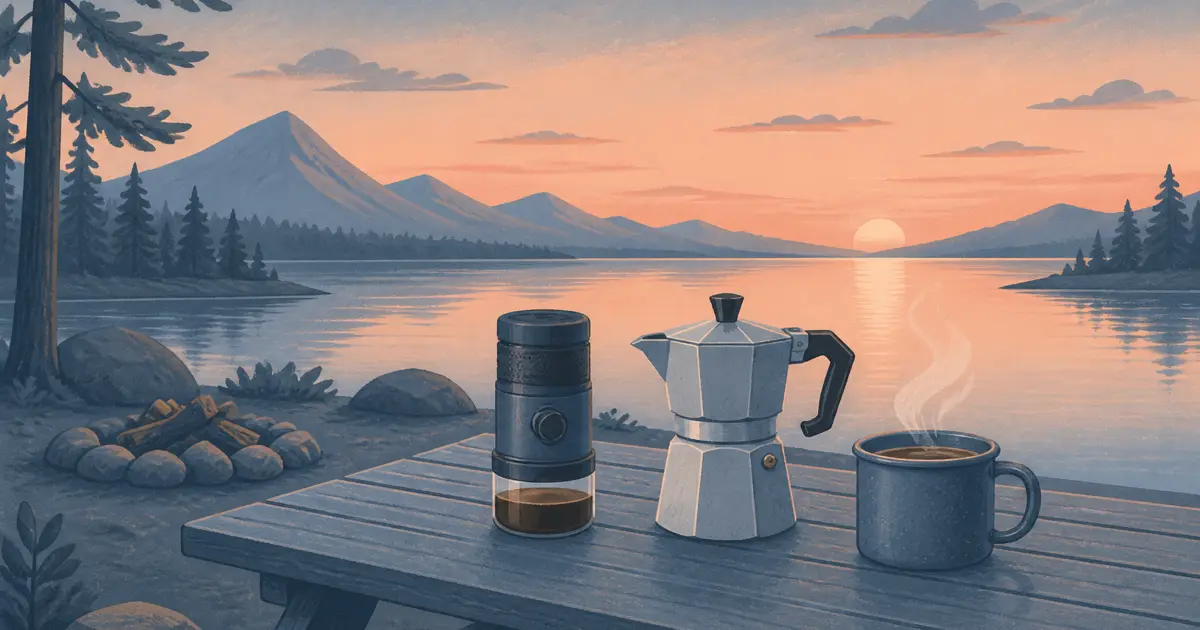
Camping Espresso Maker: Moka, Hand Pump, and Battery Options
Coffee
A camping espresso maker is worth the tote when you want a short, strong cup and already have hot water or a burner. Pick stove-top, hand pump, or battery heat based on how you camp.
Our picks
Browse the camp coffee guides and the best camping coffee maker pillar first if you are still choosing a brew style.
Camp coffee does not have to be a giant percolator or a bag of instant. A camping espresso maker is the small-volume option: one or two strong cups, then you get on with the day. Match the tool to heat. A hand pump needs a kettle. A moka pot needs a stable burner. A battery unit needs a charge plan.
Cleanup is the other honest test. Baskets, gaskets, and aluminum boilers go rancid in a closed tote if you pack them wet. Rinse while warm. Dry fully. Method tips live in how to brew coffee camping. Fresh beans need a camping coffee grinder. Heat water with a camping kettle if your maker does not boil for you.
Does a camping espresso maker make real espresso?
A hand pump can. The Picopresso reaches up to 18 bar at the pump, which lands about 7 to 9 bar at the puck, the range a cafe machine uses. A moka pot generates only about 1 to 2 bar, so it makes strong concentrated coffee rather than true espresso. An electric unit like the OutIn Nano pumps at 20 bar but brews cooler than a machine.
Hand pump vs moka vs electric
Hand pump. You add hot water and press. No outlet, no battery. Best when you already boil for oatmeal. The Picopresso lives here.
Stove-top moka. The pot is the brewer. Sit it on a camp stove like a tiny percolator. The Bialetti Moka Express is the default.
Battery electric. The unit heats and pumps. You charge it in the car or at home. The OutIn Nano is the car-camp version of that idea.
Backpacking usually wants the pump or a moka small enough to nest. Group car camp can use any of the three. Skip electric if you will not remember to charge it.
The preheat that makes or breaks a shot
Every manual maker runs cold unless you warm it first. Fill the Picopresso with boiling water and pump a tank through before the real shot, and use water just off the boil for the moka. Skip the preheat and the cup comes out thin and sour even with good beans.
WACACO Picopresso Portable Espresso Maker
The WACACO Picopresso Portable Espresso Maker is the camping espresso maker to try first if you want a real shot without parking another pot on the burner. Heat water separately, dose the 18 g basket, tamp, and pump by hand. It measures about 4.17 by 3.07 by 2.8 inches and weighs 350 g, so it disappears into a coffee pouch.
It packs short and dense. The tradeoff is parts. There are roughly 14 pieces, and the listing even carries a "frequently returned item" note, which usually means buyers skipped the learning curve. Use water just off a rolling boil so you do not scald the puck. If the pump feels brutal, the grind is too fine or the dose is too heavy, and if nothing comes out after about 10 pumps, grind coarser.
Who it is for: Solo and couple campers who already boil water and want espresso more than a big pot of drip.
Who should skip it: Group breakfasts and anyone who hates washing small parts with limited water.
Shop: WACACO Picopresso on Amazon
Bialetti Moka Express 6-Cup Stovetop Espresso Maker
The Bialetti Moka Express 6-Cup Stovetop Espresso Maker is the simple camping espresso maker for anyone who already runs a dual-burner. Fill the boiler to the valve, add grounds without packing a brick, and heat until the top chamber fills. The three-part design means fewer lost pieces than a pump.
Six cups is a couple's breakfast or a small table, not a scout troop, because a moka cup is about 2 oz, so the whole pot is roughly 12 oz of brew. Hand wash only. Dishwasher cycles ruin the finish and the taste. It is aluminum, so it will not work on an induction cooktop.
Who it is for: Car campers who want concentrated coffee without pumping or charging.
Shop: Bialetti Moka Express 6-Cup on Amazon
Pull it as soon as the sputter turns pale. Leaving it on the flame is how moka tastes burnt. A two burner camping stove lets eggs happen on the other side while the moka finishes.
OutIn Nano Portable Electric Espresso Machine
The OutIn Nano Portable Electric Espresso Machine is the camping espresso maker for picnic tables with USB-C in reach. It heats a small tank and pushes a shot so you do not steal the breakfast burner. Its 2,500 mAh battery gives about 5 cold-water shots per charge, or 200+ if you pour in pre-heated water.
It is heavier than a Picopresso and it needs a charge plan. In one independent test the brew temperature landed between 85 and 88°C with normal volumes, below the 92°C on the box, so darker roasts taste better than light ones. That is fine for car camp, RV, and hotel-plus-trailhead weekends. It is a poor backpacking tool. Capsule mode is convenient. Grounds mode still tastes better if you grind fresh.
Who it is for: Drivers and RV campers who want a button shot and will actually recharge the battery.
Shop: OutIn Nano on Amazon
Pack the cable in the coffee pouch, not the random electronics bag. A dead battery at 7 a.m. is just a heavy paperweight.
How much weight does each type add to your kit?
The Picopresso is 350 g, the Bialetti is about 7.4 oz, and the OutIn Nano is 670 g. The electric unit is 320 g heavier than the pump because it carries a boiler and battery. On a trail, that 320 g is a real cost. At a picnic table, it buys you not touching a stove.
Where the boiler weight goes
The 320 g gap between the pump and the electric unit is the boiler and battery. That is about the weight of a full mug. On a day hike it is the difference between noticing your pack and forgetting it. At a picnic table it is the difference between pressing a button and heating a kettle.
Do you need a special grind?
Fine drip to espresso-fine works for moka and pump makers. Grocery coarse drip tastes thin and drains through the basket. If you grind at camp, a hand mill with a fine setting helps more than a blade chopper, because a blade leaves boulders and dust.
The pump maker gives you the clearest feedback. If the pump is easy and the shot runs fast, grind finer. If nothing comes out after about 10 pumps, grind coarser. The moka pot is more forgiving but still wants a consistent grind so the water does not channel.
Why does a moka pot taste burnt?
Usually because the water was boiled inside the pot instead of added hot. Boiling water first and pouring it into the base means the grounds meet heat for a shorter time. Keep the flame low, pull the pot off at the first gurgle, and run the base under cold water for 5 seconds to stop the extraction.
Leaving the pot on the heat after the sputter is the other common cause. The coffee keeps cooking and turns bitter. A moka is a two-minute brew on a backpacking stove, so stay with it.
Is an electric camping espresso maker worth it?
It is worth it when you have power and no patience for a stove. The OutIn Nano heats its own water, works with grounds or capsules, and gives a button shot. It is not worth it on a trail, where the 670 g and the charge plan outweigh the convenience.
If you camp with a car or RV and already carry a USB power bank, the electric lane is the calmest morning. If you want the best shot per gram, the hand pump wins.
How do you clean espresso gear at camp?
Rinse parts while they are warm, before oils set. Pack a small brush for the basket and the shower screen. Dry everything fully before it goes in the tote, because gaskets and aluminum hold moisture and go sour between trips.
The moka pot should never see a dishwasher or harsh soap, which dull the aluminum. The Picopresso's many small parts are easiest to rinse right after the shot, before you break camp. The OutIn Nano needs a wipe of the basket and a dry of the charging port, which is the part most likely to give trouble over time.
Cleaning order that saves a tote
Rinse the basket first, then the screen, then the tank, so grounds do not travel back through the water path. Wipe the threads where the portafilter screws on, because grit there causes leaks. Lay every part on a camp towel to dry in the sun before it goes back in the case.
Common mistakes
Buying electric for a backpacking list. Charge anxiety is not worth the weight.
Treating moka like espresso and over-extracting. Heat, then take it off.
Skipping a rinse. Oils go rancid in a closed tote by the next trip.
Using pre-ground supermarket coarse drip in a pump basket. You will get sour, thin coffee and blame the maker.
Forgetting a mug with a stable base. Tiny espresso cups look cute and spill in the dirt.
Bottom line
A camping espresso maker is a small-cup tool, not a replacement for every brew method. Start with the Picopresso if you want a packable pump shot, the Bialetti 6-Cup if you already cook on a stove, or the OutIn Nano if car power is easier than a second burner. Pair it with a grinder and a kettle, then rinse the parts before they sit wet.
Frequently Asked Questions
Does a camping espresso maker make real espresso?
Manual pumps like the Picopresso can hit high pressure and a crema layer. A moka pot makes concentrated stove-top coffee, not nine-bar cafe espresso. Both taste strong. Only the pump units behave like a tiny espresso machine.
Do I need a special grind?
Fine drip to espresso-fine works for moka and pump makers. Grocery coarse drip tastes thin. If you grind at camp, a hand mill with a fine setting helps more than a blade chopper.
Can I use a moka pot on a camp stove?
Yes on a stable dual-burner or a canister stove with a wide pot support. Keep the flame under the base, not licking the handle. Pull it as soon as the top fills so it does not go harsh.
Why does my moka pot taste burnt?
Usually the water boiled in the pot instead of being added hot. Put already-boiled water in the base, then heat it on a low flame and pull it off at the first gurgle. Running the base under cold water for 5 seconds stops the extraction.
Is an electric camping espresso maker worth it?
Worth it for car camp and RV trips where you can recharge USB-C. Skip it for backpacking. The OutIn Nano gives about 5 cold-water shots per charge, or 200+ if you pour in hot water first.
How do I clean espresso gear at camp?
Rinse parts while they are warm. Pack a small brush for the basket. Dry fully before the tote so gaskets and aluminum do not sit wet.
What else do I need besides the maker?
Hot water or a stove, a mug, and a grind that matches the basket. A kettle and a hand grinder cover most kits. Capsule users still need a rinse plan for the used pod.