Sleeping Bag Temperature Calculator
Match a sleeping bag rating to the forecast low and how warm or cold you sleep, so you are not cold at 3 a.m.
| Low temp (F) | Warm sleeper | Average sleeper | Cold sleeper |
|---|---|---|---|
| 40 | 35 F | 30 F | 25 F |
| 30 | 25 F | 20 F | 15 F |
| 20 | 15 F | 10 F | 5 F |
| 10 | 5 F | 0 F | -5 F |
| 0 | -5 F | -10 F | -15 F |
Comfort rating is the number that matters
Bag makers list a comfort rating, a lower limit, and sometimes a survival rating. The comfort rating is the temperature a cold sleeper stays warm at. The lower limit is the edge for a warm sleeper. The survival number is about staying alive, not sleeping well. Buy by comfort, then add a few degrees of margin for a colder forecast.
Down or synthetic for the trip
Down packs smaller and warmer for its weight, so it suits cold, dry trips and backpacking. Synthetic fill keeps some warmth when it gets damp and costs less, which helps in wet coastal weather and for a first bag. Both work when the rating is right. The fill matters less than matching the rating to the low.
Shape, pad, and the rest of the system
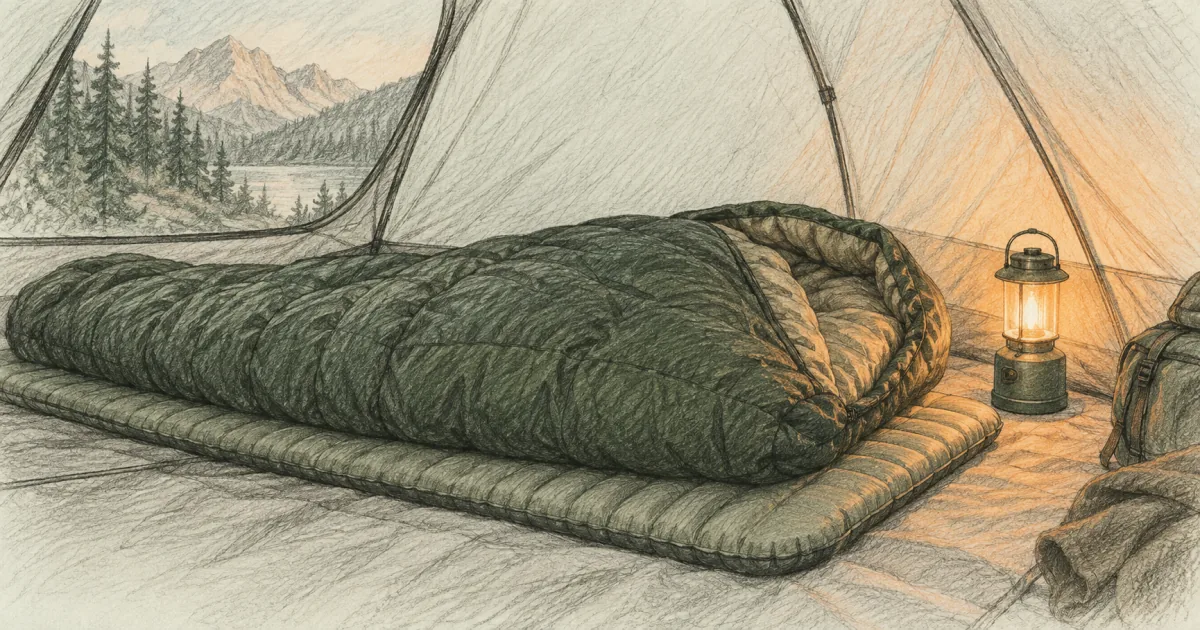
A mummy bag traps heat with a close hood and narrow cut, which is why it wins in real cold. A rectangular bag feels roomier and works for mild nights and car camp. No bag keeps you warm on cold ground without an insulated pad underneath. Pair the bag with a pad rated for the season and a dry base layer.
Our picks
Questions about this calculator
What temperature rating sleeping bag do I need?
Pick a bag with a comfort rating about 10 degrees below the coldest forecast low. For a 30 F night, an average sleeper wants a bag rated near 20 F comfort. Cold sleepers should aim a few degrees lower and warm sleepers can go a touch higher.
What is the difference between comfort rating and limit rating?
The comfort rating is the temperature a cold sleeper stays comfortable at. The limit rating is the lower edge for a warm sleeper. The limit is usually colder than the comfort number, so a bag rated 20 F comfort may list a limit near 10 F.
Should I size down a sleeping bag rating for cold?
Yes. Choose a bag rated colder than the forecast, not warmer. A rating that matches the low exactly leaves no margin for wind, damp, or a colder than expected night. Five to 10 degrees of extra warmth is a good cushion.
Down or synthetic sleeping bag for cold weather?
Down is warmer for its weight and packs smaller, so it suits cold, dry trips. Synthetic keeps more warmth when damp and costs less, which helps in wet weather. Match the fill to your climate, then make sure the rating is right.
Mummy or rectangular sleeping bag for cold nights?
A mummy bag traps heat better with a snug hood and narrow cut, so it is the pick for real cold. A rectangular bag is roomier and fine for mild nights and car camp. If you sleep cold, the mummy shape makes a real difference.
Why do I still get cold in a bag rated for the temperature?
The ground pulls heat out of you faster than the air. A bag rating assumes a pad with matching insulation underneath. A thin or uninsulated pad makes any bag feel colder. Wear a dry base layer and add a warmer pad before you blame the bag.
How do I stay warm in a sleeping bag at 20 degrees?
Use a bag rated near 10 F comfort, sleep on an insulated pad, and wear a dry base layer and a hat. Eat a snack before bed so your body has fuel, and vent the tent a little to keep condensation off the bag. Keep the bag dry and it will hold its loft.