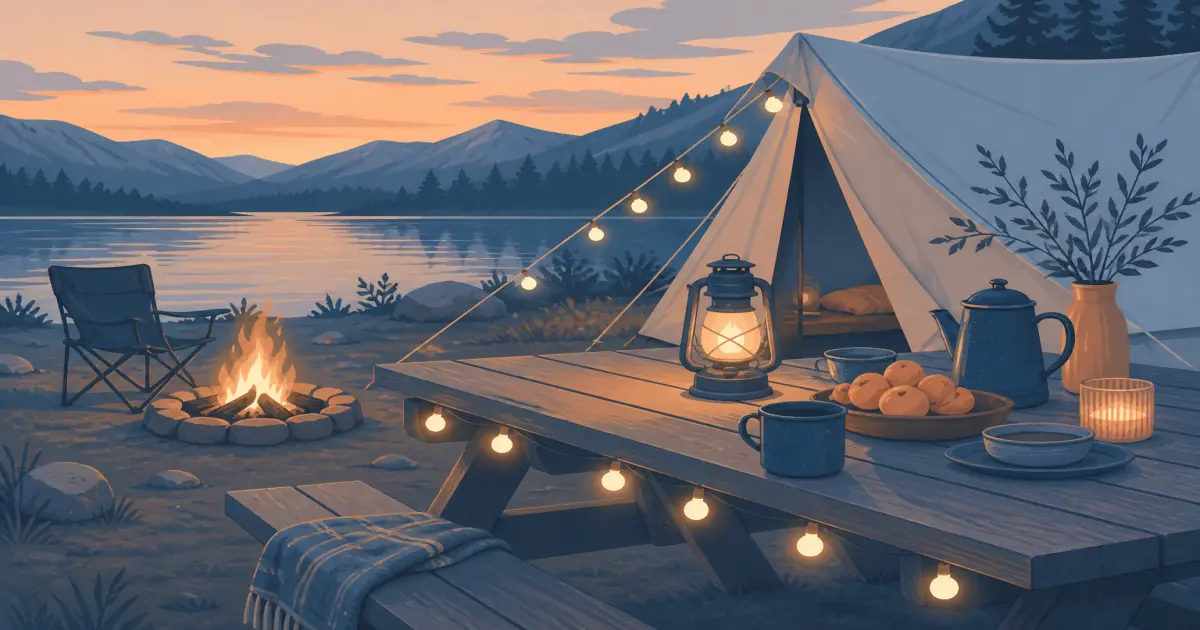
Camping String Lights: Soft Campsite Light Without Blinding Glare
Lighting
Camping string lights give soft table and tent glow without turning your site into a stadium. Pick power that matches the trip, then hang them where people walk.
Our picks
A single lantern can feel harsh when it sits in the middle of dinner. String lights spread soft glow so people can eat, talk, and find cups without squinting into a spotlight. They are furniture lighting for the table and awning, not a substitute for a headlamp on the walk to the bathhouse. Soft light options share the lighting category.
Hang them above head height. Keep walkways clear. Warm LEDs feel closer to firelight than icy white. Solar topping-up is a bonus under trees. Plan USB or spare cells anyway. For named product winners, see best camping string lights. Pair with best camping lantern, tent lighting ideas, and best rechargeable camping lantern.
What camping string lights are for
Use string lights when you want the campsite to feel usable after dark without blasting one bright point. They shine for picnic tables, tarp edges, trailer awnings, and vestibules. They are weaker for slicing vegetables or packing wet gear. Keep a focused light for those jobs.
Think of string lights as furniture lighting. They set the mood of the kitchen and hangout zone. They are not a substitute for a headlamp when you walk the trail to the bathhouse.
Car campers get the most value. Weight barely matters in a tote. Backpackers only bring tiny strands when the grams are listed and the battery is shared with other USB gear.
Power: battery packs vs USB
Most camping string lights use LED bulbs on a flexible wire with either replaceable batteries or a USB charge port. Battery packs are simple. Toss in fresh AAs and you are done. USB sets cut battery waste if you already carry a power bank for phones and rechargeable lanterns.
Match runtime to the trip. A Friday-to-Sunday car camp needs enough juice for two full evenings plus a little margin. Cold nights drain batteries faster. Pack spare cells or a charged bank before you leave the driveway.
Avoid mystery sets with no runtime claim and no weather note. Look for an IP rating or at least a sealed battery box if dew and light rain are likely. Do not dunk lights in the wash basin “to clean them.” Wipe the cable and store dry.
Solar-topped strands can top up in sunny weather. Treat solar as a bonus, not a guarantee under trees or gray skies. Plan as if you may need a plug or spare batteries anyway.
Warm light vs cool light
Warm white LEDs feel closer to campfire light and are easier on eyes at dinner. Cool white looks clinical and can make food and faces look washed out. For camping string lights, prefer warm tones unless you specifically need a brighter work bay under an awning.
Dimmable sets earn their keep. Start low. Raise brightness only when someone is reading a map or cleaning dishes. Neighbors will thank you for not turning the loop into a parking lot.
Flicker matters more than marketing claims. Cheap PWM dimming can bother some people. If a set flickers hard at mid brightness, return it and try another brand before the big trip.
How to hang them without trip hazards
Hang camping string lights above head height along a ridge line, tarp edge, or picnic table frame. Keep the middle of walkways clear. Tape or clip excess cable so nobody hooks a boot at midnight.
Use soft ties, plastic clips, or small carabiners. Avoid sharp knots that crush wire jackets. Do not staple lights into tent fabric. Do not wrap hot lantern glass with plastic string-light wire.
Keep the battery pack or USB brick off the ground when rain is possible. A tote lid, table underside, or dry bag pocket works. Condensation under a cooler is a common failure point.
If you hang lights inside a tent, keep them away from sleeping bags and exits. Low-heat LEDs are the only sensible choice indoors. Unplug or switch off when you sleep if the set has no timer and you want dark rest.
Table setup that actually helps dinner
Drape a short strand along the back edge of the picnic table so plates stay lit and eyes stay comfortable. Combine with a lantern at the cook end if you are still finishing pasta. Once food is plated, dim or move the lantern so string lights carry the meal.
For tarp kitchens, run lights along the high edge facing the table, not straight into people’s faces. Side light beats front light for conversation.
Kids’ sites benefit from a second short strand marking the path to the tent door. Keep it soft. Path markers should guide feet, not announce the campsite to the whole loop.
String lights that survive camp
The MPOWERD Luci Solar String Lights 18ft are the default warm-white hang for awnings and tarp edges. Charge in sun or USB, then clip them where kids will not yank the cord into the fire ring.
Prefer USB-C topping up from a modern power bank? Use the OGERY Camping String Lights 4-in-1.
Want color for a birthday weekend? The MPOWERD Luci Color Solar String Lights trade some pure task brightness for modes. Keep a headlamp for real kitchen work either way.
Common mistakes
Buying the longest mega-strand you can find is a classic miss. Extra wire becomes a tangle and a trip hazard. Measure the table or tarp edge, then add a little slack for corners.
Skipping a backup light is another miss. When the strand dies at 9 p.m., you still need to wash pans and find shoes. Pack the headlamp for camping you already trust.
Leaving lights on all night wastes batteries and can bother nearby sites. Use a timer if you have one. Otherwise assign someone to switch them off when the group heads to tents.
Packing wet lights into a sealed tote breeds funk and corrosion. Air-dry the cable before the drive home, the same way you dry sponges after how to wash dishes camping.
When to skip string lights
Skip them on ultralight backpacking trips where every ounce fights for a place. Skip them in high-wind sites where hanging anything becomes a chore. Skip them if your group already hates extra setup and a single lantern keeps everyone happy.
Also skip novelty shapes that look cute online and fail outdoors. Clear, warm LEDs on a tough wire beat fragile plastic ornaments that crack in a tote.
If your only goal is cooking light, spend the money on a better lantern first. Add camping string lights once the work light problem is solved.
Pack list for a simple strand kit
Pack the lights, spare batteries or a charged USB bank, two soft ties, and a small dry bag for the power pack. Add a short note in your kitchen checklist so they do not stay in the garage. Store the coiled strand in a zipper pouch so it does not knot around stove legs.
Test the set at home the night before. Confirm the switch mode you want (steady vs blink). Blink modes are party tricks. Steady warm light is what dinner needs.
Bottom line
Camping string lights make the table and hangout zone feel usable after dark without hard glare. Choose warm LEDs, plan power for two evenings, hang high and tidy, and keep a lantern or headlamp for real tasks. Soft light is a comfort upgrade once cook and clean gear already work.
Frequently Asked Questions
Are camping string lights better than a lantern?
They do different jobs. A lantern lights a work spot. String lights spread soft ambient light across a table or awning so faces look normal and paths feel calmer.
Battery or USB rechargeable?
Battery packs travel easy when you have spare AAs. USB rechargeable lights save waste if you already charge phones and lanterns from a power bank.
Can I hang camping string lights inside a tent?
Yes if the lights run cool and you keep cords off exits. Favor low-heat LED sets. Do not pinch wires in zippers or guy points that move.
How bright should camping string lights be?
Dimmer than you think. Soft warm LEDs are enough for dinner and cards. Save bright headlamps and lanterns for cooking and packing.
Will string lights attract bugs?
Warm, lower output light attracts fewer insects than cool blue-white floods. Keep food sealed and trash closed either way.
Do I still need a headlamp?
Yes. String lights stay fixed. Hands-free light still wins for cooking, midnight bathroom walks, and packing the car.